Whether in food service, the medical field, or for private household use, choosing the right disposable gloves is crucial for hygiene and protection. However, given the variety of materials and designs, the selection can quickly become overwhelming. This guide provides you with objective information to identify the right disposable gloves for your specific application and make an informed purchasing decision.
What to Look for When Buying Disposable Gloves
To find the right gloves, three criteria are particularly important: the material, whether they are powder-free, and the intended area of use.
1. The Choice of Material: Nitrile, Vinyl, or PE?
The material largely determines the protective properties, comfort, and price of the gloves.
- Nitrile Gloves: Made from synthetic rubber, nitrile gloves offer high resistance to chemicals, oils, and fats. They are very tear-resistant and elastic, which allows for good tactile sensitivity. Since they are latex-free, they are a suitable alternative for individuals with latex allergies. Due to these properties, they are frequently used as medical gloves in clinics and hospitals, as well as in laboratories and industry.
- Vinyl Gloves: These gloves are made of polyvinyl chloride (PVC) and are a cost-effective option for low-risk applications. They are also latex-free but are less flexible and durable than nitrile. Vinyl gloves are well-suited for short-term tasks such as light cleaning, in beauty salons, or when handling non-greasy foods.
- PE Gloves: Polyethylene gloves are the simplest and most affordable option. They are very thin and loose-fitting, making them quick to put on and take off. Their main area of use is for short-term protection against general contamination, for example, in food service at buffets, when refuelling a car, or for preparing food in the take-away sector.
2. The Importance of "Powder-Free"
In the past, disposable gloves were often coated with powder (usually cornstarch) to make them easier to put on. Today, powder-free models are the standard. The powder can cause skin irritation and lead to contamination when in contact with food or in sterile environments. Powder-free gloves minimise these risks and are therefore the preferred choice in professional applications.
3. The Application is Key
Clearly define what you need the gloves for. For handling for food, gloves must be explicitly labelled as food-safe. In the medical sector, certifications according to specific standards (e.g., EN 455) are required. For simple household or gardening tasks, however, less specialised models may suffice.
Disposable Glove Recommendations
Here you will find a selection of products for different requirements, based on their material properties and intended areas of use.
BJ Disposable PE Plastic Gloves, 200 Pairs
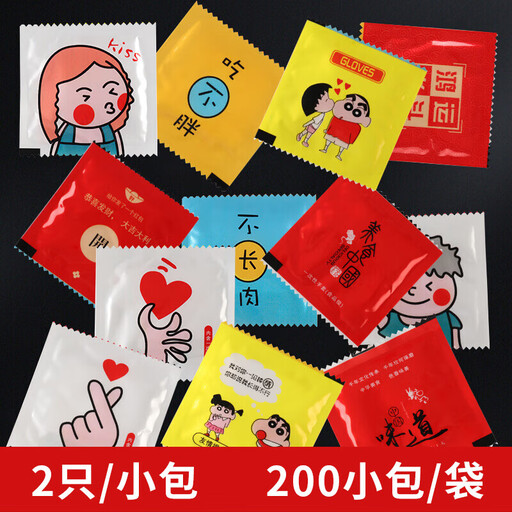
- Why They Stand Out: These gloves are distinguished by their convenient individual packaging, which ensures each pair is hygienic and fresh upon removal. The thickened PE material provides a solid barrier for short-term applications.
- Benefits:
- Individually wrapped for maximum hygiene
- Thickened PE material for increased durability
- Cost-effective solution for high-volume use
- Easy and quick to put on and take off
- Best Suited For: Ideal for food service establishments, take-away services, and catering where frequent and rapid glove changes are necessary. Also practical for private use in the kitchen.
Nitrile Disposable Gloves Blue Size L, 100 Pieces
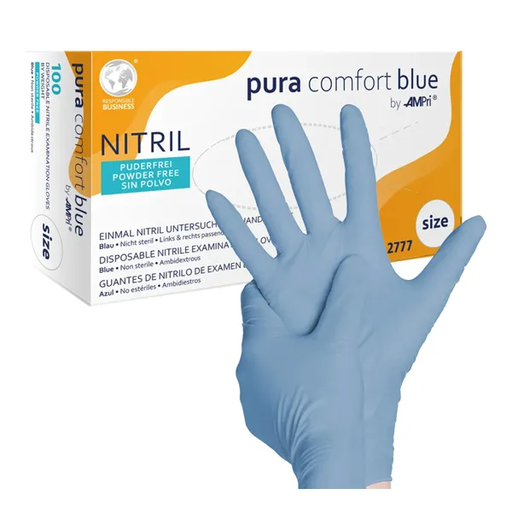
- Why They Stand Out: As nitrile gloves, they offer reliable protection and are designed for use in demanding environments. The micro-textured fingertips ensure a secure grip, while the material provides a good barrier function.
- Benefits:
- Powder-free and latex-free, suitable for allergy sufferers
- High material thickness at the fingers (approx. 0.08 mm) for robustness
- Suitable for use in medical, laboratory, and industrial settings
- Approved for short-term, indirect contact with food
- Best Suited For: Professionals in medical practices, care facilities, laboratories, and the pharmaceutical industry. Also for professional cleaning companies and users who require a durable glove.
Powder-Free Vinyl Disposable Gloves Size L
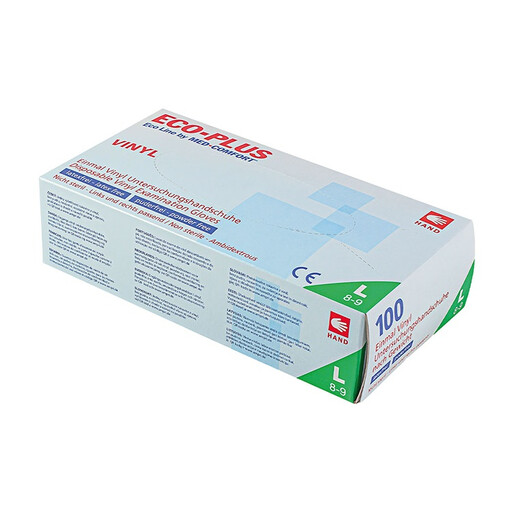
- Why They Stand Out: These vinyl (PVC) gloves are an economical alternative for low-risk activities. They are free of allergy-causing proteins and offer basic protection for a variety of tasks.
- Benefits:
- Cost-effective option for frequent changes
- Latex-free and powder-free for high wearing comfort
- Suitable for handling weak acids and alkalis
- Neutral white colour for use in cosmetics and service industries
- Best Suited For: Users in beauty salons, for light cleaning work, in food processing (with non-greasy products), and for general household tasks.
Discover More Options
Didn't find the right model for you, or would you like to compare different sizes and packaging units? If you want to buy disposable gloves, you will surely find the right solution in our broader selection.
Discover our entire range of disposable gloves
Frequently Asked Questions (FAQ)
1. Are nitrile gloves suitable for handling food?
Yes, many nitrile gloves are suitable for contact with food. Look for the corresponding certification from the manufacturer, often symbolised by a glass and fork symbol. They are particularly well-suited for handling greasy or oily foods, as the material is resistant.
2. What does "powder-free" mean for disposable gloves?
"Powder-free" means that the gloves are manufactured without the use of powder (usually cornstarch). This reduces the risk of skin irritation and allergic reactions. It also prevents contamination of samples, food, or wounds by powder particles, making them the first choice in professional and hygienically sensitive areas.
3. How do I determine the correct glove size?
A well-fitting glove is crucial for comfort and safety. To find your size, measure the circumference of your hand at its widest point (across the knuckles, excluding the thumb). The common sizes (S, M, L, XL) correspond to specific circumference measurements found in the manufacturers' size charts. A glove that is too tight can tear, while a glove that is too loose impairs tactile sensitivity and can slip off.


