
Lieferung heute & morgen

Qualitätsgarantie

Willkommens-Angebote freischalten: KOSTENLOSE Lieferung | Bis zu 80 % RABATT | Kostenlose 30-Tage-JoyPlus-Testphase
App herunterladen
Disposable plates are practical when you need to serve a large number of guests, lack tableware while camping, or want to keep washing up to a minimum after a children’s birthday party. At the same time, products vary considerably in terms of material, sturdiness, pack size, heat resistance and disposal. An inexpensive pack can quickly prove impractical if it becomes soggy when used with moist foods or is too small for the dish you have planned.
The following guidance helps households, event organisers and catering businesses compare disposable plates objectively and avoid common buying mistakes.
Terms such as biodegradable plates, compostable plates and “eco-friendly” should not be treated as interchangeable. Biodegradable generally means that a material can break down under certain conditions. However, disposal in a home compost heap or organic waste bin is subject to additional requirements and local regulations.
The following points are therefore essential:
A sugarcane-fibre plate can be an alternative to conventional plastic plates. Its exact disposal route should nevertheless be determined by checking the packaging and local regulations.
A plate with a diameter of 27 cm offers more surface area than a 15- or 18-cm model. However, this says little about whether it will bend when carried. For grilled foods, salads with dressing or hot dishes, material thickness, rim height and design are important.
A flat paper plate may be perfectly adequate for cake, while a deeper sugarcane plate may be better suited to sauces and side dishes. For buffets and catering, it is also worth considering whether several plates can be stacked securely.
A 50-pack of disposable plates is suitable for smaller celebrations, family gatherings or limited catering use. A 100-pack of disposable plates can reduce the need to restock at larger events. Before comparing prices, however, calculate the cost per plate.
You should also consider:
For a picnic with four people, a 100-pack may take up unnecessarily large amounts of storage space. At a club event with 80 guests, the same quantity could prove insufficient.
Sugarcane plates are often made from bagasse, the fibrous residue left over from sugarcane processing. Bamboo-fibre plates are produced from plant fibres and are available in a range of diameters and pack sizes. For both materials, the product description and packaging should clearly state whether the plate is intended for food contact.
The legal classification is particularly important for plastic products. In the European Union, disposable tableware made from certain plastics is subject to restrictions on single-use plastic products. A plastic plate is therefore not automatically suitable as a conventional disposable plate for every type of event. Reusable plastic plates can provide a different solution for garden parties, camping and families with children, provided the manufacturer specifies that they are designed for repeated use and cleaning.
Typical sizes can be broadly matched to different uses:
A three-compartment plate, for example, keeps the main dish, side dish and salad separate. This is practical for buffets, takeaway meals and children’s portions. The dividers should be high enough to prevent liquids from immediately running into adjacent sections.
For hot or oily foods, oil-resistant plates and water-resistant materials are a sensible choice. Product specifications should be as precise as possible. Statements such as “suitable for hot foods” do not automatically replace guidance on maximum temperature or microwave use.
Only products that explicitly state this feature should be used as microwave-safe disposable plates. The plate should also not be heated for longer or at a higher temperature than specified by the supplier. Additional restrictions may apply to frozen meals, very fatty foods or prolonged heating.
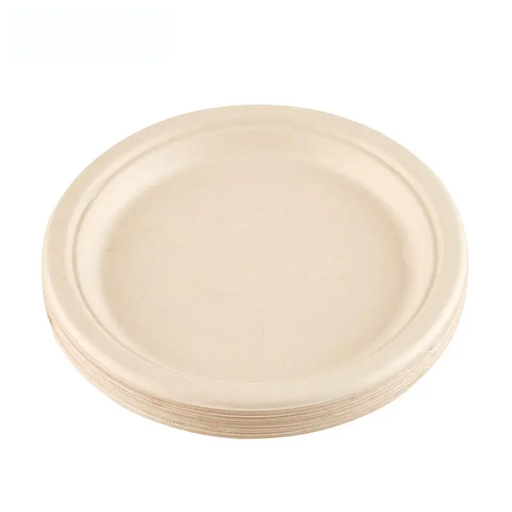
Why it’s a good fit: According to the product information, the 22.5-cm diameter is suitable for main courses, appetisers and desserts. The 20-plate pack is a manageable choice for smaller households or a modest celebration.
The specifications state the material, diameter, and water and oil resistance. Intended microwave use is also explicitly listed.
Food-grade sugarcane fibre, a 22.5-cm diameter, and—according to the product description—biodegradable, water- and oil-resistant construction.
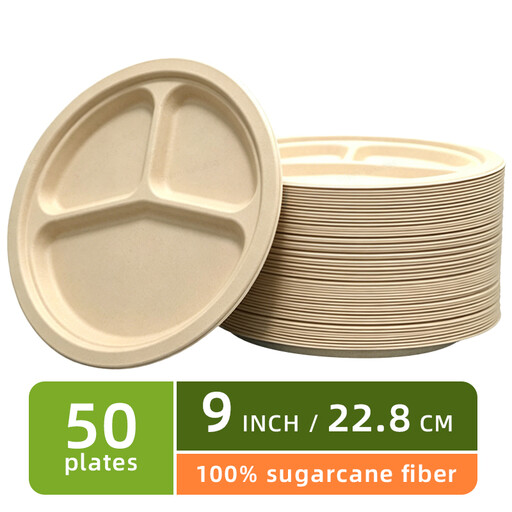
Why it’s a good fit: According to the product name, these 23-cm plates with three compartments are designed for catering, celebrations and food-service applications.
The compartment design helps prevent different foods from mixing. The stated oil resistance is particularly relevant for grilled foods and hot buffet dishes.
50-pack, 23-cm diameter, three compartments and—according to the product information—compostable sugarcane fibre.
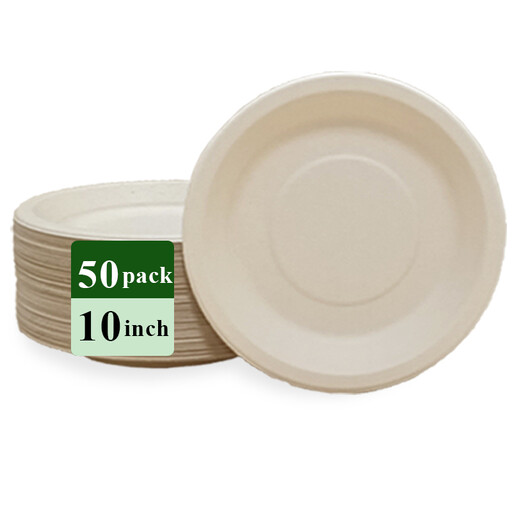
Why it’s a good fit: The generous diameter is designed for substantial main courses, buffets and events requiring larger quantities of plates.
Before buying, check whether 10-inch plates will fit comfortably in your available storage space and whether the manufacturer’s specifications cover hot or liquid foods.
Bamboo fibre according to the product name, a generous 10-inch diameter and 50 pieces per pack.
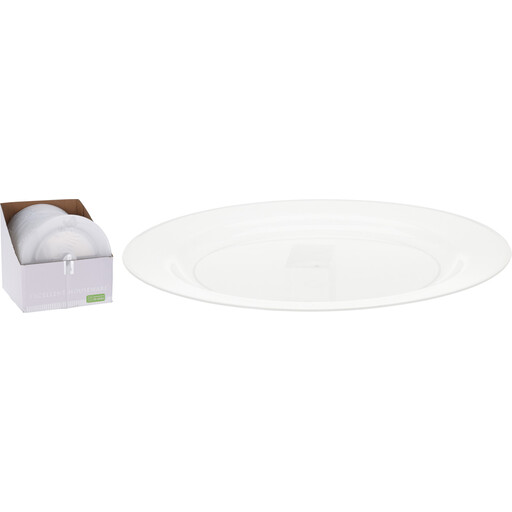
Why it’s a good fit: For picnics and camping trips, garden parties and families with children, a reusable set offers an alternative to single-use products.
According to the product description, the plates are designed for repeated use, easy cleaning and outdoor applications. Check dishwasher and temperature instructions before buying.
Four plates with a 23-cm diameter, low weight and—according to the product description—a shatter-resistant, reusable design.
Our complete selection includes disposable plates in a range of sizes and materials, with pack quantities and designs for different applications.
According to their respective product descriptions, sugarcane and certain bamboo-fibre plates may be suitable for hot foods. However, the decisive factors are the specific details regarding temperature, water resistance, oil resistance and microwave use. For soups or dishes with a high liquid content, choose a plate with a raised rim.
As a general guide, allow one plate per guest for the main course, plus an additional plate for dessert or second helpings. For buffets, barbecues or catering events, a reserve of around 10 to 20 percent is recommended. For 25 guests, this works out at approximately 55 to 60 plates, depending on the menu.
This depends on the material, labelling and local waste disposal regulations. Even plates labelled as compostable cannot automatically be placed in every organic waste bin. Always check the packaging instructions and the requirements of the responsible waste management provider before disposal.