
Lieferung heute & morgen

Qualitätsgarantie

Willkommens-Angebote freischalten: KOSTENLOSE Lieferung | Bis zu 80 % RABATT | Kostenlose 30-Tage-JoyPlus-Testphase
App herunterladen
Disposable plates should hold food securely, simplify preparation and minimise hassle after the celebration. However, unclear product information can quickly lead to the wrong purchase. A small paper plate is not suitable for a barbecue buffet, a thin model may give way under moist food, and a product advertised as “compostable” does not automatically belong in a home compost heap.
It is therefore worth checking the material, diameter, quantity and usage instructions before buying. The following criteria help individuals, families, hosts and event organisers compare disposable plates objectively.
Disposable plates measuring around 15 cm in diameter are primarily suitable for cake, desserts, fruit or smaller snacks. For main courses, barbecued food and mixed buffets, 23 cm disposable plates or similar sizes are usually more practical. For catering, the stated quantity may not always be enough either: additional plates for second helpings, damaged items or different courses should be factored in.
Paper plates can be made from thicker card and still become soggy when used with sauces or very fatty foods. Product descriptions for sugarcane plates and bagasse plates often specifically mention water and oil resistance. This information should not automatically be applied to every product made from the same material. The specific manufacturer’s information is what matters.
Biodegradable plates and compostable plates are not interchangeable synonyms. Disposal options depend on the material, coating and local regulations. Even a product made from sugarcane fibres should be disposed of after use according to the instructions on the packaging or product page. Disposal should be checked particularly carefully for coated paper plates.
For paper plates for parties, a diameter of 23 cm is a versatile starting point. For children’s birthday parties or themed celebrations, the design may be more important than having an especially large surface area.
Classic paper plates are made from paper or card, sometimes with an inner coating. This can help them cope with contact with grease or moisture. For hot food, the product description should explicitly state that the plates are suitable for this use. Boiling liquids or very heavy portions should not be served on a plate unless suitable use is specified.
Sugarcane plates and bagasse plates are made from fibrous materials. The available product information states that several models are water- and oil-resistant. This makes them interesting for paper plates for barbecue parties, buffets and takeaway applications. Nevertheless, the actual suitability depends on the individual product description.
Not every disposable plate is suitable for microwave use. The “Jeden Tag Paper Plate 23cm White” model explicitly states that it is not suitable for microwaves or boiling liquids. By contrast, the Ochama model with a diameter of 22.5 cm is described as microwave-safe. These differences show why general statements about the material are not enough.
For products labelled as compostable or biodegradable, consumers should follow the disposal instructions. Such a label does not replace checking whether the product is accepted by local council collections or intended for private composting.
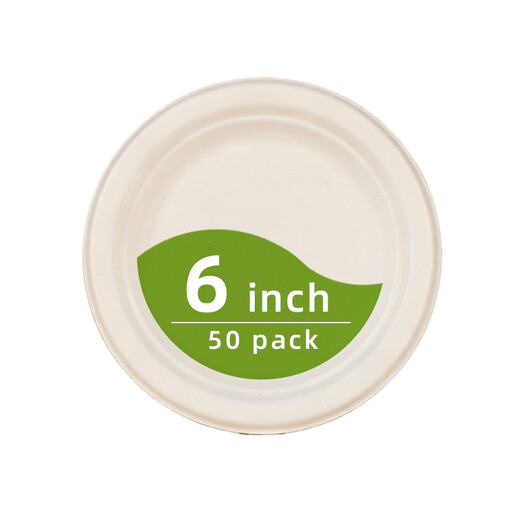
Why this product suits this profile: The 50-pack with a diameter of 15 cm is designed for desserts, cake, snacks and smaller portions. For a modest celebration, it is easy to plan the quantity you need.
The clearly stated diameter prevents a small party plate from accidentally being planned for a complete main course.
50 pieces per pack; suitable for desserts, parties, barbecues and picnics according to the product information.
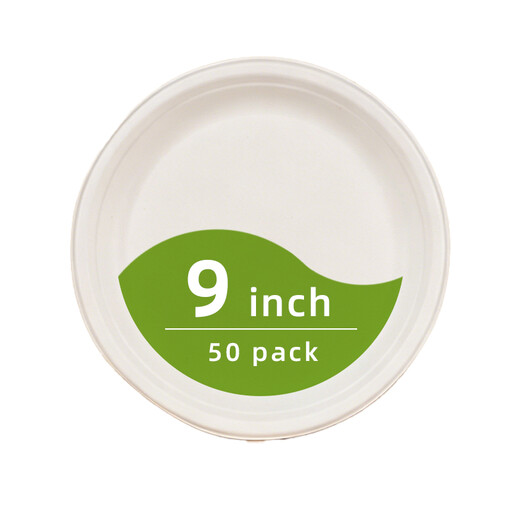
Why this product suits this profile: The 23 cm format and stated sugarcane-fibre construction are suitable for hot and cold food at barbecues, picnics or larger buffets.
The diameter, quantity and material are clearly stated. The product information also specifies suitability for hot and cold food.
23 cm diameter; 50 pieces; described as biodegradable sugarcane plates for a range of foods.
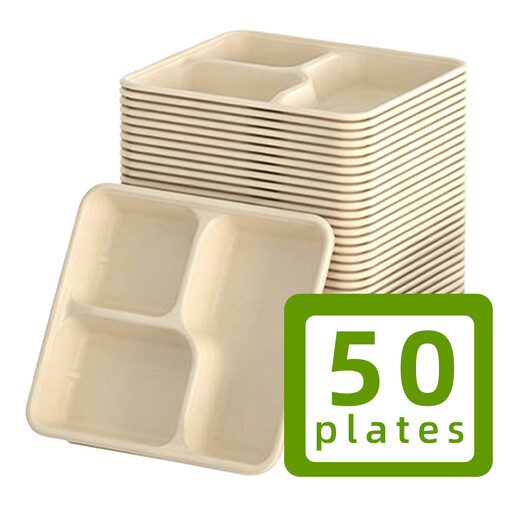
Why this product suits this profile: The three separate compartments are designed for catering, buffets and takeaway meals where side dishes and main courses need to remain separate.
The divided design prevents food from mixing and reduces the need for additional bowls or small plates.
50 pieces; three compartments; dimensions of 21.6 × 23.7 cm; described as oil-resistant and intended for catering, buffets and takeaway use.

Why this product suits this profile: The black-and-white football goal design complements sports and birthday parties. With a diameter of 23 cm, the plates are suitable for cake and snacks according to the description.
The design and pack size are clearly stated. This makes it easy to plan the plates as a decorative element rather than as a general-purpose bulk pack.
23 cm diameter; 8 pieces per pack; food-safe card according to the product description.
For main courses and barbecued food, disposable plates with a diameter of around 23 cm are often practical. They offer more space than 15 cm plates and may be intended for hot and cold food according to the relevant product description. For very heavy portions, the material and stability information should also be checked.
Not necessarily. Some sugarcane or bagasse plates are described as microwave-safe, while other paper plates are explicitly not suitable. The manufacturer’s specific instructions are always decisive. If no such information is provided, the plate should not be used for heating food.
This depends on the product and local disposal rules. Before disposing of them, consumers should check the information on the packaging or product page. “Compostable” does not automatically mean that the plate belongs in the food waste bin or private compost heap. Coatings and food residue in particular can affect how it should be disposed of.