
Lieferung heute & morgen

Qualitätsgarantie

Willkommens-Angebote freischalten: KOSTENLOSE Lieferung | Bis zu 80 % RABATT | Kostenlose 30-Tage-JoyPlus-Testphase
App herunterladen
Disposable plates make preparing and clearing up after birthday parties, barbecues, picnics and catering events easier. However, paper plates, sugarcane plates and other disposable options can differ considerably in terms of strength, coating, size and disposal.
If you only look at the number of plates in a pack or the low unit price, you may end up buying plates that go soggy when used with hot food, fail to contain grease reliably or are too small for their intended purpose. The following criteria will help you compare disposable plates objectively and choose the right option.
A pack of 50 or 100 plates may initially seem like good value. However, the key factor is the price per plate. You should also choose a pack size that suits the occasion. For a small household or a party with just a few guests, 20 paper plates may be enough, while event organisers and catering businesses can benefit from larger packs.
Strength depends on factors including material thickness, shape and coating. A flat paper plate may be suitable for cake but give way when used for a hot meal with sauce. For barbecued food, salads with dressing or greasy dishes, grease-resistant plates with a suitable inner coating or made from moulded plant fibre are the better choice.
“Biodegradable”, “compostable” and “made from plant fibres” are not automatically interchangeable terms. Buyers should check:
Local disposal rules may vary. Even a bagasse plate should not be put in the food waste bin without checking first.
Disposable plates with a diameter of 23 cm are often suitable for main courses, side dishes and typical barbecue portions. Plates measuring around 22.5 cm or 9 inches fall within a similar size range. For cake, fruit or small snacks, however, 15 cm is usually sufficient.
For buffets and takeaway services, three-compartment disposable plates are practical. They can keep, for example, meat, side dishes and salad separate. This prevents liquids from mixing immediately. However, the usable surface area is smaller than that of a same-sized plate without compartments.
Also look for information confirming suitability for food contact. For example, the general EU requirement for materials that come into contact with food is set out in Regulation (EC) No 1935/2004. The specific labelling and usage instructions for the individual product remain decisive.
Not every paper plate is suitable for microwave use or boiling liquids. A product may be marketed for hot food but still have restrictions on heating. Before use, check the temperature, microwave and liquid-use information on the product page or packaging.
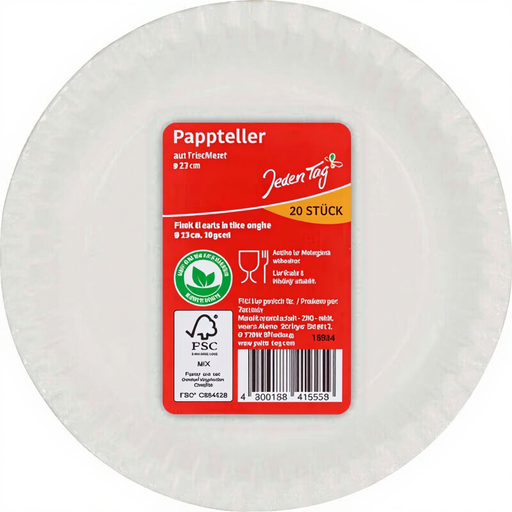
Why this product suits this profile: The pack contains 20 white paper plates with a diameter of 23 cm, making them suitable for smaller celebrations, picnics or occasional household use.
The stated diameter helps prevent a portioning area that is too small. According to the product description, the food-safe inner coating is designed for grease as well as hot and cold food. Microwave use and boiling liquids are not permitted.
23 cm diameter, 20 plates per pack and a grease-resistant inner coating according to the product information.
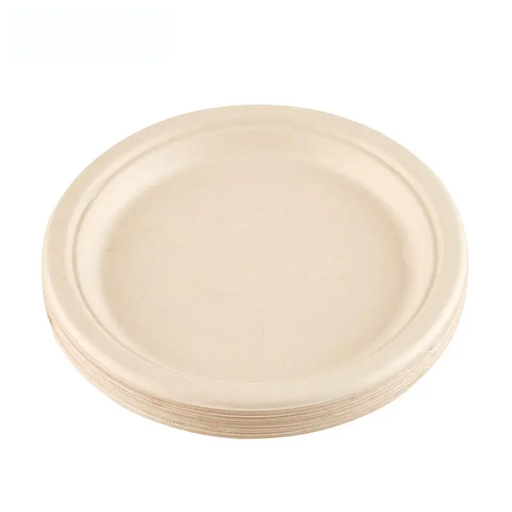
Why this product suits this profile: According to the product description, the plates are made from food-safe sugarcane fibre and are intended for households that consider material, use and disposal together.
The product information states that the plates are water- and oil-resistant and suitable for microwave use. Before use, check the manufacturer’s specific instructions on temperature and disposal.
22.5 cm or approximately 9 inches in diameter, made from sugarcane fibre and water- and oil-resistant according to the product information.
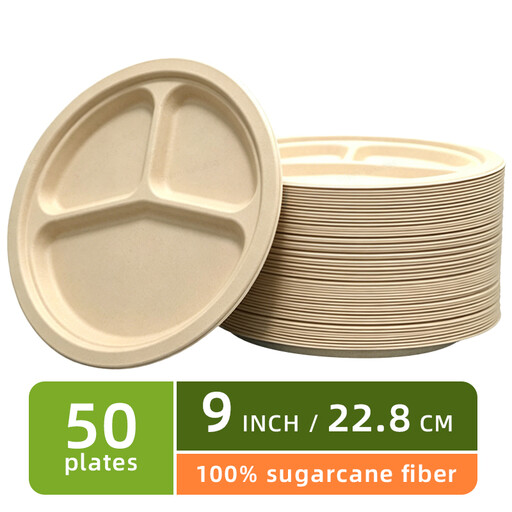
Why this product suits this profile: The combination of 50 plates, a 23 cm diameter and three compartments makes this option suitable for barbecues, catering, buffets and larger events where different foods need to be kept separate.
The three compartments help prevent side dishes, sauces and the main course from mixing. The stated oil resistance makes the plates suitable for greasier foods; check the disposal instructions in advance.
Pack of 50, 23 cm diameter and three separate sections made from sugarcane fibre according to the product name.
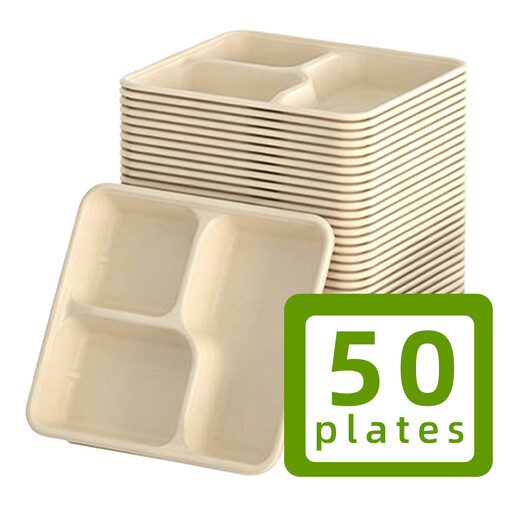
Why this product suits this profile: Measuring 21.6 × 23.7 cm and featuring three compartments, these plates are designed for buffets, serving stations and takeaway meals with several components.
The stated dimensions and three compartments make portioning easier. The product name mentions oil resistance and sugarcane fibre; check the supplier’s specific composting conditions.
50 plates, three compartments, dimensions of 21.6 × 23.7 cm and an oil-resistant design according to the product information.
For a birthday party with cake and finger food, small 15 cm plates are sufficient. At a barbecue or picnic, paper plates for barbecues and picnics measuring around 23 cm are more practical, provided they are suitable for grease and hot food. For catering and buffet services, three-compartment plates are recommended when separate components need to be served apart.
If you need disposable plates regularly, you should also consider storage conditions. Cardboard and plant fibre may lose their shape-retaining properties in high humidity. Store the packs in a dry, clean place protected from direct sunlight.
We have put together a complete, regularly updated list of products that fully meet these strict selection criteria and the safety regulations applicable in the EU.
That depends on the material, coating and manufacturer’s instructions. Grease-resistant paper plates and bagasse plates are often offered for hot and cold food. When serving soup, boiling liquids or very moist dishes, check the usage instructions particularly carefully.
Not necessarily. According to the product description, some sugarcane plates are microwave-safe, while other disposable plates must not be heated. The specific labelling for the individual product is always decisive.
Plan on at least one plate per person for each complete meal. For longer events, second helpings, cake or separate courses, it is sensible to keep a few extra plates in reserve. The number of guests, type of food and pack size are more important for making the right choice than a flat unit price.