
Lieferung heute & morgen

Qualitätsgarantie

Willkommens-Angebote freischalten: KOSTENLOSE Lieferung | Bis zu 80 % RABATT | Kostenlose 30-Tage-JoyPlus-Testphase
App herunterladen
Whether you’re hosting a birthday party, having a barbecue, going on a picnic or catering an event, disposable plates save time when it comes to clearing up and cut down on washing-up. But paper plates, sugarcane plates, bagasse plates and reusable options can vary considerably in strength, size and how they should be disposed of.
If you focus only on the price per plate, you could easily end up with the wrong pack. Thin plates can become soggy under wet foods, smaller diameters may not be big enough for main courses, and terms such as ‘biodegradable’ and ‘compostable’ aren’t always used in the same way. The following criteria will help you compare your options objectively.
A plate with a diameter of 15 cm is best suited to cake, fruit, snacks or smaller desserts. For a full meal, 23 cm or more is usually more practical. A ‘9-inch’ plate measures approximately 22.5 cm, making it close to the popular 23 cm paper plate size.
Shape matters too: a flat plate offers less protection against sauce than one with a rim. For barbecue dishes, salads or meals with sides, consider the diameter and rim height together.
Words such as ‘sturdy’, ‘sustainable’ or ‘suitable for any food’ don’t tell you much without technical details. Check the following:
For paper plates, it’s also worth checking whether a coating could affect how they should be disposed of. Follow your local waste-sorting guidance.
When buying biodegradable plates or compostable plates, check the specific labelling and the manufacturer’s disposal instructions. Commercial composting facilities operate under different conditions from a garden compost heap. A product description may state that a sugarcane fibre plate is biodegradable, but that doesn’t necessarily mean it can go in every local food waste bin or on a home compost heap.
In Germany, dispose of used plates in line with local guidance and remove food scraps if required.
Paper plates are lightweight and handy for shorter events. A grease-resistant option is a good choice for hot food and barbecue dishes. Sugarcane plates, also known as bagasse plates, are made from plant fibres and are often listed as suitable for hot and cold food. For particularly wet dishes, still check whether the product is described as water- and oil-resistant.
Reusable outdoor plates made from plastic or melamine are a good option if you plan to use them regularly for camping, garden parties or family outings. They need to be washed after each use and stored dry. Melamine isn’t disposable tableware, and should only be used in line with the manufacturer’s instructions, particularly when it comes to heat and microwaves.
Compartment plates can be useful for catering and buffets, as they keep sides separate from main courses. However, they don’t necessarily replace bowls for liquid foods.
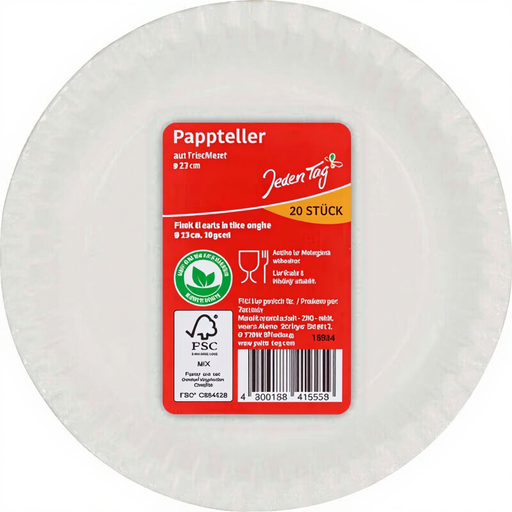
Why it suits this profile: This pack contains 20 white paper plates with a diameter of 23 cm, making them a good choice for parties, picnics and barbecues with standard-sized portions.
The size is clearly stated. According to the product description, the plates are suitable for hot and cold food and are grease-resistant; however, they are not microwave-safe.
A 23 cm diameter, 20 plates per pack and clear guidance on use with hot and cold food.
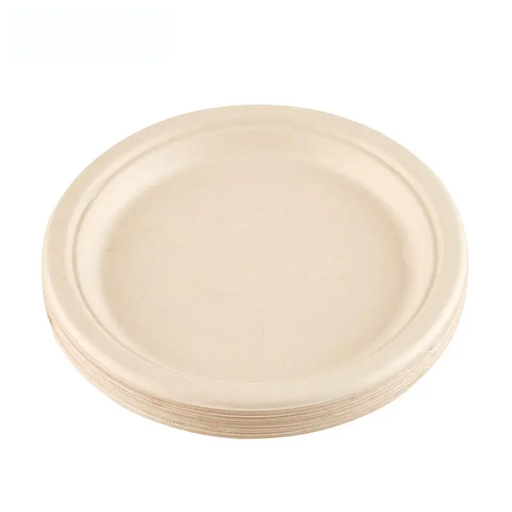
Why it suits this profile: Made from sugarcane fibre described in the product details as food-safe, these plates combine a standard size of around 22.5 cm with stated resistance to water and oil.
The product details give specific measurements and state that the plates are water- and oil-resistant. You should still check local guidance before disposing of them.
A 22.5 cm diameter; described as microwave-safe, biodegradable, and resistant to water and oil.
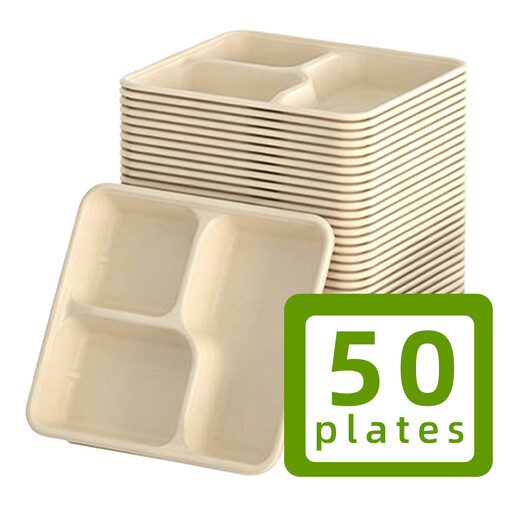
Why it suits this profile: With three compartments and dimensions of 21.6 × 23.7 cm, these plates are designed for catering, buffets, takeaway meals and events with several different dishes.
The compartments stop sides and main courses from mixing together. The 50-piece pack also makes it easier to plan for larger groups.
Three compartments, a rectangular shape and 50 plates per pack; the product name indicates that they’re intended for catering and buffets.
We’ve put together a complete, regularly updated list of products that meet these strict selection criteria and fully comply with the safety regulations in force in the EU.
For main courses, 22.5 to 23 cm is a practical starting point in many cases. If you’re serving large portions or several sides, a 28 cm plate or a compartment serving plate may offer more space. For cake and snacks, 15 cm is often enough.
It depends on the product. Only use sugarcane or bagasse plates in the microwave if the product description explicitly says they’re suitable. The product details state that the Ochama plates can be used in a microwave. Other paper plates may be explicitly listed as unsuitable.
The product labelling and local disposal rules are what matter. ‘Biodegradable’ describes a material property, while whether something is ‘compostable’ can depend on specific conditions and, in some cases, relevant certification. Check the packaging and your local authority’s guidance before putting plates in a food waste bin, general waste or another collection.