
Lieferung heute & morgen

Qualitätsgarantie

Willkommens-Angebote freischalten: KOSTENLOSE Lieferung | Bis zu 80 % RABATT | Kostenlose 30-Tage-JoyPlus-Testphase
App herunterladen
Whether you’re hosting a birthday party in the garden, having a barbecue, heading out for a picnic or arranging catering, disposable plates need to hold food securely without going soft from grease or moisture. Many households in Germany also look for clear information about materials and how to dispose of products properly. There’s a wide choice, from paper plates to sugarcane and bamboo fibre plates. However, differences in size, coating, pack quantity and heat resistance aren’t always obvious at first glance.
Terms such as biodegradable plates and compostable plates describe certain properties of the material. They don’t automatically mean the plates can go in your home food-waste bin or garden compost. Always check the packaging and your local disposal guidelines.
Sugarcane and bagasse plates are often described as biodegradable. Even so, check whether your local waste disposal service accepts them before deciding how to dispose of them.
A plate might look robust at first, but give way when holding sauce, salad dressing or hot food. Material thickness, rim design and coating all make a difference. For paper plates, the product description should specifically state whether they’re suitable for greasy or hot food.
If you’re looking for disposable tableware for a picnic or barbecue, check for a raised rim too. This helps reduce the risk of liquids spilling over when you carry the plate.
A plate with a diameter of 15 cm is mainly suitable for cake, snacks and desserts. For main meals, 23 cm plates or similar sizes are more practical. Pack size also affects the actual cost per plate. A pack of 50 disposable plates can be useful for larger gatherings, while a 20-pack may leave smaller households with fewer leftovers.
For hot main meals, meat, sides or sauces, sturdy disposable plates with greater material strength are a practical choice. Terms such as “oil resistant” or “water resistant” should appear in the product information itself, rather than being inferred from the product image.
Compartment plates are useful for catering, buffets and takeaway meals, as they let you serve different foods separately. However, the dividers don’t replace checking how much the plate can actually hold.
Not all disposable plates are suitable for microwave use. The product information for the Ochama sugarcane model with a 22.5 cm diameter states that it’s microwave-safe, as well as water- and oil-resistant. In contrast, the product information for the 23 cm Jeden Tag paper plate specifically advises against using it in the microwave or with boiling liquids.
For safe use:
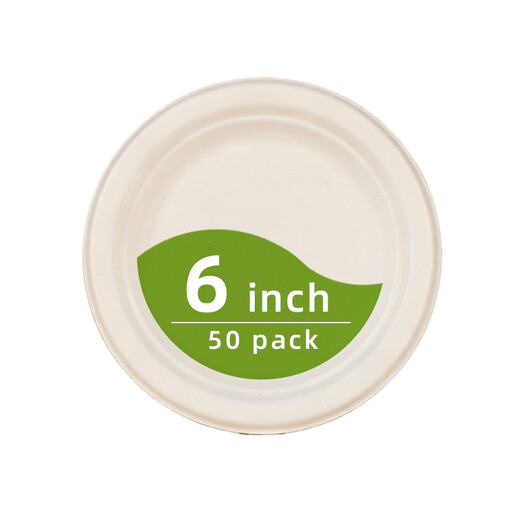
Why this product suits you: This 50-pack is designed for smaller portions, desserts and snacks, making it a good choice for birthdays, short get-togethers and households with predictable needs.
The clearly stated 15 cm size helps you avoid mistakenly planning to use a dessert plate as a full-size dinner plate.
50 plates per pack; described as made from sugarcane fibres and suitable for desserts, parties, barbecues and picnics.
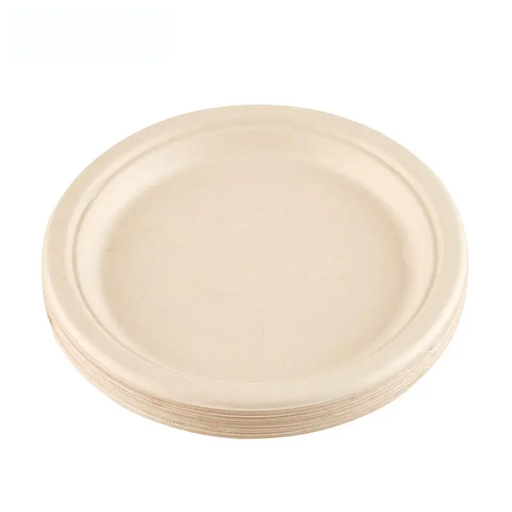
Why this product suits you: This model has a clearly stated size of 22.5 cm and is described as water- and oil-resistant, as well as suitable for microwave use.
The product description gives specific information about the material and how to use it, rather than relying on a vague “eco” claim.
Food-grade sugarcane pulp; described in the product information as biodegradable, microwave-safe, and water- and oil-resistant.
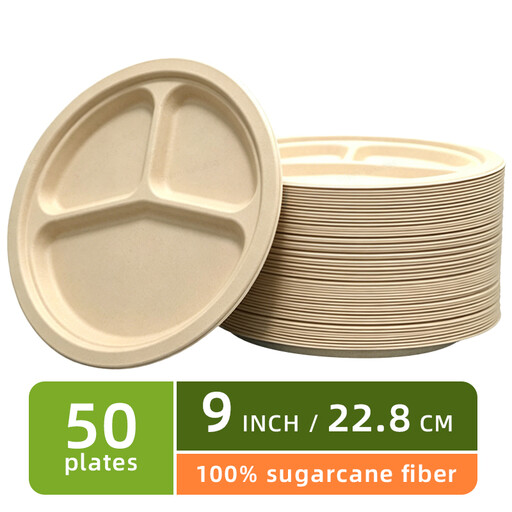
Why this product suits you: The size and three compartments make these plates a good fit for catering, buffets, barbecues and meals with several components.
The details on size (23 cm), quantity (50) and three compartments make it easier to plan for larger groups and different uses.
50 bagasse plates with three compartments; the product name describes them as suitable for oily foods, catering and food service.
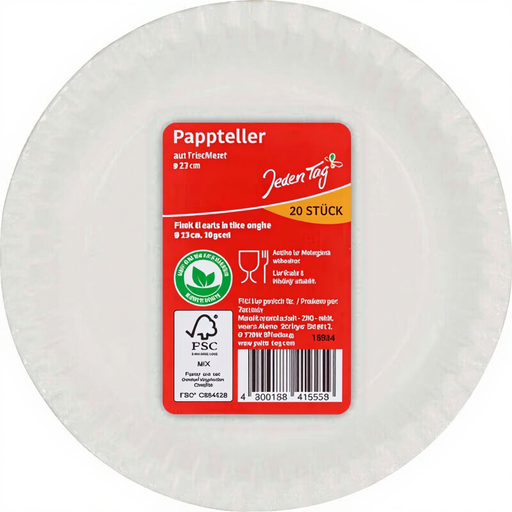
Why this product suits you: With a 23 cm diameter, this plate is a good size for main meals at parties, picnics and barbecues when you want a classic paper plate shape.
The clear advice that the product isn’t suitable for microwave use or boiling liquids helps prevent misuse.
20 white paper plates with a 23 cm diameter; described as grease-resistant and suitable for hot and cold food.
We’ve put together a complete, regularly updated list of products that meet these strict selection criteria and fully comply with the safety regulations in force in the EU.
A diameter of around 23 cm is usually a good choice for main meals. Smaller plates of around 15 cm are better suited to cake, fruit, snacks and desserts. For catering or generous barbecue meals, deeper plates or models with several compartments may be more practical.
It depends on the product. The 22.5 cm Ochama plates are described as suitable for microwave use. Other paper plates, including the 23 cm Jeden Tag model mentioned above, are described as unsuitable for microwave use. Always check that the product itself is explicitly approved.
First, check the packaging and your local guidelines. The term “compostable” doesn’t automatically mean a plate can go in your home compost or food-waste bin. Remove food scraps according to local rules, then dispose of the plate using the appropriate local waste stream.