
Lieferung heute & morgen

Qualitätsgarantie

Willkommens-Angebote freischalten: KOSTENLOSE Lieferung | Bis zu 80 % RABATT | Kostenlose 30-Tage-JoyPlus-Testphase
App herunterladen
Disposable tableware is designed to make birthdays, barbecues, picnics, catering and office events more convenient. However, shopping mistakes can often lead to unnecessary costs: plates become soft under warm food, cups lose their shape during prolonged use, or the pack size does not match the number of guests. Terms such as “biodegradable” and “compostable” are also not always used consistently.
As a Joybuy Product Recommendation Officer, I have therefore set out the key product details in clear, objective terms. This makes it easier to choose disposable tableware based on its intended use, rather than being guided solely by design, environmental claims or large pack sizes.
Paper, sugar cane fibre and bagasse are different materials with different properties. A plate made from sugar cane tableware may be described as biodegradable according to the product information. However, this does not automatically mean that it can be disposed of in every local food-waste bin or on every compost heap.
The important factors are the local disposal rules, any coatings and the information provided on the packaging or product page. For example, a paper cup with a PE coating cannot be treated in the same way as a fully fibre-based product.
Small paper plates are suitable for cake, snacks and desserts, but are often not large enough for a full barbecue serving. For main courses, disposable plates measuring around 23 cm in diameter are generally more practical than 15 cm plates. Soups, stews and side dishes, on the other hand, require bowls with sufficient capacity and a sturdy rim.
“Leak-proof” or “heat-resistant” does not necessarily describe every possible use. Hot liquids, greasy food, condensation and long periods of use can place different demands on paper products. You should therefore check:
Sugar cane tableware, also known as bagasse tableware, is made from compressed plant fibres. Depending on the product information, it may be water- and oil-resistant as well as biodegradable. You should only assume that a product is compostable if this is explicitly stated and is compatible with local disposal conditions.
Paper plates and paperboard plates are made from card or paper, sometimes with an inner coating. This can improve their stability when used with moist food, but it also affects disposal. For disposable cups, it is particularly important to check whether a PE coating is used. The supplier Maxcook explicitly lists “Paper Pulp + PE (Polyethylene) Coating” for its cups and advises against using them in a microwave.
Specific measurements are more useful when choosing products than general descriptions:
For 500 ml soup bowls, you should also check the rim height and the intended heat resistance. Do not fill the bowl right to the brim, as this reduces the risk of spills when carrying it.
Start by working out the number of guests and allow a reserve when calculating the number of plates and cups. Buffets and catering events often require additional bowls and plates because food may be served separately or used products may need to be replaced during the event. Small packs can be practical for private households, while larger quantities are often easier to plan for offices, events and catering businesses.
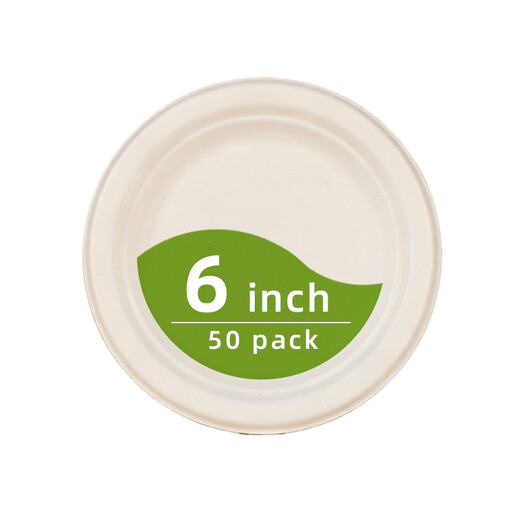
Why this product suits the profile: The pack of 50 plates, each measuring 15 cm in diameter, is suitable for desserts, snacks, cake and smaller portions at private parties or picnics.
The clear size specification prevents a small snack plate from being mistakenly planned for large main courses.
50 plates per pack and a compact format for desserts and snacks.
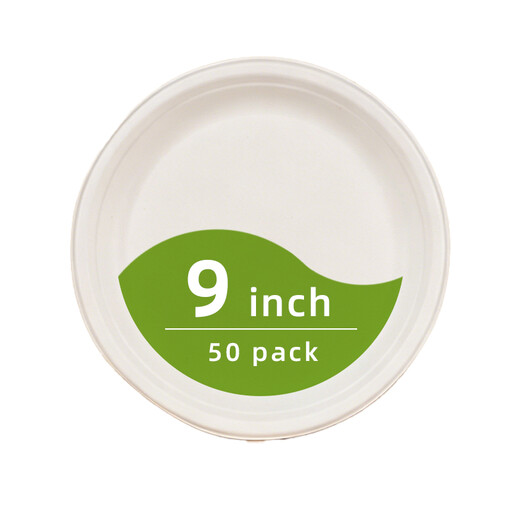
Why this product suits the profile: The 23 cm diameter is designed for main courses, barbecued food and mixed portions at birthday parties or barbecues.
The stated size and pack of 50 make it easier to calculate requirements and intended use before buying.
According to the product information, made from sugar cane fibre and suitable for hot and cold food.
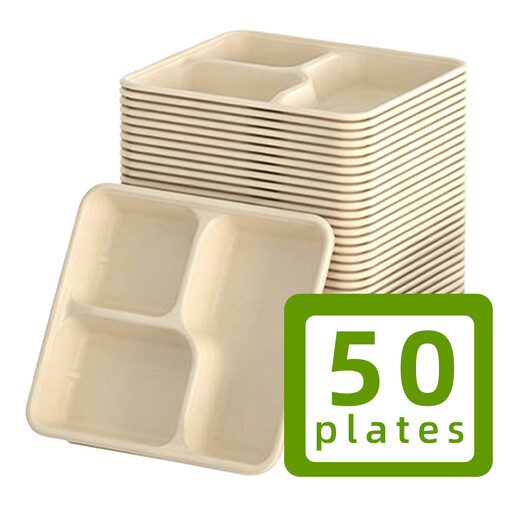
Why this product suits the profile: Three separate sections are useful for catering, buffets, takeaway meals and disposable plates for barbecues with several side dishes.
The compartments help prevent food from mixing and replace several small plates when serving portioned meals.
50 plates, measuring 21.6 × 23.7 cm, made from oil-resistant sugar cane fibre according to the product information.
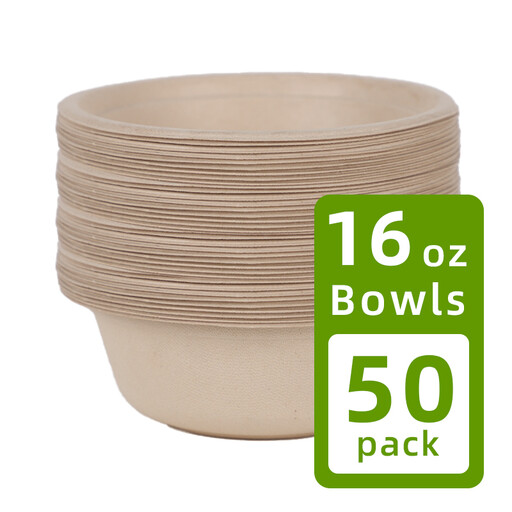
Why this product suits the profile: The 500 ml bowls are designed for soups, stews and liquid food at outdoor dining events, barbecues and larger gatherings.
The stated capacity helps with portion planning and is more suitable for liquid food than a flat paper plate.
50 bowls, a 500 ml capacity and, according to the product information, made from biodegradable sugar cane.
For coffee, tea, water and cold drinks, disposable cups with a capacity of 200 to 220 ml are suitable for individual portions. According to the product description, the Jeden Tag Paper Cup White 0.2L holds 200 ml and is suitable for hot and cold drinks. The Maxcook cup holds approximately 220 ml according to the product information, but has a PE coating and is not suitable for microwave use.
For longer periods of use, watch out for condensation, particularly with cold drinks. Cups should also not be overfilled, reused or placed near naked flames. A pack of 100 can be practical for offices and catering, while a pack of 50 may be enough for smaller celebrations.
We have put together a complete, regularly updated list of products that fully meet these strict selection criteria and the safety regulations applicable in the EU.
Depending on the product, paper, card or sugar cane fibre tableware may be suitable for warm food. Always check the manufacturer’s specific guidance on heat resistance. For soups and stews, 500 ml bowls are more suitable than shallow plates. Microwave use is only permitted if this is expressly stated.
Unused disposable tableware should be stored in a dry, clean place away from direct sunlight. Moisture can weaken paper and card before use. Once filled, the length of time it can be used depends on the food, temperature, coating and product construction. Disposable tableware is generally intended for single use.
Not necessarily. Material, manufacturing, transport, service life and correct disposal all contribute to its environmental impact. The term “compostable” should be checked against the relevant certification and local disposal facilities. Biodegradable plates should therefore not be placed in a home compost heap or food-waste bin without checking first.