
Lieferung heute & morgen

Qualitätsgarantie

Willkommens-Angebote freischalten: KOSTENLOSE Lieferung | Bis zu 80 % RABATT | Kostenlose 30-Tage-JoyPlus-Testphase
App herunterladen
Choosing the right disposable tableware can be crucial, whether for a private party, daily food service operations, or a large catering event. The market offers a wealth of options, but not all products live up to their promises. Misleading material claims or impractical designs often lead to unnecessary costs and dissatisfied guests. This guide will help you understand the essential criteria and make an informed decision.
Before choosing a product, it's helpful to be aware of the most common problems that can arise when using disposable tableware.
To avoid making a poor purchase, you should focus on objective and measurable characteristics. The following two parameters are crucial for most applications.
The material determines the tableware's stability, heat resistance, and potential applications.
The container's design must match its intended use.
Based on the criteria mentioned, we have identified several products suitable for specific user profiles.
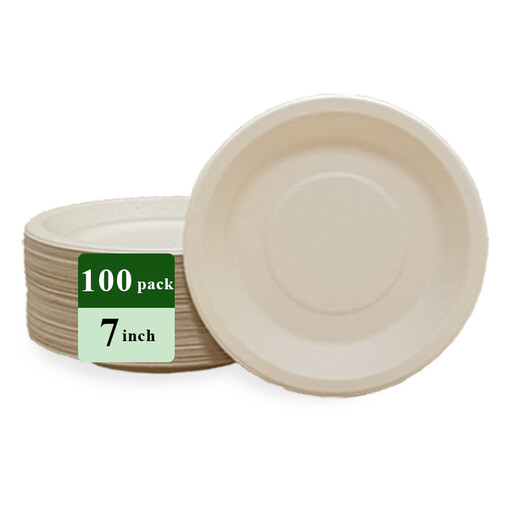
Why it's a good fit: Perfect for private celebrations like barbecues or birthdays. The bulk pack of 100 offers excellent value for a larger number of guests, and the 7-inch (approx. 18 cm) size is suitable for cake or barbecue side dishes.
The bamboo fibre material offers greater stability than conventional thin paper plates. This prevents them from getting soggy when in contact with salads or sauces.
The sturdy construction makes the plate versatile for a wide range of foods. The pack size is tailored to the needs of private events.
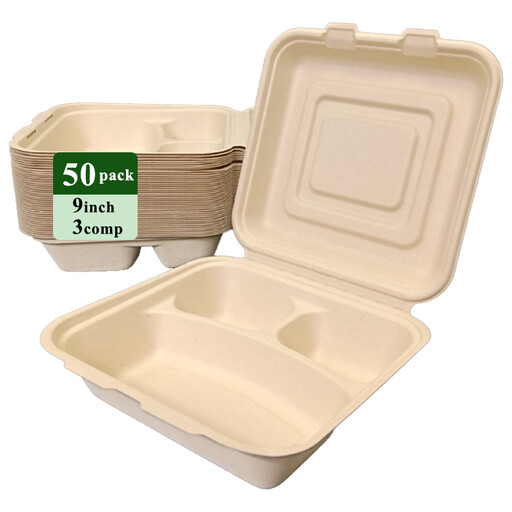
Why it's a good fit: This menu box is designed for food service businesses that offer complete meals to go. The three compartments allow for a clean separation of the main course, side dish, and salad or sauce.
The fixed compartment layout prevents the unwanted mixing of food during transport, a common problem with poorly designed take-out packaging.
The clamshell design is practical to handle and eliminates the need for a separate lid. The 50-pack is designed for commercial use.
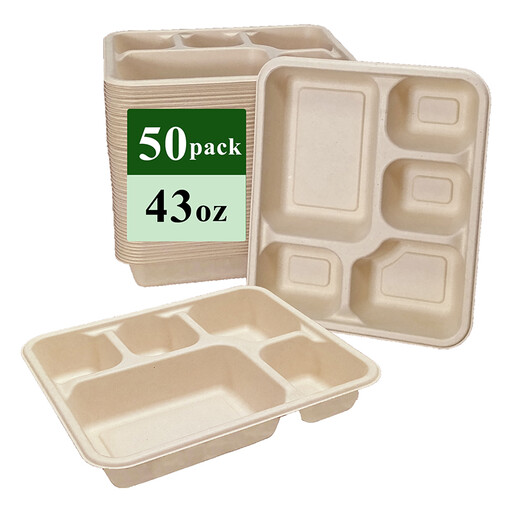
Why it's a good fit: This five-compartment tray is designed for buffets and events where a variety of food components are offered. It allows guests to carry different dishes, neatly separated, on a single tray.
The clear separation provided by five compartments solves the problem of impractical layouts and allows for serving meals with many different components without them mixing.
The large 43oz (approx. 1270 ml) capacity and sturdy bamboo fibre construction are suitable for full meals. The 50-pack is designed for professional use in the event sector.
We have compiled a complete, up-to-date list of products that meet these strict selection criteria and comply with current regulations.
Many products made from bamboo fibres or sugarcane are suitable for brief reheating in the microwave. However, it is important to always check the manufacturer's instructions on the packaging. Avoid overheating and do not use the products in a conventional oven unless explicitly permitted.
The term biodegradable means that a material will break down over time through microorganisms, but the time frame is not precisely defined. Compostable (often certified according to standards like EN 13432) means that the material will decompose to a specific degree within a set period (e.g., 90 days) under the conditions of an industrial composting facility. Special labelling is required for home composting.
Aluminium trays with lids should be stored in a dry, clean place. Avoid crushing the trays, as dents and deformations can compromise the lid's seal. Careful stacking helps to maintain their shape and ensure functionality.