
Lieferung heute & morgen

Qualitätsgarantie

Willkommens-Angebote freischalten: KOSTENLOSE Lieferung | Bis zu 80 % RABATT | Kostenlose 30-Tage-JoyPlus-Testphase
App herunterladen
Disposable tableware is designed to make celebrations, picnics and everyday work life easier. In practice, however, unclear size specifications, unsuitable materials and packs that are too small can quickly lead to unnecessary expense. If you want to buy disposable plates, bowls, paper cups or lunch boxes with lids, you should therefore look beyond the price per item.
Terms such as biodegradable tableware, sugarcane tableware or bamboo-fibre tableware do not, on their own, explain how a product should be disposed of. Disposal may vary depending on the material, coating and local waste regulations. For example, a plate made from sugarcane fibres is not automatically suitable for the food-waste bin. The manufacturer’s information and the requirements of your local waste disposal service are decisive.
Paper plates and disposable bowls can become soggy when used with sauces, soups or oily food if the material and coating are not designed for this purpose. For grilled dishes, dressed salads or hot meals, details such as water and oil resistance, capacity and leak protection are more important than particularly decorative looks.
A small pack may be sufficient for a household, but it can quickly run out at a party. Plates, bowls, cups, disposable straws and serving containers are also often calculated separately. For parties, offices and catering, simple quantity planning is worthwhile:
The right size depends on the dish. Disposable plates with a diameter of around 23 cm are suitable for main courses, side dishes and BBQ food. For soup, stew or dessert, 500-ml disposable bowls are more practical. Lunch boxes with lids should be selected according to their volume and internal layout. A 750-ml container offers more room for rice dishes, pasta or salads than a shallow snack box.
Paperboard, paper, sugarcane fibre and bamboo fibre differ in terms of shape retention and suitability for different uses. Look for specific manufacturer information on:
Microwave suitability should not be assumed across the board. It is expressly stated for the sugarcane plates described here. According to the product description, however, the white Jeden Tag paper plates are not suitable for microwave use or boiling liquids.
For individual households, 20 paper plates or 20 cups may be enough. Event organisers, catering businesses and food service companies often need packs of 50 or 100. When choosing camping tableware, you should also consider how compactly the items can be stored and whether they are suitable for transport and outdoor use.
The following recommendations categorise specific products according to requirements and intended use. They do not replace checking the latest product information for each item.
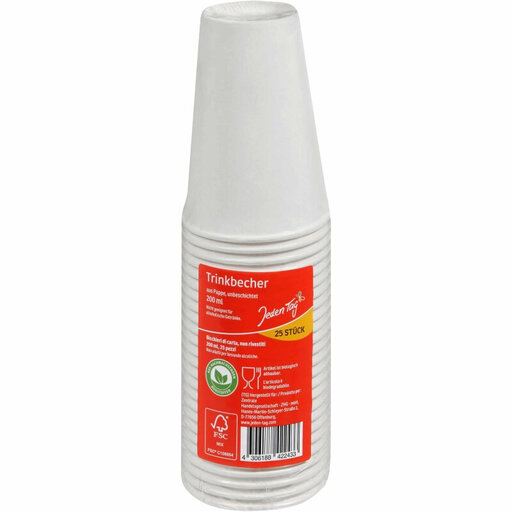
Why this product suits this profile: The 200-ml paper cups are designed for smaller households, offices and celebrations, as well as for serving hot or cold drinks.
The capacity is clearly stated. The product information also specifies single use, dry storage and limitations when used with hot liquids.
200 ml capacity, described as suitable for hot and cold drinks, white in colour and suitable for events.
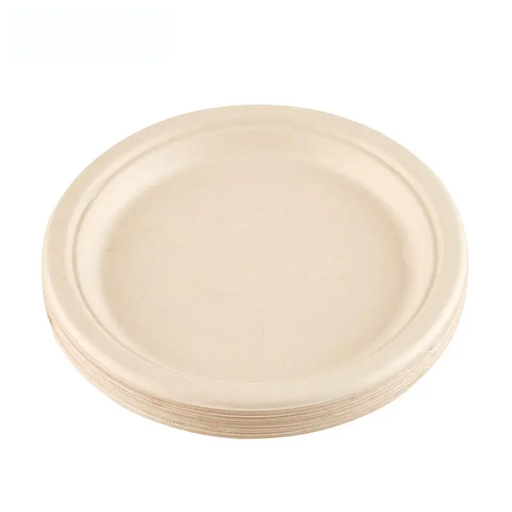
Why this product suits this profile: Made from food-grade sugarcane pulp, these plates combine a defined size with stated resistance to grease and water.
The description explicitly states the material, diameter and intended properties. This makes it easier to compare the item with conventional paper plates.
22.5 cm diameter, water- and oil-resistant according to the product description, with microwave use specified.
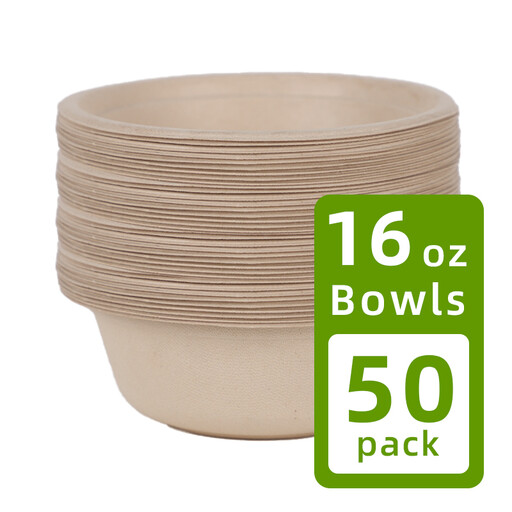
Why this product suits this profile: These 500-ml disposable bowls are intended for soups, stews, outdoor dining, BBQs and larger gatherings.
The capacity and pack contents of 50 pieces are stated. The description also lists leak protection and thermal insulation as product features.
500 ml capacity, pack of 50, described as biodegradable sugarcane bowls and intended for outdoor use.
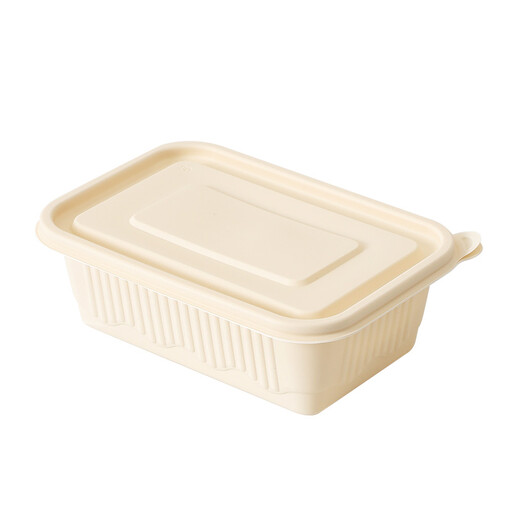
Why this product suits this profile: The stackable containers are suitable for office lunches, delivery services, picnics and pre-portioned meals.
The lid is included and the volume is clearly stated as 750 ml. This makes portion planning and transport planning easier.
We have put together a complete, regularly updated list of products that fully meet these strict selection criteria and the safety regulations applicable in the EU.
For a private celebration, paper plates, paper cups and disposable straws are often sufficient. At a BBQ, sturdy plates and 500-ml bowls for side dishes or sauces are a sensible choice. For a buffet, you should also plan for serving bowls and matching disposable dishes. Catering supplies, on the other hand, usually also include lunch boxes, lids, transport solutions and larger packs.
When choosing disposable straws, pay attention to the applicable requirements and the specific product description. Small parts should generally only be used by children under supervision and stored safely. Products used with naked flames or very hot liquids should only be used within the stated conditions.
For a simple meal, one plate, one cup and one cutlery set per person may be enough. For buffets, second helpings or multiple courses, you should plan additional spares. The quantity of bowls, straws and lunch boxes depends on the menu and the transport concept.
No. These terms do not mean that an item can be disposed of in the food-waste bin or home compost. Check the material, coating, manufacturer’s instructions and local disposal regulations. Sugarcane tableware may be described as biodegradable, but it still requires the appropriate disposal method.
Only if the specific item is expressly suitable for microwave use. Microwave use is specified for the sugarcane plates described here. According to the product description, the Jeden Tag paper plates mentioned are not microwave-safe. Temperature recommendations and warnings should be checked before use.