
Lieferung heute & morgen

Qualitätsgarantie

Willkommens-Angebote freischalten: KOSTENLOSE Lieferung | Bis zu 80 % RABATT | Kostenlose 30-Tage-JoyPlus-Testphase
App herunterladen
A communal meal with family or friends, where everyone cooks their own ingredients in a steaming broth—this is the appeal of the hot pot. A divided hot pot takes this experience to the next level by allowing you to serve two different broths at the same time. For instance, you can offer a spicy and a mild version simultaneously, catering to everyone's palate.
However, pitfalls await during the selection process. An unsuitable model can quickly spoil the fun. As your Joybuy Product Recommendation Officer, I'm here to help you identify the crucial features and avoid making a purchase you'll regret.
Many buyers focus on design while overlooking technical flaws that can severely limit the pot's usefulness. Pay close attention to these three points to avoid disappointment:
To ensure your hot pot performs its function reliably, you should check three technical aspects before buying. These factors determine the durability, safety, and versatility of your cookware.
The material significantly influences heat conduction and retention. The most common options are:
The right size depends on the number of people you typically host. A divided pot should offer enough space for the broth and all the guests' ingredients.
The quality of the divider is crucial. A solid, continuous weld seam with no visible gaps or crevices is a must. The S-shaped divider, modeled after the Yin-Yang symbol, should be firmly connected to the pot's base and side walls to prevent any leakage.
Here are some models tailored to different needs and use cases.
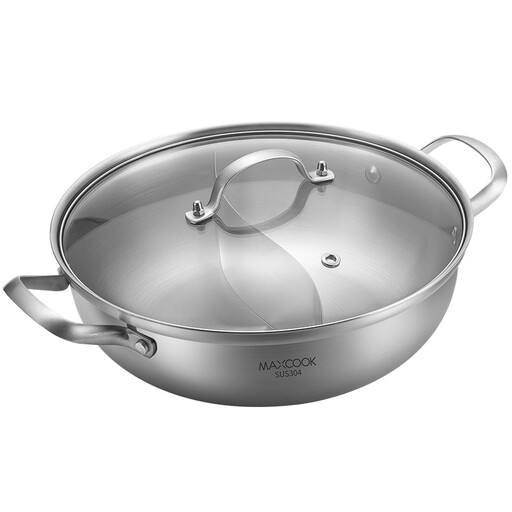
Why This Fits Their Persona: With a 32 cm diameter and a 4.6-liter capacity, this pot is ideal for large gatherings. It offers plenty of space to serve family and friends with different tastes for a communal hot pot meal.
The multi-ply base is suitable for all stovetops, including induction. The solid construction of the 304 stainless steel divider prevents the broths from mixing.
Large Volume: 4.6-liter capacity for 6-8 people.
Material: Durable and food-grade 304 stainless steel.
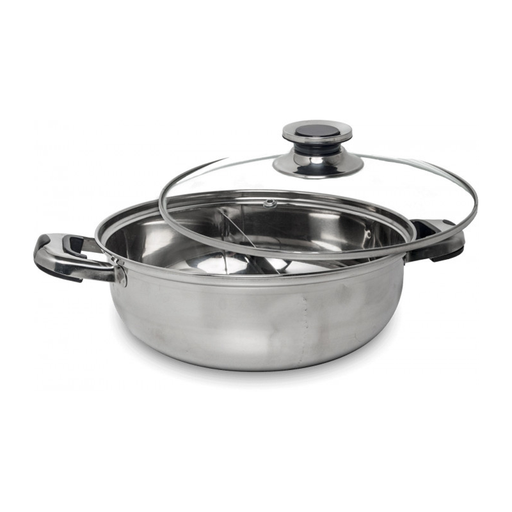
Why This Fits Their Persona: This model is a practical choice for couples or small families who want to try the divided hot pot concept. With a 28 cm diameter, it's compact yet large enough for 2-4 people.
The two compartments are clearly separated, allowing you to serve different broths or sauces. Its lightweight design makes it easy to handle at the table.
Compact Size: Ideal for beginners and smaller households.
Lightweight: At just 1.29 kg, it's easy to transport and clean.
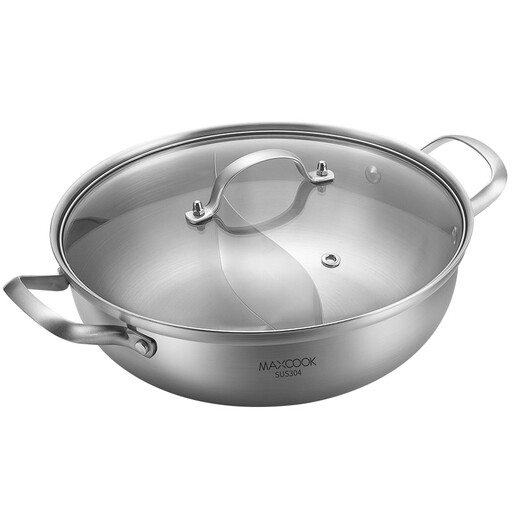
Why This Fits Their Persona: The 30 cm pot is the perfect all-rounder for regular hot pot nights. It's large enough for most families and groups of friends (4-6 people) and delivers reliable performance thanks to its high-quality materials.
The 3-ply stainless steel construction ensures excellent, even heat distribution and prevents scorching. It is explicitly designed for all stovetops, including induction.
Balanced Size: 30 cm diameter for 4-6 people.
Even Heat: The 3-layer construction ensures optimal cooking results.
We've compiled a complete, up-to-date list of products that fully meet these strict selection criteria and all relevant safety standards.
Yes, as long as the pot has a ferromagnetic base. Most modern 2-compartment fondue pots made of stainless steel or cast iron are induction-compatible. Look for the induction symbol (a stylized coil) on the packaging or in the product description. When in doubt, you can test it with a magnet: if it sticks to the base of the pot, it's suitable for induction.
Due to the divider, cleaning by hand is often the gentlest method. Use warm water, mild dish soap, and a soft sponge. Avoid steel wool or abrasive scouring pads, as they can damage the surface, especially the weld seam. Dry the pot thoroughly after cleaning to prevent water spots.
For a divided hot pot, stainless steel (especially 304 stainless steel) with a thick sandwich base is an excellent choice. It's durable, easy to maintain, conducts heat well, and is relatively lightweight. Enameled cast iron is an alternative for enthusiasts who value excellent heat retention and don't mind the extra weight.