
Lieferung heute & morgen

Qualitätsgarantie

Willkommens-Angebote freischalten: KOSTENLOSE Lieferung | Bis zu 80 % RABATT | Kostenlose 30-Tage-JoyPlus-Testphase
App herunterladen
A craft kit often looks more substantial on the packaging than it actually is. Many parents, grandparents and relatives first look at colourful designs or a high piece count. However, what really matters is the age recommendation, materials, instructions and the actual difficulty level. If you overlook these points, you can quickly buy a set that is too challenging, ends up unused after a short time, or doesn't suit your family situation because of small parts.
A craft toy for ages 6 and up may contain small beads, needles or tools that younger children shouldn't use independently. Conversely, a very simple set may not offer enough challenge for older children. The age recommendation should therefore be matched to the child's abilities: Can they follow step-by-step instructions? Do they work carefully with small parts? Do they need help with cutting, gluing or assembling?
Many components don't automatically mean several complete projects. Before buying, it's worth checking the specific list: Are basic materials, tools, templates and spare parts included? With a bead craft set, for example, it should be clear whether clasps, threads or a weaving loom are supplied.
With miniature models, glue, tweezers or small scissors are sometimes not included. For wood projects, you also need to plan for a suitable work surface and adult supervision. A set is therefore only truly suitable when project scope, accessories and supervision requirements all match.
For children under three, sets with beads, magnets or swallowable small parts are unsuitable. Even with older children, you should read the safety information. Particularly strong magnets can cause serious injury if swallowed. For products with knives, sharp edges, needles or glue, age-appropriate supervision is necessary.
With a creative set for children aged 4 and up, large, easy-to-grip materials and short steps often make sense. From age 6, jewellery making, personalised pens or simple weaving techniques become suitable. More challenging craft ideas for children aged 8 and up, such as wood carving, require more concentration and a controlled working environment.
Look for clear information about materials such as wood, plastic, paper or metal. Smooth edges, securely fixed parts and enclosed magnet elements are practical things to check. A CE mark in the European toy sector is an important indication of the manufacturer's declared conformity, but it doesn't replace checking the specific warnings.
For products aimed at teenagers and adults, you should also clarify whether the result is a toy, a decorative object or a model kit. A miniature house DIY set with delicate components isn't automatically suitable for children, even if it looks appealing as a gift.
Clear instructions reduce frustration and make it easier to get started. Also check the finished dimensions and the workspace needed. A weaving loom measuring 25.5 × 18.8 × 6.2 cm can be stored differently to an assembled miniature model of approximately 25 × 15 × 19.5 cm.
For travel or waiting times, compact sets without glue and drying phases are more practical. If you're looking for a DIY gift for children, also consider whether the finished item can be used straight away, given as a present or displayed decoratively.
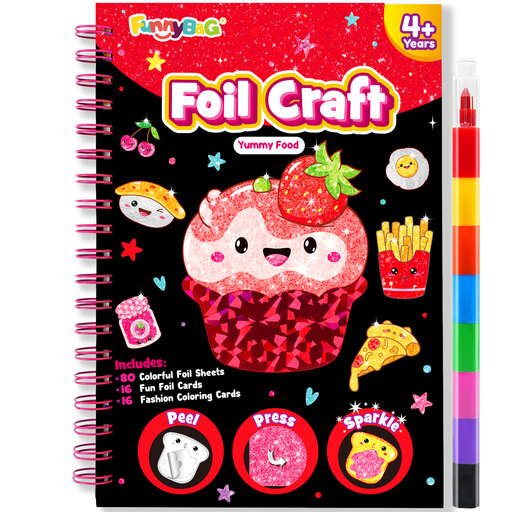
Why this product fits the profile: This set is designed for children aged 4 to 10 and uses pre-printed design cards, foils and a stylus. It requires neither glue nor scissors, making it ideal for a manageable introduction at home or on the go.
The individual steps are clearly defined. This keeps the scope clear, rather than relying on a high piece count to seem impressive.
112 pieces according to the product description, including 16 design boards, 80 foils, 16 colouring cards and a stylus with eight colours.
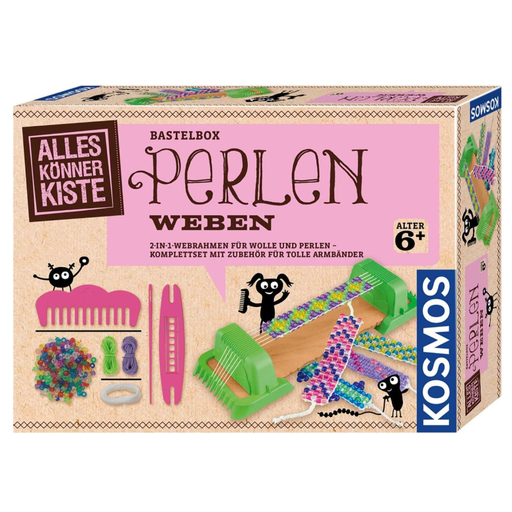
Why this product fits the profile: This set is aimed at children aged 6 and up and combines bead weaving with yarn weaving. Templates and step-by-step instructions make it easy to get started with jewellery making for children.
The frame, safety pins, accessories, yarn, plastic beads and instructions are all included according to the product description. This reduces the need for additional starter accessories.
2-in-1 weaving loom, pattern aids and recommended use for ages 6 to 10; no batteries required.
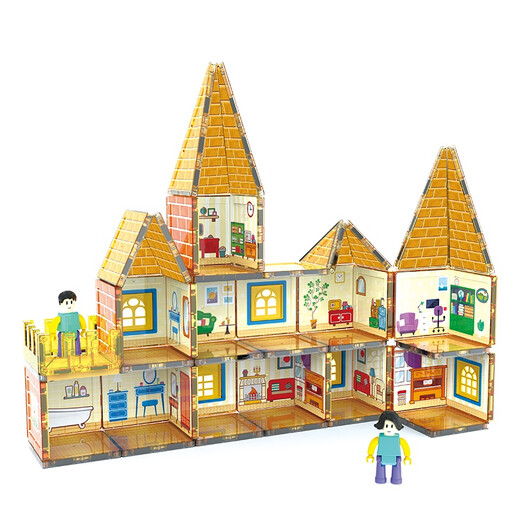
Why this product fits the profile: With 58 pieces and 7.5 cm elements, this set is suitable for open-ended building ideas, houses and scenes. It is recommended for children aged 3 and up, but due to the strong magnets included, it should only be used in accordance with the warnings and under appropriate supervision.
The piece size, quantity and magnet warning are clearly stated. Damaged elements should be regularly sorted out.
58 building pieces, themed roof and decoration elements, plus storage instructions; battery-free play.
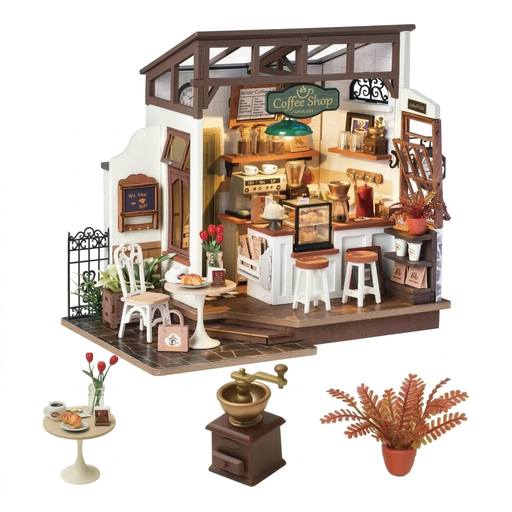
Why this product fits the profile: This miniature house DIY set is recommended for people aged 14 and up. The café scene at 1:24 scale, integrated lighting and numerous small components appeal to users looking for a longer-term model project.
The age recommendation, dimensions and the need for workspace and additional tools are clearly stated. This prevents a misjudgement of the effort involved.
Assembled size approximately 25 × 15 × 19.5 cm, natural wood materials according to the product description and battery-operated night lighting.
We've put together a complete, regularly updated list of products that fully meet these strict selection criteria and the safety regulations in force in the EU.
For a creative gift for girls and boys, it's not about gender but the preferred activity: building, designing, decorating, collecting or completing a model step by step. This makes it easier to tailor the choice to interests and concentration levels.
Sets with clear templates, manageable steps and complete basic accessories are suitable. A bead weaving set or a studio for personalised pens could work, provided the child handles small parts safely and an adult can help if needed.
Durability depends on the material, storage and use. Beads, cards and plastic parts should be stored dry and sorted. With magnetic building blocks, regular checks for cracks or exposed magnets are important. Finished miniature models should be protected from moisture, direct sunlight and dust.
Many sets don't require batteries. However, ongoing costs can arise from consumables such as yarn, beads, glue, paints or replacement parts. Before ordering, check whether the set is designed as a one-off project or whether you can create several of your own craft ideas with the accessories provided.