
Lieferung heute & morgen

Qualitätsgarantie

Willkommens-Angebote freischalten: KOSTENLOSE Lieferung | Bis zu 80 % RABATT | Kostenlose 30-Tage-JoyPlus-Testphase
App herunterladen
Whether you are assembling furniture, building shelving, carrying out repairs or renovating, power tools for DIY should work reliably, feel comfortable in your hand and suit the project at hand. However, there are clear differences between cordless drill drivers, drills supplied with bits and drill bits, and electric detail sanders. A high speed or a large number of accessories alone says little about whether a tool is suitable for its intended use.
The following criteria will help you avoid common buying mistakes and make an informed choice.
An 18V cordless drill driver often offers more torque reserves than a 12V model. However, that does not automatically make it the more suitable choice for every application. For furniture fittings, light screwdriving and overhead work, a compact 12V cordless drill driver may be easier to handle. For larger holes in wood or longer periods of use, an 18V tool can offer greater reserves.
That is why torque, speed, weight and battery capacity are also crucial.
A cordless drill driver set with lots of bits and drill bits may appear versatile at first glance. Even so, check whether the chuck, torque settings and supplied attachments are suitable for your project. Accessories may include wear parts or may be unsuitable for certain materials. For hard materials, check whether the relevant drill bit is suitable according to the manufacturer’s specifications.
An electric detail sander with a high oscillation rate may be suitable for fast surface preparation. In tight spaces, however, the shape of the sanding plate, the ability to change paper quickly and dust extraction are equally important. A sander with dust collection reduces airborne particles, but it does not replace suitable extraction equipment or safety goggles.
When driving screws, controlled torque is important to prevent unnecessary strain on screw heads, workpieces and threads. Multiple torque settings make it easier to adapt the tool to soft and hard materials. For drilling, the no-load speed is also relevant. A 2-speed gearbox, for example, allows you to switch between higher torque and faster drilling.
You should also check:
A single battery can reduce the initial cost of a system if it is compatible with other tools. According to the product description, the POWER FOR ALL battery system is designed to allow compatible 18V batteries to be used in numerous tools from different brands within the alliance. Before buying, you should still check the specific compatibility list, what is included and whether a charger is supplied.
For battery-powered tools, also consider:
With a 12V tool, a compact design may be more important than the longest possible runtime. For frequent renovation work, an additional battery can make your workflow easier.
A multi-sander for wood with a triangular sanding plate can reach corners and narrow edges more effectively than a round sander. For furniture edges, window areas or hard-to-reach places, a detail sander with sanding paper in different grits is practical. Coarse grits such as P80 remove more material, while finer grits such as P240 are suitable for finishing surfaces.
Check whether:
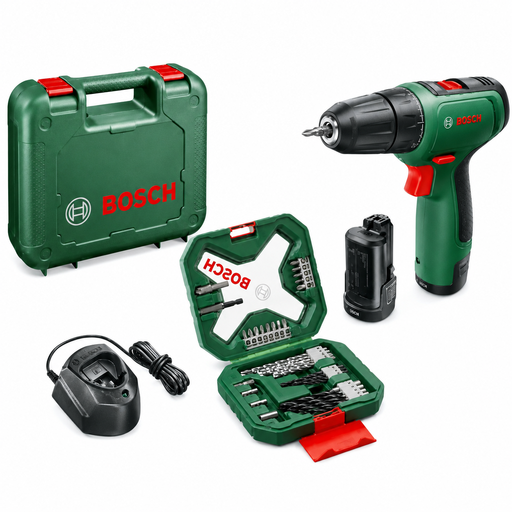
Why this product suits this profile: The compact 12V cordless drill driver with a 1.5-Ah lithium-ion battery is designed for light assembly, screwdriving and drilling tasks around the home. The 34-piece accessory set makes it easier to get started.
The variable torque setting and keyless chuck ensure that practicality is not judged solely by the number of accessories supplied.
12V design, 1.5-Ah battery, tool-free bit changes and accessories for a range of screwdriving and drilling tasks.
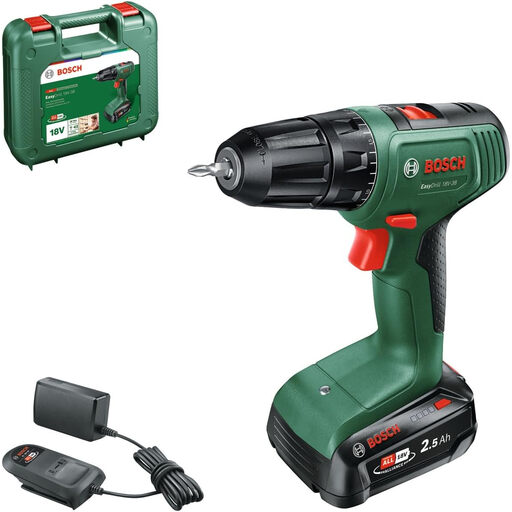
Why this product suits this profile: The 18V model is designed for versatile DIY tasks and combines 38 Nm of maximum torque with two gears and 20 torque settings.
Clearly stated torque, speed and drilling diameter figures enable realistic project planning instead of relying on battery voltage alone.
20 torque settings, 10-mm keyless chuck, LED work light and compatibility with the 18V POWER FOR ALL battery system according to the product specifications.
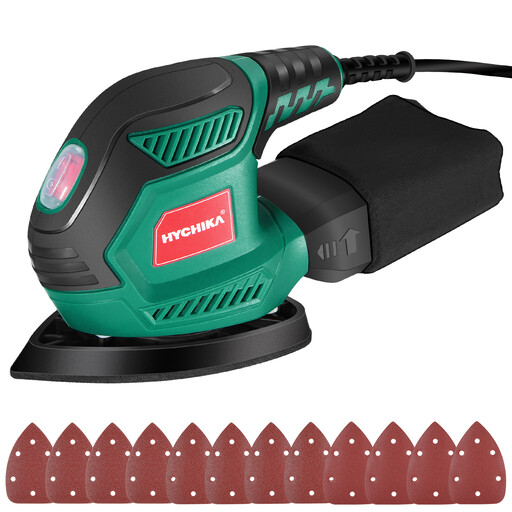
Why this product suits this profile: The corded detail sander is designed for wood, tight spaces and smaller jobs on metal or plastic. The stated speed is 14,000 U/min.
The integrated dust container with a six-hole system addresses dust extraction, which is often overlooked. The sanding paper can be changed using hook-and-loop fastening.
200-W motor, dust collection, ergonomic soft grip and 12 sanding sheets in P80, P120 and P240 grits.
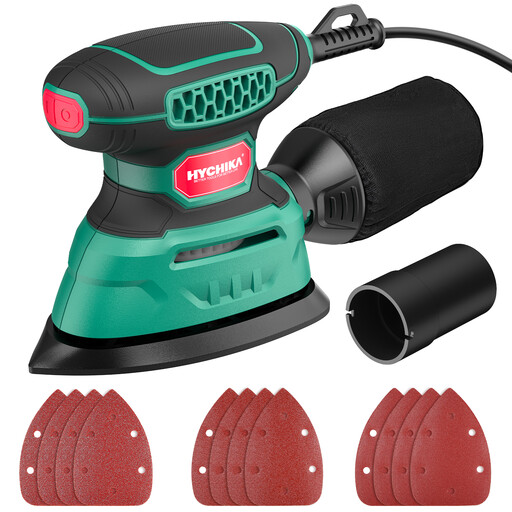
Why this product suits this profile: The compact design with 13,000 OPM is suitable for detail work, removing paint residue and rust from wood, metal and plastic, provided the material in question is suitable for this purpose.
The dust bag and vacuum cleaner adapter provide two specified options for collecting dust. This reduces reliance on a single collection system.
140-W motor, three sanding paper grits, hook-and-loop fastening, plus a dust bag and vacuum cleaner connection according to the product description.
We have put together a complete, regularly updated list of products that fully meet these strict selection criteria and the safety regulations applicable in the EU.
Before starting work, prepare the workpiece and work area safely. Wear safety goggles and, if noise levels are higher, suitable hearing protection as well. When sanding, it is advisable to wear a dust mask suitable for the material. Workpieces should be firmly secured, and drill bits and screwdriver bits must be fully seated in the chuck.
With cordless drill drivers, remove the battery before carrying out maintenance, cleaning or changing bits. Ventilation slots can be cleared of dust using a dry brush. Store lithium-ion batteries in a dry, frost-free place and follow the manufacturer’s instructions. Damaged batteries must not be used again and must be disposed of through a suitable collection point.
For light assembly work, furniture and smaller holes, a compact 12V cordless drill driver may be sufficient. If you regularly need to drill larger holes in wood, drive screws for longer periods or carry out a range of renovation tasks, the technical specifications of an 18V model offer additional reserves. Torque, weight, accessories and what is included remain key considerations.
Its service life depends on how frequently it is used, the level of strain, storage conditions and care. Overloading, moisture or storage at unsuitable temperatures can affect battery performance. When planning costs, check whether replacement batteries and chargers are available for the system in question.
In addition to electricity consumption, the main costs are sanding paper and, where applicable, replacement dust bags. Actual ongoing costs depend on motor power, operating time, material removal and grit. Hook-and-loop sanding paper that can be changed easily, along with several supplied grits, can simplify the first jobs, but regular replacement purchases will still be needed with frequent use.