
Lieferung heute & morgen

Qualitätsgarantie

Willkommens-Angebote freischalten: KOSTENLOSE Lieferung | Bis zu 80 % RABATT | Kostenlose 30-Tage-JoyPlus-Testphase
App herunterladen
As a Joybuy Product Recommendation Officer, I analyse product information daily to provide you with an informed basis for your decisions. When selecting workshop and DIY supplies, it's crucial to look beyond marketing promises and focus on the facts. The wrong tool or an unsuitable spare part not only costs money but also valuable time and frustration. This guide will show you what to look for to avoid common pitfalls and find the right equipment for your project.
Many products look convincing at first glance but only reveal their weaknesses during practical use. Three problems are particularly common:
To avoid these problems, you should check three core parameters before buying. These will help you separate the wheat from the chaff and make a reliable long-term choice.
The material is the foundation for longevity and function. Look for specific details that go beyond general terms like "robust" or "durable."
Good tools for DIYers and professionals are distinguished by thoughtful features that solve a specific problem.
Don't rely on blanket compatibility promises. Check the standards and dimensions.
Based on these objective criteria, we have identified products that are particularly well-suited for specific user groups and their requirements.
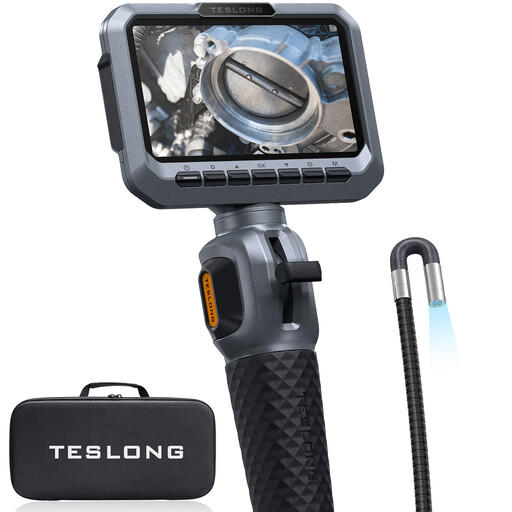
Why it's a good fit: For automotive mechanics, installers, or technicians who need to perform precise visual diagnostics in inaccessible areas like engine cylinders, turbines, or pipelines. The device is designed for continuous professional use.
Avoids the trap of poor precision. The 210° articulating probe tip and high-resolution 5-inch IPS display deliver clear, detailed images where basic cameras offer only blurry, unusable views.
The combination of a 5.5 mm thin probe and a thumb-controlled, articulating head enables inspections in extremely tight and winding areas.
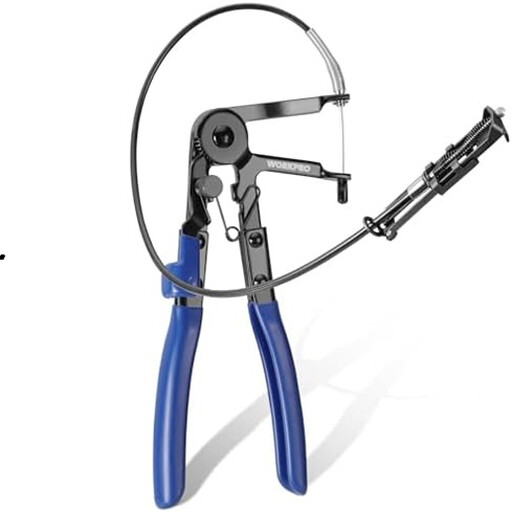
Why it's a good fit: Ideal for DIY enthusiasts who perform maintenance on their own vehicles. Specifically designed for removing and installing spring band clamps on coolant or fuel hoses in tight engine bays.
Solves the problem of poor accessibility. Where standard pliers fail, the 67 cm long, flexible Bowden cable allows you to reach clamps located deep in the engine bay. The locking function holds the clamp open.
The ratcheting lock allows for one-handed operation. The clamp can be opened and held in position, leaving both hands free to move the hose.
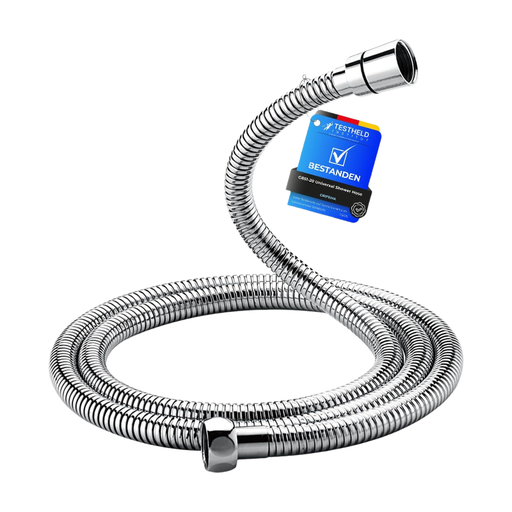
Why it's a good fit: For home and flat owners who want a durable, kink-proof, and visually appealing solution for their bathroom and don't want to buy a new hose every few years.
Bypasses the pitfall of inferior materials. The stainless steel construction is inherently kink-proof and corrosion-resistant. The brass connectors ensure a tight and stable connection where plastic often fails.
The freely rotating swivel nut serves as an effective anti-twist feature, preventing the hose from getting tangled during a shower. The 2-metre length also offers greater freedom of movement.
We have compiled a comprehensive, up-to-date list of products that meet these strict selection criteria and relevant standards.
Look for three features: the hose material (flexible stainless steel or multi-layered PVC are often more durable than simple plastic), the connector material (solid brass is the most reliable choice), and an integrated anti-twist feature. This prevents the hose from tangling and kinking prematurely.
For spring band clamps that are easily accessible, simple water pump pliers or hose clamp pliers may suffice. However, in most modern vehicles, these clamps are located in hard-to-reach places in the engine bay. This is where an automotive speciality tool like Bowden cable hose clamp pliers is required. Their long, flexible cable allows you to position the pliers on the clamp and operate them from a distance.
For ambitious DIYers, an inspection camera can be a very worthwhile investment. Besides engine diagnostics, it is excellent for examining clogged pipes, inspecting wall cavities (e.g., looking for wiring or moisture), or checking ventilation shafts. It often saves you the complex task of opening up walls or dismantling components.