
Lieferung heute & morgen

Qualitätsgarantie

Willkommens-Angebote freischalten: KOSTENLOSE Lieferung | Bis zu 80 % RABATT | Kostenlose 30-Tage-JoyPlus-Testphase
App herunterladen
A DIY tool kit should cover as many tasks as possible, from assembling furniture and putting up shelves to tightening screws and carrying out minor repairs. In practice, though, some common buying mistakes can lead to unnecessary spending. A high piece count alone tells you little about whether a set is right for the job.
A set with 100 or more pieces may look comprehensive. What matters, though, is which screwdriver types, bits, screw sizes and wall plug sizes it actually contains. If it’s missing common options such as PH2 and Torx, or wall plugs suited to different wall materials, you’ll need to buy them separately.
When choosing a cordless drill driver set, voltage and accessories are important, but they’re not the only things to consider. Check the torque, speed settings, torque settings, chuck size and battery capacity too. A lower-torque tool may be enough for assembling furniture, while more demanding drilling jobs call for different specifications.
Loose bits, pliers and screws make jobs harder and increase the risk of losing accessories. A tool case with dedicated slots or a box with separate compartments makes it easier to check what’s included. If you’re considering a wheeled case, also think about its weight, dimensions and how far you’ll need to transport it.
A basic kit for general repairs usually includes screwdrivers, bits, pliers, a hammer, a tape measure and a utility knife. For putting up fixtures on walls, a screw and wall plug set is useful. Check the following:
For example, a 101-piece set might contain 40 countersunk screws, 40 round-head screws and 20 plastic wall plugs in two sizes. The exact mix is more important than the overall piece count.
A tool case with a cordless drill driver is a good option if you want to keep your hand tools and power tool together. The following specifications are worth checking:
According to the product specifications, the Bosch EasyDrill 18V-38 has a maximum torque of 38 Nm, two speed settings, 20 torque settings and a 10 mm keyless chuck. The manufacturer lists maximum drilling diameters of 30 mm in wood and 10 mm in steel. These figures are useful for comparison, but the workpiece and drill bit you use still matter.
Claims such as steel bits, carbon steel or stainless steel are material specifications you can check. But they don’t guarantee a good fit. A bit needs to match the screw head precisely to prevent it slipping or damaging the head.
When drilling into walls, take account of any cables and pipes that may be hidden behind them. It may be worth using a cable and pipe detector before you start. Also wear safety glasses, secure your workpieces and keep small parts away from children. Use power tools only in accordance with the instructions. Work on live electrical installations should be left to qualified professionals.
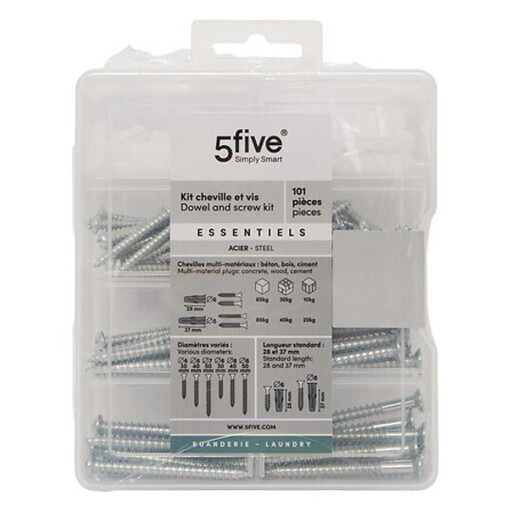
Why it suits this user: This set focuses on the fixings you’re most likely to need for small jobs involving walls, wood and plastic. The box measures 11,5 × 3,1 × 14,7 cm and is easy to store away.
Separate compartments make it easier to check the 40 countersunk screws, 40 round-head screws and 20 plastic wall plugs included.
Compact storage and a clearly itemised contents list for simple fixing jobs.
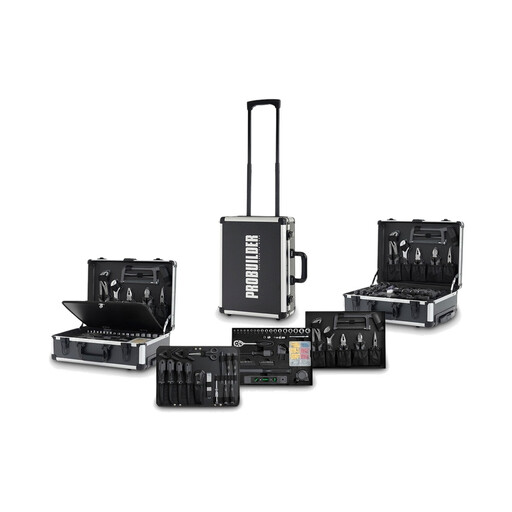
Why it suits this user: The set combines 83 hand tools with 135 pieces of screw and wall plug accessories. The aluminium case has wheels and a pull handle, and has a stated net weight of 7,8 kg.
The number of tools and accessories is listed separately, making it easier to compare the contents with your needs.
Hand tools, fixings and a wheeled case all in one set.

Why it suits this user: This cordless drill driver is designed for regular screwdriving and drilling in wood, metal and plastic. The 18 V system can be used with compatible tools from the POWER FOR ALL ALLIANCE.
The specifications list 38 Nm, 20 torque settings, two gears and a 10 mm chuck, so you can see how the tool is equipped.
LED work light, keyless chuck and compatible 18 V battery system.
We’ve put together a complete, regularly updated list of products that meet these strict selection criteria and fully comply with the safety regulations in force in the EU.
To get started, a screwdriver set, combination pliers, spirit level, tape measure, hammer and a selection of common screws and wall plugs are useful. You can add a cordless drill driver for assembling furniture and regular repairs. A precision screwdriver set is mainly intended for glasses, small appliances and electronics, and isn’t a substitute for standard tools.
Lifespan depends on the materials, how heavily the tools are used, how they’re stored and how well they’re maintained. Clean and dry tools after use, and store metal parts somewhere dry. For cordless tools, charging cycles, temperature and correct storage all affect battery life. Don’t continue using damaged bits, worn pliers or batteries that are behaving unusually.
A DIY tool kit can reduce the upfront cost if you’ll regularly use many of the items it contains. Buying tools individually makes sense if you already have the basics or need specialist sizes. So, don’t compare just the price per item: also consider the materials, storage, availability of replacement parts and what you’ll actually use the tools for.