
Lieferung heute & morgen

Qualitätsgarantie

Willkommens-Angebote freischalten: KOSTENLOSE Lieferung | Bis zu 80 % RABATT | Kostenlose 30-Tage-JoyPlus-Testphase
App herunterladen
Whether you are carrying out repairs, building furniture, maintaining the garden or renovating your home, the right DIY tools need to suit the material, the duration of the work and the accessories you already have. A low price alone says little about how practical a tool will be in everyday use. Clear technical specifications, safe handling and suitable equipment are what really matter.
When it comes to sanders, a high speed can initially sound impressive. However, achieving clean results also depends on motor power, the sanding surface, control and dust extraction. An orbital sander is suitable for even surfaces, while a detail sander with a triangular base plate is better for working in corners and along edges. A high no-load speed cannot replace the right sanding action or suitable sandpaper.
A wood saw, pruning saw or folding saw is not automatically suitable for metal or plastic. The tooth shape, tooth spacing and blade material determine how controlled the cut will be. Using an unsuitable handsaw can lead to splintering, jamming or unnecessary effort.
The reciprocating saw blades must also match the material when using a reciprocating saw. Blades for wood with nails differ from fine-toothed versions designed for metal.
A comprehensive DIY tool set can be practical if it combines drills, bits, pliers and measuring tools sensibly. Before buying, check whether batteries, a charger, spare parts and common sizes are included. A large case containing many rarely used parts can be less useful than a smaller, carefully selected set.
For handsaws, blade length, tooth configuration and material are the key specifications. A 50-cm wood saw with 7 teeth per inch is designed for medium-sized to larger woodworking jobs. For thin branches and mobile gardening tasks, compact folding saws are generally easier to handle. Bi-metal blades combine hardened teeth with a more flexible backing material. This can be advantageous when loads vary, but it does not replace using the tool correctly.
Also look out for:
For a cordless drill driver, voltage, torque, speed ranges, torque settings and chuck size are more meaningful than straightforward marketing claims. For typical household tasks, useful features include a 10-mm keyless chuck, several torque settings and a two-speed gearbox.
When choosing a sander, consider power, oscillation rate, sanding plate size and dust extraction together. Check whether replacement sanding sheets are readily available and whether a dust bag or vacuum cleaner adapter is included.
A combination square should have easy-to-read metric scales, a sturdy fence and reliable clamping. Models with a spirit level and marking awl can combine several work steps. Before use, it is advisable to carry out a simple check against a known 90-degree edge.
The manufacturer’s safety instructions apply to every tool. Safety goggles, suitable gloves and appropriate respiratory protection for dusty work are all part of using the right protective equipment for the situation. Power tools should not be operated in damp environments unless they are expressly designed for this purpose.
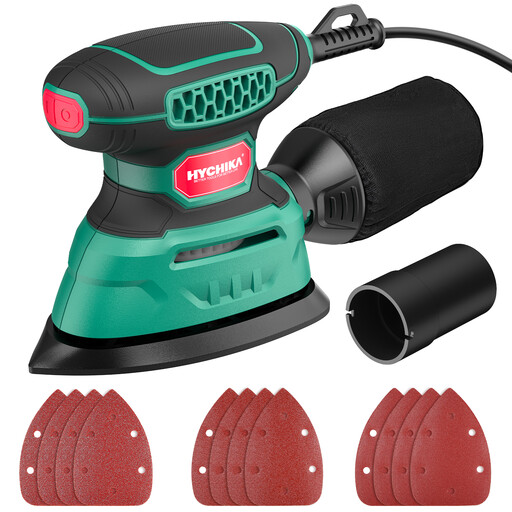
Why this product suits this profile: The compact detail sander is designed for smaller wood, metal and plastic surfaces, as well as corners and edges.
Three grades of sandpaper, hook-and-loop fastening and a dust bag are listed as included. This means you do not have to purchase essential starting components separately.
140-W motor, 13,000 OPM, compact design and a connection for a vacuum cleaner.

Why this product suits this profile: This cordless drill driver is aimed at users who need a versatile, adjustable tool for assembly, repairs and drilling tasks.
The specifications list a two-speed gearbox, 20 torque settings and a 10-mm keyless chuck. This makes it easier to adapt the tool to different tasks.
18 V, up to 38 Nm of torque, LED work light and compatibility with the POWER FOR ALL 18-V system.
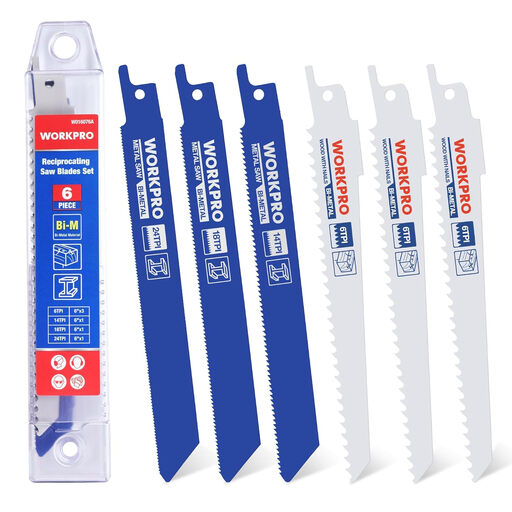
Why this product suits this profile: For renovators, gardeners and construction work involving different materials, this set offers several blade types for greater flexibility.
The blades are intended for metal, wood with nails, wood and plastic, depending on the application. A storage box helps keep them organised.
Six bi-metal saw blades, standard fitting and different tooth configurations for multiple materials.

Why this product suits this profile: This folding pruning saw is designed for cutting tasks in the garden, on the go and during smaller woodworking jobs.
The adjustable cutting angle and locking mechanism address two common weaknesses of portable saws: limited positioning and insecure storage.
Bi-metal blade, TPR handle, quick-release button, belt loop and a folded length of 230 mm.
We have put together a complete, regularly updated list of products that fully meet these strict selection criteria and the safety regulations applicable in the EU.
For repairs, a cordless drill driver, bits, drills, screwdrivers, pliers, a tape measure, spirit level and a combination square form a sensible basic kit. For woodworking and gardening tasks, add a handsaw, pruning saw, sander and suitable protective equipment as required.
Service life depends on the material, workload, cleaning and storage conditions. Saw blades should be kept dry and replaced if they show visible damage. With power tools, keeping ventilation slots clear, charging batteries correctly and storing tools in a dry, frost-free place can extend their service life. Consumables such as sandpaper and reciprocating saw blades should be replaced regularly.
A tool set can bring together several individual items when you are building a basic toolkit. Individual purchases make sense if you already have compatible batteries, chargers or specialist tools. So do not compare only the total price. Also consider the sizes included, spare-part availability, warranty information and how often you are actually likely to use each item.