
Lieferung heute & morgen

Qualitätsgarantie

Willkommens-Angebote freischalten: KOSTENLOSE Lieferung | Bis zu 80 % RABATT | Kostenlose 30-Tage-JoyPlus-Testphase
App herunterladen
Good audio isn't an option—it's a necessity. For vloggers, journalists, and content creators, poor audio quality can ruin a promising video. However, the wireless microphone market is flooded with tempting offers that often fail to deliver on their promises. Before you invest in a new wireless microphone for vlogging, it's crucial to understand the common pitfalls that lead to frustration and wasted money.
As your Joybuy Product Recommendation Officer, I've summarized the key points to help you distinguish marketing hype from genuine performance.
The 3 Most Common Mistakes When Buying a Wireless Microphone:
microphone for interviews or once-in-a-lifetime moments, this is a huge risk.microphone for iPhone and Android often requires cumbersome third-party adapters that degrade signal quality or lead to loose connections. Seamless integration without additional software or complicated setup is rarely a given.To avoid these problems, you should focus on technical features that guarantee reliability and quality. Here are the three most important parameters to check before you buy.
This is your most important safeguard against audio loss. A wireless clip-on microphone with an internal recording function saves the audio directly on the transmitter, independent of the wireless connection to the camera. Even in the event of a complete transmission failure, you have a perfect backup audio track.
32-bit float recording, as offered by the DJI Mic 2, goes a step further. This technology captures such a vast dynamic range that the recording is virtually impossible to overmodulate (clip). Sudden loud noises or a loud speaker won't ruin the recording, as the volume can be adjusted in post-production without any loss of quality.
Almost every modern microphone advertises noise cancellation. The difference, however, lies in the implementation. Simple systems often only filter out constant, low-frequency sounds like the hum of an air conditioner.
An intelligent lavalier microphone with noise cancellation analyzes the environment in real-time and suppresses unpredictable interference like wind, traffic, or background conversations, without making the speaker's voice sound unnatural. This is crucial for recordings outside of a controlled studio environment.
A high-quality wireless microphone for camera and smartphone should be a plug-and-play solution. Look for kits that include dedicated adapters for USB-C and Lightning right out of the box. These digital connections are superior to analog 3.5mm jack plugs as they ensure lossless signal transmission and eliminate the need for additional, failure-prone adapter cables. The receiver should connect directly to your smartphone or camera.
Based on these objective criteria, we have identified a few models that represent a sensible choice for different user profiles and budgets.
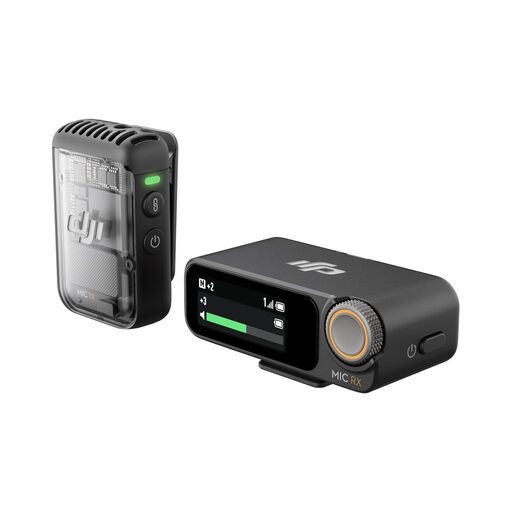
Why This Fits Their Persona: Ideal for vloggers and journalists who need a professional and completely reliable audio solution. The combination of high sound quality and failsafe reliability justifies the investment for anyone whose content depends on clear audio.
The internal 32-bit float recording serves as the ultimate safety net against signal loss and clipping. The included USB-C and Lightning adapters resolve compatibility issues right out of the box.
Superb audio quality and maximum reliability thanks to internal backup recording. The intelligent noise cancellation performs well even in unpredictable environments.
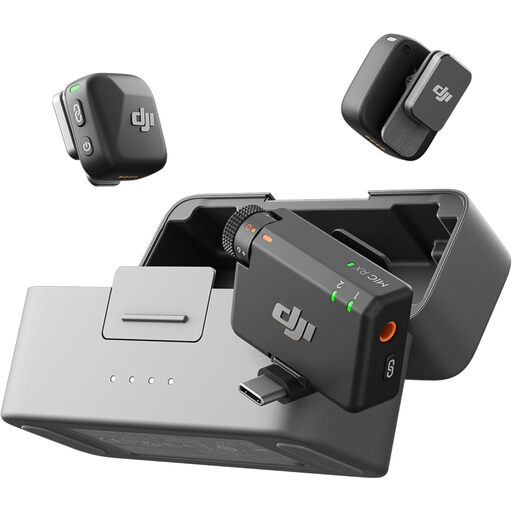
Why This Fits Their Persona: Perfect for podcasters, journalists, or YouTubers who regularly conduct interviews or work in pairs on camera. The kit is designed for efficiency and extended runtimes.
This kit provides a coordinated solution for two speakers, thus bypassing compatibility issues. The charging case ensures long battery life, making the system ideal for full-day shoots.
Two transmitters for interviews and a significantly extended total runtime thanks to the included charging case. All the benefits of the DJI system, but designed for two people.
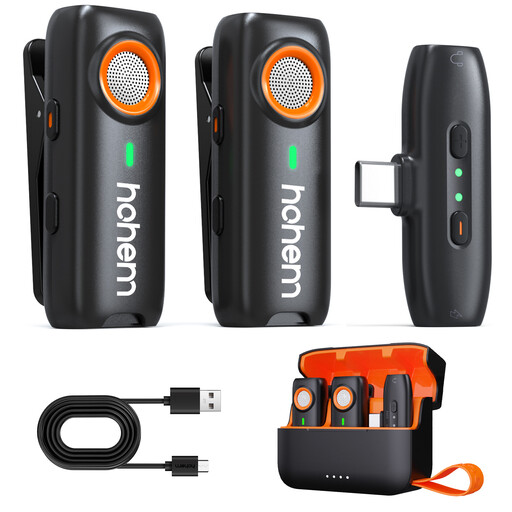
Why This Fits Their Persona: A solid choice for hobbyist vloggers and beginners looking to significantly improve their audio quality without immediately investing in a professional system. It offers key core features at an accessible price point.
This model also offers backup recording via a TF card (not included). In this price range, this is a crucial feature that protects against total audio loss.
Good value for money. Offers 3-level DSP noise cancellation and the option for local backup recording, which provides basic failsafe protection.
We have compiled a complete, up-to-date list of products that fully meet these strict selection criteria and relevant safety regulations.
Yes, the DJI Mic 2 kit comes standard with both a USB-C adapter and a Lightning adapter. These can be plugged directly into the receiver, which then connects to your smartphone's charging port without any additional cables. This ensures a stable, digital connection.
The main advantage is the prevention of digital clipping (overmodulation). With conventional recording, an unexpectedly loud sound can permanently distort the audio track. With 32-bit float, an extremely high dynamic range is captured, allowing you to adjust the volume in post-production without any loss of quality. Your recording is thus protected from unpredictable volume spikes.
According to the manufacturer, each transmitter and the receiver of the DJI Mic 2 offer an operating time of up to 6 hours. If you purchase the kit with the charging case, the total operating time extends to up to 18 hours, as the components can be recharged multiple times in the case. This is sufficient for most full-day shoots.