
Lieferung heute & morgen

Qualitätsgarantie

Willkommens-Angebote freischalten: KOSTENLOSE Lieferung | Bis zu 80 % RABATT | Kostenlose 30-Tage-JoyPlus-Testphase
App herunterladen
As a content creator, vlogger, or travel enthusiast, you know the challenge: you want to create cinematic, smooth video footage without carrying heavy and cumbersome equipment. Shaky videos and complicated setups can quickly stifle creativity. This article serves as a guide to the compact video camera market, objectively presenting the features and potential applications of various models, with a special focus on the anticipated specifications of the DJI Osmo Pocket 4.
Choosing the right camera depends on your specific needs. Three technical aspects are particularly relevant for creating high-quality video content.
For smooth footage while in motion, effective image stabilization is essential. A camera with 3-axis stabilization mechanically compensates for shakes and abrupt movements on the pan, tilt, and roll axes. Unlike purely electronic image stabilization (EIS), which digitally crops the image and can potentially reduce quality, a mechanical gimbal ensures lossless and significantly smoother video results. This is especially advantageous for walk-and-talk vlogs, action scenes, or as a travel camera.
Image quality, especially in low-light conditions, is largely determined by the size of the image sensor. A larger sensor, such as a 1-inch CMOS sensor, can capture more light, resulting in less noisy and more detailed footage. A high resolution like 4K has become the standard for professional-looking content. Also, pay attention to the frame rate (fps), which enables smooth slow-motion shots (e.g., 120 fps or higher).
For vloggers and YouTubers, a small video camera for YouTube that is easy to carry and quick to deploy is ideal. A compact design, low weight, and intuitive operation, for example via an integrated touchscreen, allow you to capture spontaneous moments without lengthy setup times.
Based on the criteria above, we have compiled a selection of cameras that are well-suited for video content creation.
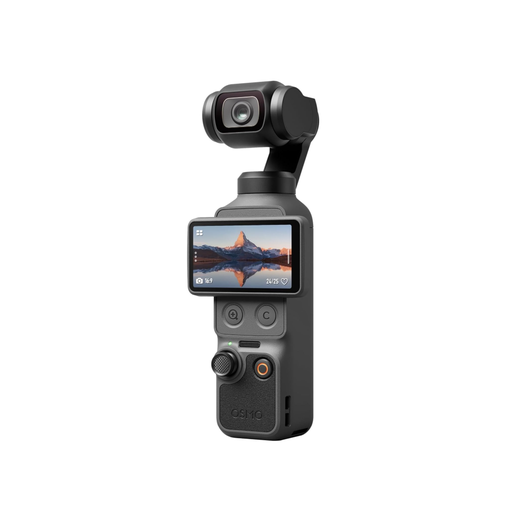
What Makes It Stand Out: The DJI Osmo Pocket 4 sets a new standard in the realm of ultra-compact gimbal cameras. The ability to record in 4K at up to 240 frames per second opens up impressive possibilities for extreme slow-motion effects in high resolution. The integrated 107 GB of storage provides ample capacity for long recording sessions without relying on external memory cards.
Pros:
Who It's For: This model is aimed at content creators and demanding hobbyist filmmakers seeking the most technically advanced performance in a pocket-sized form factor. The high frame rate and integrated storage are ideal for users who want to achieve professional results without compromising on portability.
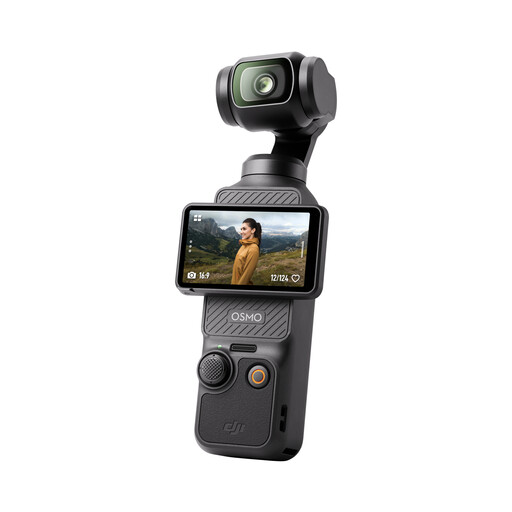
What Makes It Stand Out: The DJI Osmo Pocket 3 has established itself as an extremely capable vlogging camera. At its core is the large 1-inch CMOS sensor, which, combined with 4K/120fps video recording, delivers high image quality even in challenging light conditions. A standout feature is the 2-inch rotatable touchscreen, which allows for quick switching between horizontal and vertical shooting.
Pros:
Who It's For: The Osmo Pocket 3 is an excellent choice for vloggers and YouTubers looking for a reliable and powerful 4K gimbal camera with a mature feature set. The rotatable screen and proven tracking function make it a very practical tool for content creation.
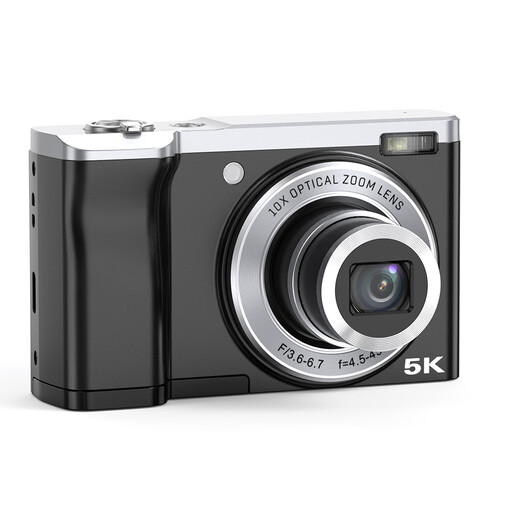
What Makes It Stand Out: This digital camera from Songdian offers a different approach. Instead of a mechanical gimbal, it relies on a 10x optical zoom and electronic image stabilization. With a dual-camera setup (front and rear) and a high photo resolution of 56 MP, it is highly versatile. According to the manufacturer's specifications, the video function supports a resolution of up to 5K.
Pros:
Who It's For: This model is suitable for beginners, students, or as a first camera for young people looking for a straightforward all-in-one solution for photos and occasional videos. The optical zoom is a clear differentiator from the gimbal cameras and is useful for capturing distant subjects.
The models presented here cover specific use cases. If your requirements are different or you would like a broader overview of various camera types such as mirrorless cameras, drones, or action cams, you can find a more extensive selection in our Camera & Photo category.
Based on the product specifications, the main difference lies in the video recording capabilities. The Pocket 4 offers 4K/240fps, twice the frame rate of the Pocket 3 (4K/120fps), which allows for significantly slower slow-motion shots. Other differences include the 2x lossless zoom and the large 107 GB of internal storage on the Pocket 4, whereas the Pocket 3 relies on external microSD cards and features a digital zoom.
For vlogs where the creator is moving, mechanical 3-axis stabilization is a crucial factor for a professional look. It ensures soft, fluid movements and avoids the jerky shakes that occur when shooting handheld without stabilization. While electronic stabilization can help, it generally doesn't achieve the same level of smoothness as a mechanical gimbal.
4K video files are very large. One minute of 4K video at 60 fps can take up several gigabytes of space, depending on the codec and bitrate. For longer recordings, high-capacity memory cards (e.g., 128 GB or 256 GB) with high write speeds (U3/V30 standard) are recommended. The DJI Osmo Pocket 4 addresses this issue with an integrated 107 GB of storage, which already provides a solid foundation for many use cases.