
Lieferung heute & morgen

Qualitätsgarantie

Willkommens-Angebote freischalten: KOSTENLOSE Lieferung | Bis zu 80 % RABATT | Kostenlose 30-Tage-JoyPlus-Testphase
App herunterladen
A doctor's kit is more than just a toy. It can help children overcome their fear of visiting the doctor, promotes empathy, and stimulates their imagination through doctor role-play. However, the market is flooded with sets of widely varying quality. Many products look promising at first glance but quickly turn out to be a disappointment. This guide will help you avoid the most common pitfalls and find a doctor toy set that is safe and provides long-lasting fun.
Before you make a decision, you should be aware of the typical weaknesses that often only become apparent after purchase:
To avoid a bad buy, you should focus on three objective criteria. These features determine whether a doctor's kit for kids is both safe and durable.
Your child's safety is the top priority. Always look for the CE marking. This indicates that the product meets the EU's essential health and safety requirements. High-quality models, such as many Theo Klein doctor's kits, are often made in Germany and use sturdy, non-toxic plastic with rounded edges to prevent injuries.
A good toy doctor's kit with accessories should include the basic instruments children recognize from a doctor's visit:
Some sets also offer electronic features like sound effects, which can further enhance the fun.
The instruments and the case must be easy for children aged 3 and up to handle. Ergonomically shaped handles that fit well in small hands are just as important as a case that is easy to open and close. A well-structured interior helps children stay organized and safely store all the parts after playing.
Here are three recommendations tailored to the different needs and preferences of children and parents.

Why This Fits Their Persona: Ideal for parents looking for a solid starter set from a well-known brand without a large budget. It provides everything needed to get started with doctor role-play.
The case is made of durable plastic and includes a good selection of basic instruments, ensuring high play value and preventing it from becoming boring quickly.
Excellent value for money; includes all essential basic instruments like a stethoscope, syringe, and thermometer.

Why This Fits Their Persona: Perfect for children who love interactive toys. The electronic blood pressure monitor with sound effects provides an especially realistic play experience and long-lasting engagement.
The electronic feature sets this kit apart from basic models and prevents boredom. The quality of the Theo Klein brand also ensures the necessary durability.
Battery-powered blood pressure monitor with sound; extensive accessories for realistic role-playing.
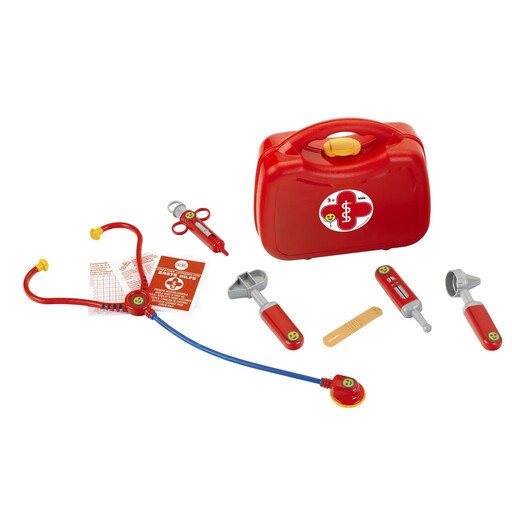
Why This Fits Their Persona: Specially designed for parents who want to playfully ease their child's fear of medical check-ups. The set familiarizes them with the instruments and helps reduce anxiety.
This set focuses on a child-friendly, approachable design for the instruments. It avoids intimidating-looking parts and promotes a positive association with the medical profession.
Educational approach to reducing fear; a comprehensive set with all key instruments in a child-friendly design.
We have compiled a complete, up-to-date list of products that fully meet these strict selection criteria and European safety standards.
1. At what age is a doctor's kit a good idea? Most doctor's kits are recommended for children aged 3 and up. At this age, children begin to develop complex role-playing scenarios and can understand the function of each instrument. Always check the manufacturer's age recommendation, as sets for older children may contain small parts that pose a choking hazard for younger children.
2. How do you clean a plastic toy doctor's kit? Cleaning is straightforward. Simply wipe the plastic parts with a damp cloth and mild soap. Avoid harsh cleaning agents or submerging the parts in water, especially any with electronic components. Let all parts air-dry completely before putting them back in the case.
3. What should I look for regarding the safety of doctor toys? Besides the CE marking, it's important that the toy has no sharp edges or pointed corners. The materials used should be durable and declared non-toxic (e.g., BPA-free). Regularly check for any broken parts to minimize the risk of injury. Adult supervision is always recommended during play.