Students with a small desk
When you’re writing, you need an overhead view of the page while leaving room for your hands, pen and calculator. Consider where the arm and base can go, and how much of the page the camera will actually capture.


For showing handwritten calculations on a small desk, an adjustable document camera is usually the most obvious place to start. The key is whether its arm, base and field of view will fit the available space. A standard webcam is more suitable if you mainly want to talk to people face to face and can set up a suitable overhead view; focus and image orientation matter when the distance changes.
When you’re writing, you need an overhead view of the page while leaving room for your hands, pen and calculator. Consider where the arm and base can go, and how much of the page the camera will actually capture.
If you want to switch between your face and your calculations during the same call, a document camera with a switchable view could work well. IPEVO describes the DO-CAM as having a foldable camera head for both views.
If you usually show the same area and want to adjust the focus yourself, consider a camera with manual focus. If the distance changes, you’ll need to refocus it.
A good fit if: you often work directly on paper and want to show the page as you do so.
Things to consider: the arm and base need a suitable spot. A stated capture area doesn’t tell you how much room the base takes up.
A good fit if: you want to switch between your face and your workings during a call. IPEVO describes this feature on the DO-CAM as switching views by flipping the camera head.
Things to consider: the position, height and lighting need to work for both views.
A good fit if: you mostly show the same area of a page and want to adjust the focus yourself.
Things to consider: you’ll need to refocus if the distance changes. HUE describes A4 as the HD Pro’s optimal capture area and A3 as its maximum.
A good fit if: you mainly talk to people face to face and only show paper occasionally.
Things to consider: you’ll also need to set up a suitable, stable overhead mount and frame the shot correctly.
A good fit if: you often want to digitise individual pages as well as show them.
Things to consider: according to the manufacturer, the CZUR Shine800 Pro has fixed focus. Its video and scanning specifications aren’t directly comparable with those of an adjustable document camera.
| Criteria | What to look for | Who is it important to? |
|---|---|---|
| Overhead view and space | Measure the available desk space and the area of the page you need to show separately. Check that both work with the base and arm position of the specific model. | If I want to write comfortably and show the page from above despite limited space, the actual set-up matters. Around 36 % of consumers put an overhead view and clear writing space first. |
| Handwriting legibility | Compare the focus type, possible distance and lighting. Test the image with a page of your own writing in the app you plan to use. | When I’m showing small numbers and symbols, I want them to stay legible on screen. Around 29 % of consumers prioritise clear handwriting. |
| Switching between views | Check how you can reposition the camera and whether your video-conferencing software displays the image in the orientation you want. | If I want to show both my workings and my face during the same call, switching views easily is important. Around 21 % of consumers prioritise this. |
| Connection and set-up | Check that the connector matches your computer and whether you’ll need a software feature or a separate mount. | I want to use the camera without unnecessary set-up and know in advance what accessories my set-up will need. Around 14 % of consumers care most about a simple connection and minimal extra effort. |
Resolution and frame rate can vary between modes. For the V4K, IPEVO states that it can reach up to 15 frames per second at 3264 × 2448 pixels, and up to 30 frames per second in Full HD. A wider field of view can also make individual characters appear smaller.
Compare the resolution and frame rate in the same mode, then test a real set of calculations in the app you plan to use.
The 374 × 280 mm working area listed by INSWAN for the INS-1 describes what the camera can capture, not the space its base takes up on your desk.
Measure the writing area and the space for the camera separately. Also check that you can write comfortably with your hand beneath the arm.
According to the manufacturer, the CZUR Shine800 Pro is designed for scanning and has fixed focus; the Logitech C920s is described as a webcam for video calls. These features don’t confirm that either device can provide a suitable overhead view of you writing live.
First decide whether you’ll mainly write on paper live, scan pages or speak to people face to face.
INSWAN lists USB-A for the INS-1 and notes that you’ll need an adapter if your computer only has USB-C ports. The available rotation or mirroring options may also depend on the software you use.
Check that the connector matches your computer and find out in advance which image features your video-conferencing software needs.
The V4K is a USB document camera with an articulated arm, while the DO-CAM is designed to switch between document and webcam views.
The HD Pro is a compact USB document camera with manual focus for close-ups.
The INS-1 is a USB document camera with an articulated arm and autofocus.
The DC530 is a document camera for presenting pages and, according to the manufacturer, is recognised as a webcam when connected to a computer.
The C920s is a standard webcam for video calls and isn’t described as a document camera.
The Shine Pro range includes foldable document scanners. The Shine800 Pro is more relevant if you want to scan pages as well as show them.
These products are webcams for computer calls. If you want to use one to show a maths page, check in advance whether you can set up a suitable overhead view.
 No image available
For face-to-face calls; you’ll need to find a suitable position if you want to show a maths page.
 No image available
A webcam for PC and video calls; if you want an overhead view of your work, you’ll need to plan the positioning separately.
 No image available
For computer calls, meetings and streaming; check whether the desk stand can be angled to show your worksheet as required.
 No image available
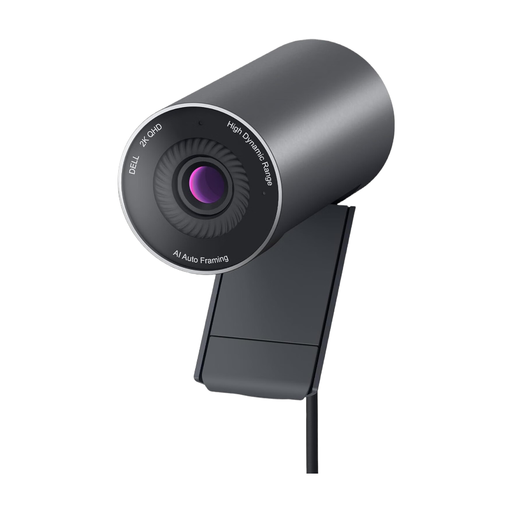
A webcam for computer calls; if you want to show your workings, check the positioning and the field of view you’ll need in advance.
First measure the area of the page you need to show and the available desk space separately. INSWAN lists a working area of 374 × 280 mm for the INS-1; HUE describes A4 as the HD Pro’s optimal area. Also check whether you can position the arm suitably on your desk.
That depends on the device and the features you want. HUE says the HD Pro works as a USB camera with apps that support UVC devices; for rotating and mirroring the live image, HUE lists its own apps. Then select the camera in your video-conferencing software.
For consumer purchases in the EU, you generally have a minimum legal guarantee of two years from the seller; a voluntary manufacturer’s warranty doesn’t replace it. Goods bought online also usually come with a 14-day right to cancel after receipt, which you must exercise with the retailer. The legal guarantee and the right to cancel have different conditions.
Buying a webcam doesn’t automatically give you permission to record other people or their data. The German Data Protection Conference notes that video calls can also capture people in your home and personal information on documents shown on screen. Frame the shot around the task where possible, avoid showing other people’s names and follow the rules set by the school or whoever is responsible for the call.
For the V4K, IPEVO says the screws at the joints can be tightened using a coin. This maintenance guidance applies to the V4K and doesn’t automatically apply to other camera models.