Filming small components in detail
You want to show screws, contacts or other small repair areas clearly. Look for a stated close-focus distance and check that the working distance suits the repair you’re carrying out.


For tiny components, the stated close-focus distance matters more than a high megapixel count alone. You’ll also need enough clearance for your hands and tools. For longer repairs, consider the mounting options, adjustable lighting and whether the camera connects to the recording or live-streaming software you want to use.
You want to show screws, contacts or other small repair areas clearly. Look for a stated close-focus distance and check that the working distance suits the repair you’re carrying out.
You need room for your tools and the item you’re working on beneath the camera. Check that you can position the camera securely and that the lighting and viewing angle suit your workspace.
You want to show your repair over USB using recording or video-conferencing software. Check the connection, camera recognition and video mode to make sure they work with your setup.
Best for: When tiny details matter most, compare the stated focusing distance with the position you can realistically work in.
Bear in mind: A very short focusing distance doesn’t automatically leave enough room for your hands and tools. You may also need a suitable stand.
Best for: If you want to show your repair using recording or video-conferencing software, make sure the camera can be used as a video source on your computer.
Bear in mind: The connection and video mode need to work with your computer and software. The highest resolution alone doesn’t tell you the frame rate in the mode you’ll be using.
Best for: If you want the picture to appear straight on a screen without using a recording computer, consider a camera with HDMI output.
Bear in mind: According to the manufacturer, the IPEVO VZ-R needs an additional power supply in HDMI mode. Check its close-focus distance separately.
When carrying out a small repair at home, your choice largely depends on whether close-up detail, clear workspace, a live feed to your computer or a flexible connection setup matters most.
| What you need | What to check when buying | Who it matters most to |
|---|---|---|
| Clear close-ups of small details | Compare the stated minimum focusing distance with the space you need for your hands and tools. | If I want to show tiny screws or contacts, the camera needs to focus closely without getting in the way of my work. Around 36% of consumers prioritise sharp close-ups. |
| A clear, well-lit workspace | Check the mount, arm movement, what’s included and the lighting. | If I’m working with both hands, the camera should show the item and tools without getting in the way. Around 29% of consumers prioritise a clear workspace. |
| A suitable live feed to your computer | Check the USB connection, camera recognition, and the video mode and frame rate in the software you’ll be using. | If I’m demonstrating a repair live on my computer, I need a suitable connection and a usable video mode. Around 21% of consumers prioritise a live feed to their computer. |
| A flexible setup | Check the outputs you need, the power supply required in your chosen mode and the included mount. | If I want to switch between workspaces or connection types, my setup needs to work with my screen, computer and accessories. Around 14% of consumers prioritise a flexible setup. |
A magnified image doesn’t tell you whether the camera can focus at the distance you need. For small components, the actual minimum focusing distance can make all the difference.
Before comparing zoom specifications, check the stated focusing distance against the room you need for your hands and tools while you work.
Manufacturers may quote different maximum frame rates for different video modes. For example, CZUR lists the Fancy S Pro at up to 60 frames/s in 1080p and up to 15 frames/s in 4K.
Check the frame rate for the specific mode you plan to use for your demonstration or recording.
A close-up is only useful when you can mount and connect the camera in a way that works for a repair requiring both hands.
Check what’s included and make sure the computer connection and power supply suit your planned setup.
The P2V ULTRA is worth considering for close-ups; the VZ-R is a separate product line with HDMI and USB output.
The DC530 is a USB document camera designed for demonstrations on a computer.
According to the manufacturer’s data sheet, the INS-2 combines a USB setup with a mechanical arm, LED light and autofocus.
According to the manufacturer, the Fancy S Pro combines document camera and webcam functions in an adjustable USB setup.
The MX-P3 is worth considering for demonstrations using multiple outputs, even when you’re not using a recording computer.
The products below are USB webcams for a live feed to your computer, not document cameras. Before buying, check that you can position your chosen camera to show the repair area clearly.
 No image available
For a live feed to your computer if you’d prefer a USB webcam to a document camera.
Autofocus; 1080p at 30 frames/s or 720p at 60 frames/s.
USB video and UVC mode; a flexible desktop stand or tripod is specified. The adjustable stand extends up to 18,5 cm.
 No image available
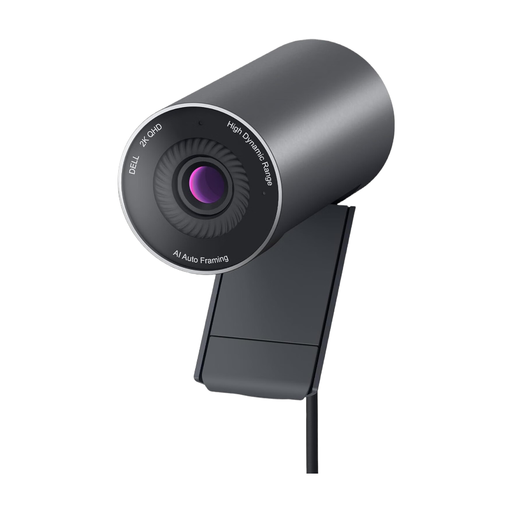
For a live feed to your computer if you need a USB webcam for collaboration or presentations; this isn’t a document camera.
2K QHD resolution, up to 60 frames/s and autofocus.
USB 2.0; a clip for attaching it to a monitor or laptop is specified.
No. Also compare the stated minimum focusing distance with the space you need for your hands and tools. Manufacturers specify, for example, 1 cm for the IPEVO P2V ULTRA, around 5 cm for the JOURIST DC530 and 10 cm for the INSWAN INS-2. These are manufacturers’ figures, not comparative real-world test results.
Position the camera and the item you’re working on so you can see each step clearly, then check the focus using the tools you’ll actually be working with. Check the mount and lighting too: IPEVO describes the P2V ULTRA’s stand as optional, while the INSWAN INS-2 has an arm and LED according to its data sheet.
Not with every document camera. According to the manufacturer, the IPEVO VZ-R can connect to a screen over HDMI, although it also needs an additional power supply in this mode. The ELMO MX-P3 also has HDMI. For recording or video-conferencing software on your computer, check that the USB camera connection is suitable.
Consumers generally have a 14-day right to cancel an online purchase, although exceptions and the applicable time-limit conditions should be checked. The Verbraucherzentrale also distinguishes between your statutory rights against the seller and a voluntary manufacturer’s guarantee.
As part of its market surveillance, the Bundesnetzagentur checks criteria including correct CE marking and an identifiable manufacturer with accurate manufacturer details. Check these points for the specific product listing; general product information doesn’t confirm them for every individual device.