
Lieferung heute & morgen

Qualitätsgarantie

Willkommens-Angebote freischalten: KOSTENLOSE Lieferung | Bis zu 80 % RABATT | Kostenlose 30-Tage-JoyPlus-Testphase
App herunterladen
Piles of paper, lost invoices, and a constantly cluttered desk—these scenarios hinder concentration and efficiency, whether in a home office, at the office, or while studying. A well-designed document organiser is not a luxury but a fundamental requirement for structured workflows. It not only helps maintain order but also saves valuable time when searching for important documents.
This article serves as a practical guide. It explains the key criteria for selecting a filing system and presents specific models that stand out for their functionality and durability. The goal is to provide you with a solid foundation for making an informed decision and achieving better office organisation.
Before you decide on a model, several key aspects should be considered. The right solution depends on your available space, the volume of documents, and your personal work habits.
The durability of a document organiser is largely determined by its material. Cardboard models are inexpensive but wear out quickly and are susceptible to moisture. A metal desk organiser offers significantly greater stability and longevity. Look for features like a powder coating, which protects the material from rust and scratches. A clean finish with no sharp edges is also an indicator of quality.
Available space is a crucial factor.
Consider what exactly you need to organise. Do you need a simple A4 paper tray for documents, or a system for thicker folders and magazines? A magazine file is excellent for the vertical storage of catalogues or binders. Systems with multiple compartments and labelling options allow for clear categorisation and make finding documents significantly easier.
Based on functionality, material, and design, we have curated a selection of models suited for various everyday office needs.
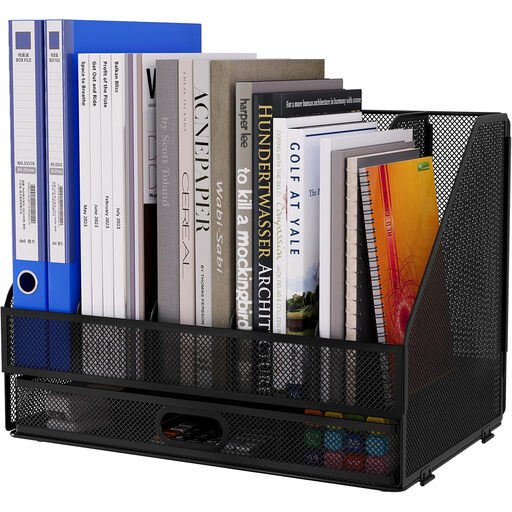
What sets this model apart: This document organiser is an all-in-one solution for your desk. It combines vertical compartments for files and documents with an integrated drawer for office supplies. The sturdy metal mesh design is not only stable but also provides a quick overview of its contents.
Benefits at a glance:
Who is this model for? Ideal for home-office professionals and students looking for a comprehensive, space-saving solution to organise both documents and office supplies in one central location.
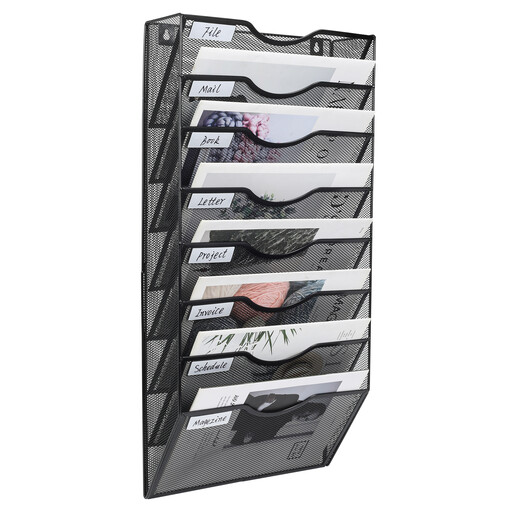
What sets this model apart: This wall organiser maximises vertical storage and keeps your desk completely clear. With eight generous compartments and label holders, it enables systematic and clear archiving of mail, invoices, files, and projects.
Benefits at a glance:
Who is this model for? Perfect for offices, entryways, or studies with a high volume of mail or documents. Users who prefer a durable and clearly structured wall-mounted solution will find this system ideal.
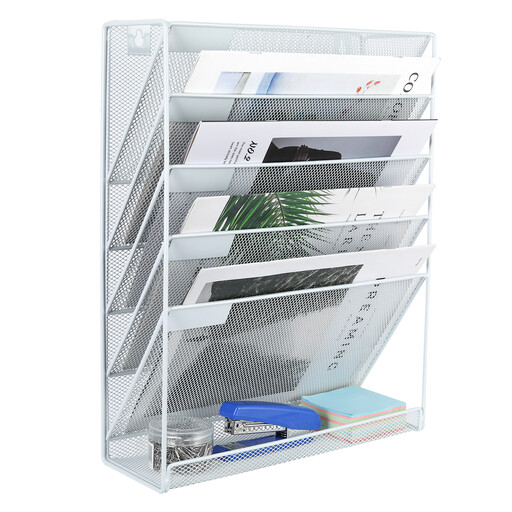
What sets this model apart: This model's strength lies in its flexibility. It can be either mounted on the wall or placed freestanding on a desk. Six compartments for A4 documents are complemented by a practical bottom tray for small items like pens, keys, or tape.
Benefits at a glance:
Who is this model for? Suitable for anyone who values flexibility and doesn't want to choose between a desk and a wall solution. Its modern white design fits well in bright office and home environments.
The models presented offer solutions for common needs. However, if you are looking for specialised organisers, different designs, or other materials, it's worth exploring more alternatives.
Discover a wider selection of organisational aids in our Book Accessory Gifts category.
1. How do I organise my documents most efficiently? A proven method is categorisation. Divide your documents into logical groups such as "Invoices," "Projects," "Archive," or by priority ("Urgent," "In Progress"). Use filing systems with labelling options to maintain an overview. A regular review (e.g., weekly) helps to maintain order.
2. What is the difference between a magazine file and a letter tray? A magazine file is designed for the vertical storage of thicker or bound documents like magazines, catalogues, and binders. A letter tray is used for the horizontal, stacked filing of loose sheets or thin folders, typically for daily mail or current tasks.
3. How do I safely mount a wall organiser? Ensure you use the correct wall plugs and screws for your wall type (e.g., different ones for drywall than for a brick wall). The mounting hardware is often included with the product. Before drilling, check that there are no electrical or water lines in the chosen spot. Make sure to align the organiser straight and tighten the screws firmly to ensure a stable attachment. Distribute the weight of the documents evenly across the compartments.