As a Joybuy Product Recommendation Officer, I see dog owners every day trying to make the right choice for their four-legged friends. A good dog bed is more than just a cushion—it's a sanctuary that significantly impacts your dog's sleep and health. However, the market is flooded with products whose marketing promises often fall short in practice. This guide will help you avoid the common pitfalls and make an informed decision.
The 3 Most Common Mistakes When Buying a Dog Bed
Many well-intentioned purchases end in disappointment because certain details are overlooked. Pay close attention to these three points to avoid a bad investment:
- The "Washable" Trap: A dog bed advertised as washable often only means the outer cover is removable and machine-safe. The filling itself, however, cannot be cleaned. After a few months, dirt, odours, and allergens accumulate inside, severely compromising hygiene.
- The Empty "Orthopedic" Promise: The term "orthopedic" is not a protected term. Many beds are filled with simple, cheap fiberfill or low-quality foam that loses its support after a short time. A true orthopedic dog bed should be made of materials that evenly distribute the dog's weight and relieve pressure on the joints.
- Poor Material Quality: A fluffy cover may look cosy, but it's often not durable enough to withstand a dog's claws and teeth. Thin fabrics and weak seams cause the bed to quickly become unsightly or even fall apart.
What Really Matters: The Core Features of a Long-Lasting Dog Bed
To avoid the problems mentioned above, you should check three essential features before buying. These define the quality, durability, and comfort of a dog bed.
1. Filling Material and Support
The filling is the heart of any dog bed. It determines how well your dog's body is supported.
- Standard PP (Polypropylene) Filling: This cotton-like filling is soft and often found in more affordable models like a donut dog bed. It offers a high level of coziness but tends to clump and lose its supportive structure over time.
- Egg-Crate Foam: This textured foam provides good pressure relief by distributing the dog's weight across many small points. It also promotes air circulation, which is beneficial on warmer days. This type of filling is a great choice for older dogs or pets with early joint issues.
- Memory Foam (Visco-Foam): This material conforms exactly to the body's shape and offers excellent pressure distribution. It is the foundation for many high-quality orthopedic dog beds and is particularly suitable for dogs with arthritis or other joint conditions.
2. Care and Hygiene
A washable dog bed makes maintenance much easier. Look for the following features:
- Fully Removable Cover: A zipper that runs along at least two sides (L-shaped) makes removing and putting the cover back on significantly easier.
- Water-Resistant Inner Liner: A waterproof layer directly around the foam filling protects it from moisture, dirt, and accidents. This keeps the core of the bed hygienically clean.
- Washable Filling: In some models, especially pillows or donut beds, the filling itself can also be washed. This is the most hygienic option.
3. Shape, Size, and Safety
The shape of the bed should match your dog's sleeping habits.
- Dog Cushions and Mattresses: Ideal for dogs that love to stretch out.
- Donut Dog Bed: The raised, soft edge provides a sense of security and is well-suited for dogs that love to curl up or are prone to anxiety. This is also known as a calming dog bed.
- Dog Sofa: With raised edges on two or three sides, it offers a backrest and is perfect for dogs that like to lean against something. These models are often a great choice as a dog bed for large dogs.
- Non-Slip Base: A non-slip base coated with rubber grips prevents the bed from sliding around on smooth floors like wood or tile. This gives older or very active dogs security when getting in and out.
Top Picks for Every Need
Here are three recommendations tailored to the different needs of dogs and their owners.
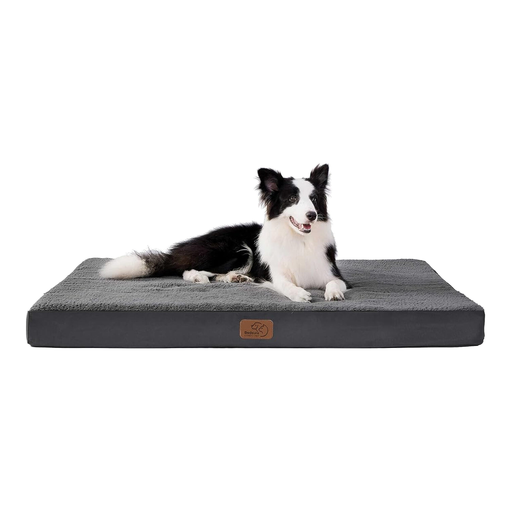
MATCH FOR: Joint-Friendly Comfort
Why This Fits Their Persona: Ideal for older dogs or those with sensitive joints. The structured foam evenly distributes weight, relieving pressure points on the hips and shoulders.
How It Avoids the Trap
It bypasses the empty "orthopedic" promise by using egg-crate foam, which offers a demonstrably supportive structure—unlike simple fiberfill.
Key Advantage & Pros
Even weight distribution for pressure relief; removable and machine-washable cover for easy hygiene.
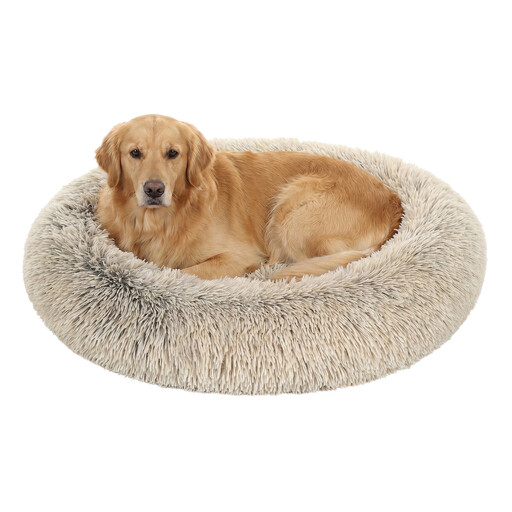
MATCH FOR: Anxious Dogs and Cuddlers
Why This Fits Their Persona: The donut design with its high, soft rim creates a sense of safety and security. Perfect for dogs that love to curl up or feel insecure in new environments.
How It Avoids the Trap
It solves the hygiene trap of many plush beds: the removable central cushion can be washed separately, making cleaning significantly easier compared to beds with fixed construction.
Key Advantage & Pros
Calming design to reduce anxiety; non-slip base for stability; easy to clean thanks to the removable cushion.
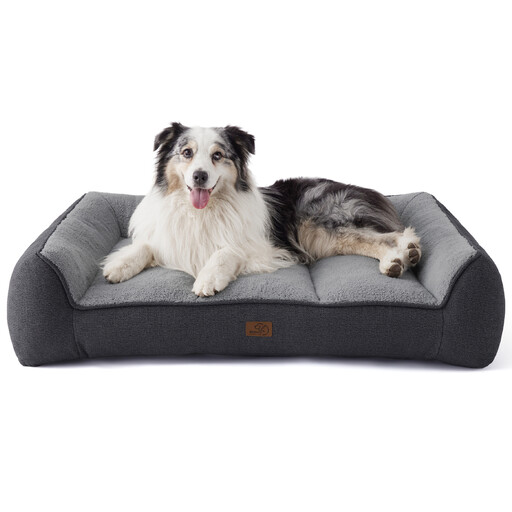
MATCH FOR: Large Dogs That Need Space
Why This Fits Their Persona: With its generous dimensions and sturdy, raised bolsters, this dog sofa provides ample space and support for large breeds like Golden Retrievers or German Shepherds that love to lean.
How It Avoids the Trap
It avoids the durability trap with a waterproof inner liner that protects the foam core from moisture and a robust, machine-washable cover, significantly extending its lifespan.
Key Advantage & Pros
Extra-thick, supportive filling; waterproof core protection; low-profile entry for easy access.
Looking for More Options?
We've compiled a complete, up-to-date list of products that fully meet these strict selection criteria and European safety regulations.
## Frequently Asked Questions (FAQ)
1. How often should you wash a dog bed?
The cleaning frequency depends on several factors, such as your dog's coat type, activity level, and whether they have allergies. As a general guideline, it's recommended to wash the dog bed's cover every one to two weeks. A deep clean of the entire bed (if possible) should be done every one to two months.
2. What is the right size for my dog's bed?
Measure your dog from the tip of its nose to the base of its tail while it's in its typical sleeping position. Add about 15-25 cm (6-10 inches) to this length to determine the minimum size for the bed. This ensures your dog has enough space to stretch out comfortably.
3. My dog destroys every bed. What can I do?
If your dog tends to chew or dig, look for beds made from particularly durable materials like corduroy, canvas, or tightly woven polyester. Avoid models with many loose threads, sewn-on buttons, or thin plush fabrics. Additionally, it can help to offer your dog plenty of chew toys as an alternative and to specifically train them to stop the destructive behaviour.