
Lieferung heute & morgen

Qualitätsgarantie

Willkommens-Angebote freischalten: KOSTENLOSE Lieferung | Bis zu 80 % RABATT | Kostenlose 30-Tage-JoyPlus-Testphase
App herunterladen
A reliable dog carrier is essential for many pet owners, whether for the annual vet visit, a trip on holiday, or as a safe retreat at home. The market offers a plethora of models, but not every carrier delivers on its promises. Before making a decision, it's important to be aware of common defects that often only become apparent after purchase and can compromise your pet's safety and comfort.
Many buyers focus on price or design, overlooking critical structural flaws. Three common problems repeatedly lead to poor purchasing decisions:
An informed choice not only protects your pet but also saves you money and effort in the long run.
To make an informed decision, you should focus on three core technical parameters. These largely determine the safety, durability, and functionality of a dog carrier.
The choice of material depends on the primary use case. A dog carrier for the car must, above all, be stable.
A good breathable pet carrier is crucial for your pet's well-being.
The carrier should be neither too small nor too large. As a rule of thumb: your pet should be able to stand, turn around, and lie down comfortably in the carrier. Measure your pet while standing from the tip of the nose to the base of the tail (length) and from the floor to the top of the head (height). Add 10–15 cm to both the measured length and height to get the minimum internal dimensions of the carrier. This applies to a carrier for small dogs as well as a carrier for large dogs.
Based on the criteria mentioned, we have identified several models that offer a well-thought-out solution for specific requirement profiles and pet sizes.
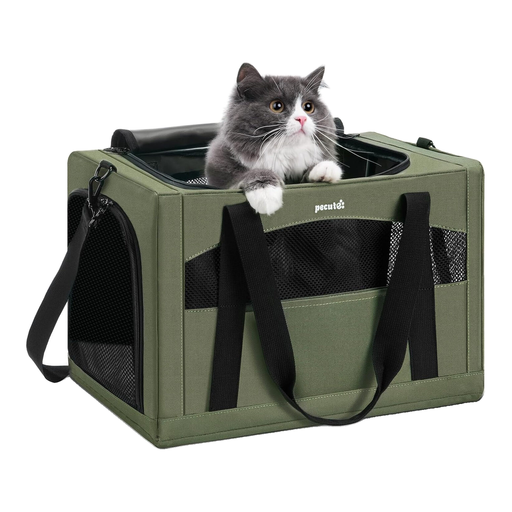
Why this model is a good fit: Ideal for daily city life, vet visits, or short trips. This compact carrier for dogs and cats is lightweight yet retains its shape thanks to the integrated frame.
The 5 mm thick wireframe with honeycomb board reinforcement prevents the bag from collapsing and protects the pet. This solves the problem of unstable soft-sided bags.
Dual escape protection with locking zippers and an internal safety tether. Large mesh panels ensure good ventilation.
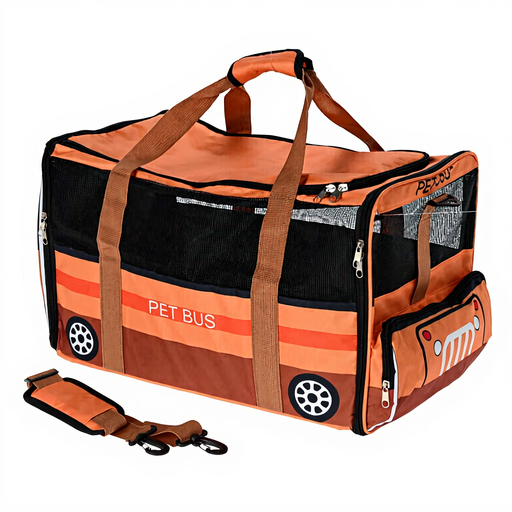
Why this model is a good fit: A universal dog travel bag for pets up to 10 kg, suitable for various travel situations due to its solid structure and practical handling.
The durable polyester construction with a reinforced base and a removable insert ensures stability. Extensive mesh panels on multiple sides prevent heat build-up.
Highly practical with an adjustable shoulder strap, carrying handle, and two pockets for accessories. Multiple zippers allow for easy access from all sides.
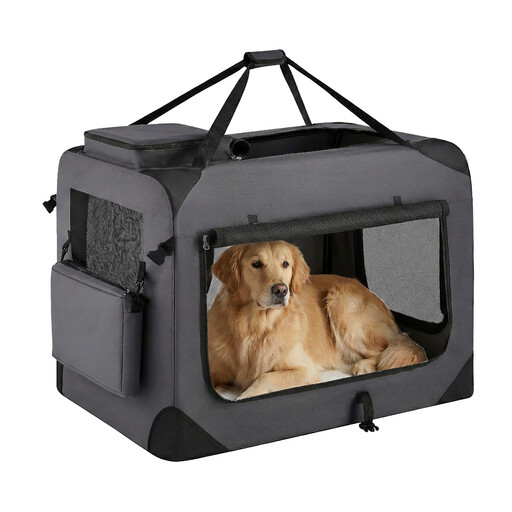
Why this model is a good fit: This foldable carrier is designed for large dogs like Huskies or Retrievers (23-32 kg) and is suitable for car travel, camping, or as a mobile retreat.
The robust steel frame provides necessary stability, while the durable Oxford fabric ensures longevity. Its foldability solves the problem of storing bulky large carriers.
Folds flat in seconds. Large mesh windows on the doors and sides provide excellent ventilation and visibility for the pet.
We have compiled a complete, up-to-date list of products that fully meet these strict selection criteria and safety standards.
Measure your dog's length from the tip of its nose to the base of its tail and its height from the floor to the top of its head while standing. Add 10 to 15 cm to both measurements to determine the minimum internal dimensions of the carrier. Your dog must be able to stand up, turn around, and lie down comfortably.
Start by placing the open carrier in your home and put a familiar blanket or toy inside. Reward your dog with treats when it explores the carrier on its own. Begin by closing the door for short periods, gradually increasing the duration. Associate the carrier with positive experiences before you take your first trip.
Yes, as long as it is properly secured. Place the carrier in the boot (for estate cars/SUVs) or on the back seat and secure it with the seatbelt or special fastening straps to prevent it from sliding during braking or cornering. Ensure the carrier has a sturdy frame that will not collapse in the event of an impact.