
Lieferung heute & morgen

Qualitätsgarantie

Willkommens-Angebote freischalten: KOSTENLOSE Lieferung | Bis zu 80 % RABATT | Kostenlose 30-Tage-JoyPlus-Testphase
App herunterladen
As a Joybuy Product Recommendation Officer, I see daily how many pet owners face the challenge of finding the right carrier for their small dog or cat. The market is full of products that make big promises but don't always deliver. An unsuitable bag can be not only uncomfortable for your pet but also unsafe. In this guide, I'll show you what to look for to avoid bad buys and choose a durable, safe dog carrier bag.
Many well-intentioned purchases end in frustration because crucial details are overlooked. These three weaknesses often cause a bag to become unusable after a short time or to create stress for the pet:
To avoid these pitfalls, you should check three core parameters before buying. These define the quality, safety, and comfort of a carrier bag.
A sturdy carrier for small dogs starts with its construction. Look for the following features:
A good pet carrier with ventilation is crucial for your animal's well-being.
The right size and practical details make a dog travel bag suitable for everyday use.
Based on the criteria above, we have analysed models that offer a well-thought-out design for everyday life and travel.
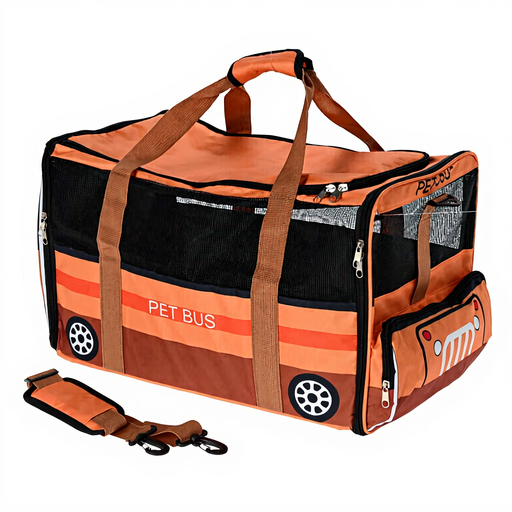
Why This Fits Their Persona: Ideal for owners of small dogs or cats up to 10 kg who need a reliable solution for vet visits, car rides, or travel. The bag combines safety with practical handling.
The design directly addresses the typical weak points: A reinforced base with a removable insert prevents sagging. Extensive mesh panels on multiple sides ensure optimal ventilation. Multiple zippers make access easy.
Stable, shape-retaining structure made of easy-to-clean polyester. With internal dimensions of 50x29x31 cm, it offers sufficient space and features practical side pockets and an adjustable shoulder strap (94-123 cm).
If you want to compare other models that meet our criteria for safety and functionality, you can find a comprehensive selection here.
The bag must be large enough for your dog or cat to comfortably stand up, turn around, and lie down. Measure your pet's back length (from collar to the base of the tail) and its shoulder height. Add about 10-15 cm to both measurements to determine the ideal internal dimensions of the bag. Always pay attention to the internal dimensions, not the external dimensions of the product.
First, place the new bag open in your home. Put a familiar blanket and some treats inside so your pet can explore the bag positively at its own pace. Start with very short, closed carrying periods inside the house before taking your first trip outside.
A carrier bag offers protection in the car if it is properly secured. The safest place is the footwell behind the front seats. Alternatively, the bag can be placed on the back seat and secured with the seatbelt, provided it has the appropriate fastening loops. Never place the bag on the front passenger seat, as a deploying airbag poses a significant danger to your pet.