
Lieferung heute & morgen

Qualitätsgarantie

Willkommens-Angebote freischalten: KOSTENLOSE Lieferung | Bis zu 80 % RABATT | Kostenlose 30-Tage-JoyPlus-Testphase
App herunterladen
Choosing a dog carrier might seem simple at first glance. In reality, however, a lack of proper information often leads to poor purchases that not only strain your wallet but also compromise your pet's safety and well-being. Many products overpromise and underdeliver, revealing design flaws only after you start using them.
This guide will show you what to look for to find a functional and durable carrier for your pet. We'll focus on the three most common pitfalls and explain the critical technical features that separate a great carrier from an unsuitable one.
Before you make a purchase, you should be aware of the typical weaknesses that cause problems in many models.
To avoid the problems mentioned above, you should check three core parameters. These are crucial in determining the safety, comfort, and durability of a carrier.
The material is the foundation of stability. For a soft-sided carrier, a robust internal frame is essential. Look for models with a steel frame that maintains its shape even when in motion. The exterior material should be made of a durable fabric like Oxford polyester, which is scratch-resistant and easy to clean.
With hard-shell carriers, the quality of the plastic is key. Check that the material feels sturdy and that the connection points and latches are solidly constructed. A foldable dog carrier often combines the best of both worlds: a stable frame with a flexible, space-saving cover.
The right size is crucial for your pet's well-being. The dog or cat must be able to stand, turn around, and lie down comfortably inside the carrier. Measure your pet while standing (from the floor to the top of the head) and its length (from the tip of the nose to the base of the tail). Add about 10–15 cm to both measurements to determine the appropriate interior dimensions of the carrier. This applies to both a carrier for small dogs and a carrier for large dogs.
Also, pay attention to thoughtful interior design. An integrated, adjustable short tether prevents the pet from jumping out when the door is opened. Removable and washable liners enhance hygiene and comfort.
For safe transport, especially in a car, specific features are essential. A good dog carrier for the car will have:
Whether it's a dog backpack, dog tote bag, or a classic dog crate for the car—these safety aspects should always be a priority.
Based on the criteria above, we have identified several models that are well-suited for different use cases.
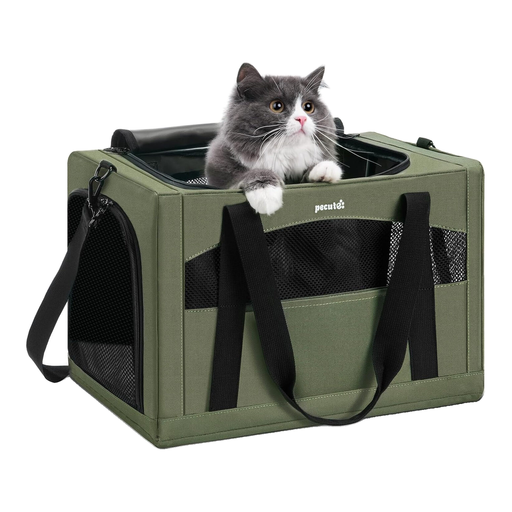
Why This Fits Their Persona: Ideal for owners of cats and small dogs (up to 5 kg) who need a lightweight yet stable solution for vet visits or short car trips. This dog tote is easy to handle and store.
The 5 mm thick wire frame and integrated honeycomb boards prevent the carrier from collapsing. Locking zippers and an internal safety leash offer dual protection against escape.
Stable frame construction despite its soft-sided design. Special straps for dual-fixation in the car enhance safety during travel.
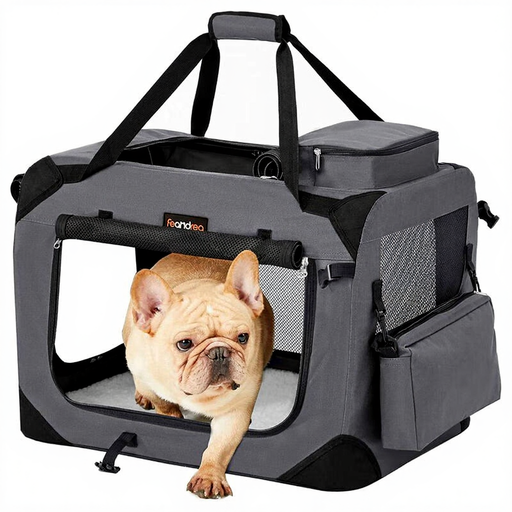
Why This Fits Their Persona: Perfect for dog owners looking for a practical and space-saving solution for travel, camping, or the car boot. Suitable for dogs up to approx. 11 kg, such as Miniature Poodles or French Bulldogs.
The sturdy metal frame provides necessary stability, while the folding feature solves the problem of bulky crates. Large mesh windows ensure good ventilation and visibility, which reduces pet stress.
Folds down to a height of just 8 cm, making it extremely space-saving. Practical side pockets offer storage for accessories.
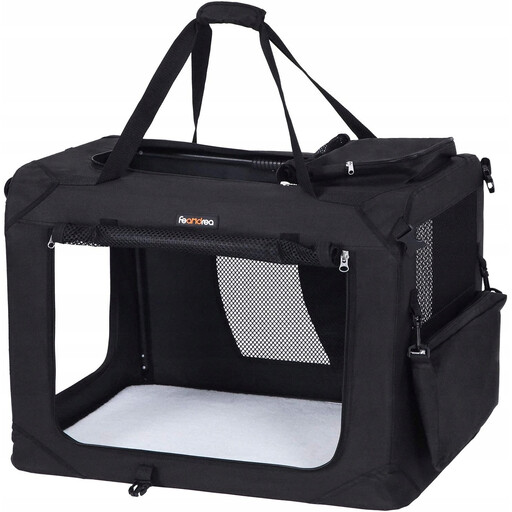
Why This Fits Their Persona: A spacious and robust solution for owners of large dogs (up to 32 kg) who need a foldable yet secure carrier for the car or as a mobile resting space.
The reinforced steel frame combined with durable Oxford fabric provides the stability needed for large dogs. The large mesh panels ensure excellent air circulation.
Combines the security of a rigid crate with the portability of a soft carrier. Despite its size, it folds flat for easy storage when not in use.
We have compiled a complete, up-to-date list of products that fully meet these strict selection criteria and safety standards.
Measure your dog's height while standing (from the floor to the highest point of its head or ears) and its length (from the tip of its nose to the base of its tail). The carrier's interior should be about 10-15 cm taller and longer than your dog. This ensures it can stand up, turn around, and lie down comfortably.
Yes, as long as they have a high-quality construction. Look for models with a sturdy metal or steel frame that maintains the structure even under pressure. The exterior material should be tear-resistant, and the zippers should be lockable. When chosen correctly, a foldable carrier is just as safe as a hard-shell one and offers the advantage of space-saving storage.
Start the acclimatisation process at home in a calm environment. Place the open carrier in a room where your dog spends a lot of time. Put its favourite blanket, toys, or treats inside to create a positive association. Initially, close the door for just a few seconds, gradually increasing the duration. Reward calm behaviour and never force anything. Short, positive training sessions are more effective than long, stressful attempts.