
Lieferung heute & morgen

Qualitätsgarantie

Willkommens-Angebote freischalten: KOSTENLOSE Lieferung | Bis zu 80 % RABATT | Kostenlose 30-Tage-JoyPlus-Testphase
App herunterladen
Choosing a dog carrier can quickly become overwhelming. The market is filled with models that promise safety and comfort, yet not all live up to their marketing claims. An unsuitable carrier is not just a waste of money; it can also cause stress or even danger for your pet. As a Joybuy Product Recommendation Officer, I'm here to help you identify the crucial features and avoid common purchasing traps.
Many buyers focus on price or design, overlooking critical flaws that only become apparent with use. These include three common problems:
To make an informed decision, don't be swayed by marketing promises. Instead, focus on verifiable facts. Three parameters are crucial.
The material determines the carrier's durability and safety. A soft-sided carrier made of fabric is lightweight and flexible, but its stability depends heavily on the internal structure.
The right size is not a luxury, but a necessity. Measure your dog before you buy:
The dog carrier should be at least 10–15 cm longer and taller than your dog's measurements. This is the only way it can move naturally. This is particularly true for a carrier for large dogs.
Good ventilation is just as important. The carrier should have large mesh panels on at least three sides. This ensures constant air circulation and allows the animal to observe its surroundings, which can reduce stress.
Not every carrier is suitable for every purpose. Consider how you will primarily use the carrier:
Based on these objective criteria, we have identified some models that are suitable for specific requirement profiles.
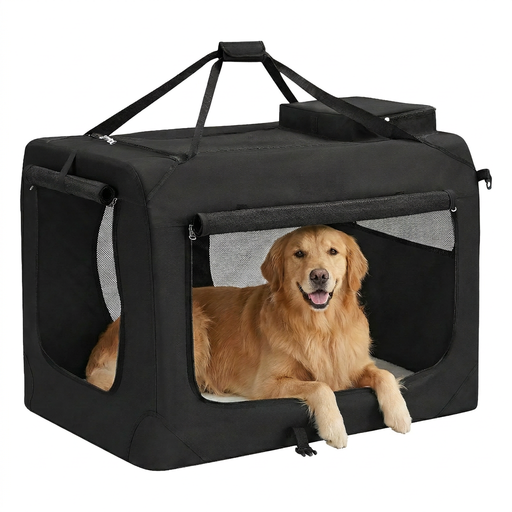
Why This Fits Their Persona: Ideal for owners of large dog breeds who need a spacious and secure solution for car trips or holidays. The generous dimensions allow the dog to move comfortably, which is crucial on longer journeys.
The robust steel frame and durable Oxford fabric counter the trap of unstable construction. Large mesh windows on multiple sides ensure excellent ventilation and prevent the risk of heat buildup.
Very spacious (122 cm length) and folds flat when not in use. Offers room for large breeds or multiple small pets.
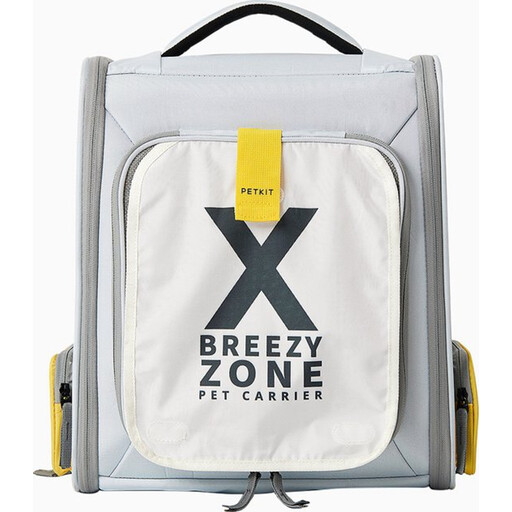
Why This Fits Their Persona: Perfect for owners of small dogs or cats in the city. The backpack design keeps your hands free, ideal for public transport or café visits. The expandable tent feature provides a comfortable resting place at your destination.
Addresses the problem of poor ventilation with highly breathable mesh fabric. The unique blackout curtain actively reduces a pet's travel anxiety—a thoughtful feature missing from standard carriers.
Innovative 2-in-1 design (backpack and expandable tent). Lightweight and folds quickly for storage. Suitable for pets up to 6 kg.
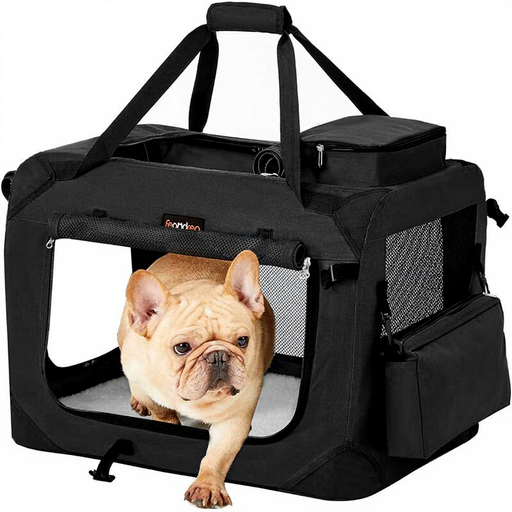
Why This Fits Their Persona: A versatile and functional choice for owners of small to medium-sized dogs who need a reliable carrier for vet visits or car rides. It combines the security of a rigid carrier with the convenience of being foldable.
Avoids the trap of misleading size claims with clear dimensions and a precise weight recommendation (7–11 kg). The simple, robust design focuses on the core functions of safety and portability rather than unnecessary extras.
Folds down to a height of just 8 cm, making it extremely space-saving. A washable fleece mat for added comfort is included.
We've compiled a complete, up-to-date list of products that fully meet these strict selection criteria and safety regulations.
Start the acclimatisation process in a quiet environment at home. Place the open carrier on the floor and put a familiar blanket or toy inside. Reward your dog with treats as soon as it shows interest or enters the carrier on its own. Initially, close the door for only a few seconds and gradually increase the time. Associate the carrier with positive experiences, not just trips to the vet.
A dog car carrier should always be secured. Smaller carriers can be placed on the back seat and fastened with the seatbelt through the designated loops or handles. Larger carriers belong in the boot, pushed directly against the back seat to prevent sliding during braking. If necessary, use additional straps to keep the carrier from shifting. Never leave your pet unattended in the carrier inside a car, especially in warm weather.
Yes, many models are suitable for both dogs and cats. A cat carrier should also be stable, well-ventilated, and escape-proof. Since cats often try to squeeze through small openings, sturdy zippers and scratch-resistant mesh fabric are particularly important for a soft-sided carrier. Make sure the size is appropriate for your cat and that it feels comfortable inside.