
Lieferung heute & morgen

Qualitätsgarantie

Willkommens-Angebote freischalten: KOSTENLOSE Lieferung | Bis zu 80 % RABATT | Kostenlose 30-Tage-JoyPlus-Testphase
App herunterladen
Choosing the right dog carrier is crucial for your pet's safety and comfort during travel, vet visits, or car rides. However, the market is flooded with products whose marketing claims often fall short. Many pet owners only realize after the purchase that the carrier is too small, the material is flimsy, or it's simply impractical to use.
This guide will help you identify common pitfalls and make an informed decision. We'll focus on the three most critical points that often lead to a bad purchase:
To find a durable and suitable transport solution, you should evaluate three core parameters before making a decision. These will help you separate the wheat from the chaff and choose a product that reliably serves its purpose.
The choice of material largely depends on the intended use and the size of your pet.
The right size is essential for your pet's well-being. An animal must be able to stand comfortably, turn around, and lie down inside the carrier. Measure your pet as follows:
Add about 10–15 cm to both measurements to get the minimum internal dimensions for the carrier. This is especially important when looking for a carrier for a large dog, as insufficient space can quickly lead to stress and discomfort.
Consider what you will primarily use the carrier for.
Here are some recommendations tailored to the different needs and profiles of pet owners.
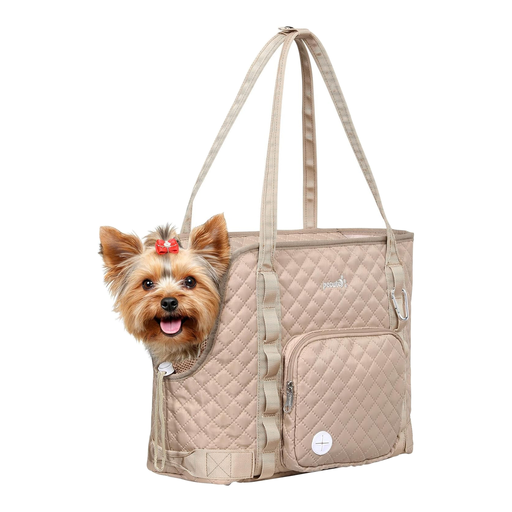
Why This Fits Their Persona: Ideal for city life, vet visits, or trips to a café. This bag combines a fashionable design with practical functionality for pets under 5 kg. It's as light and discreet as a handbag but provides the necessary security.
Avoids the trap of impractical, bulky carriers. Weighing only 0.7 kg and featuring thoughtful storage compartments, it's functional and not just a fashion accessory. The integrated safety leash and full-zip closure prevent escapes.
A combination of low weight, safety features, and practical storage. The back pocket can be slipped over a suitcase handle, making it travel-ready.
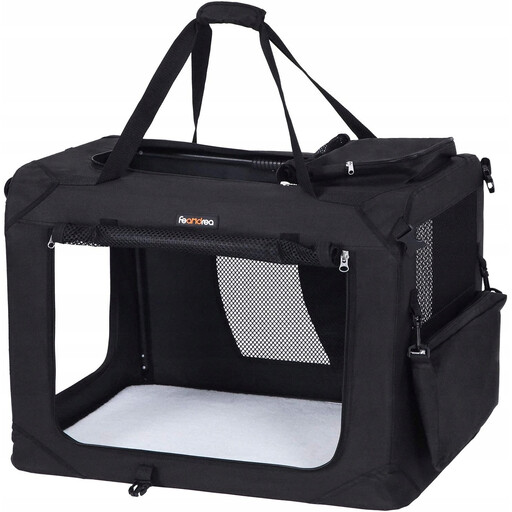
Why This Fits Their Persona: Perfect for large dog owners who need a robust yet portable solution for car trips, camping, or hotel stays. It offers the security of a rigid crate with the flexibility of a foldable carrier.
Solves the problem of flimsy soft-sided crates for large dogs. The reinforced steel frame combined with durable Oxford fabric provides high stability, while the crate can be folded flat when not in use.
Generous dimensions (102 x 69 x 69 cm) and high load capacity (up to 32 kg). The large mesh windows ensure excellent ventilation and visibility for the pet.
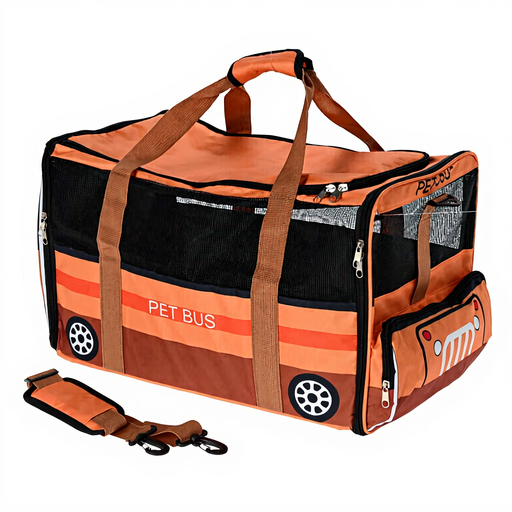
Why This Fits Their Persona: A universal and straightforward solution for owners of cats and small dogs (up to 10 kg). Ideal for vet visits and short trips where easy access and good ventilation are top priorities.
Addresses the issues of poor ventilation and difficult access. The extensive mesh panels on multiple sides ensure optimal airflow. Multiple zippers allow for access from the top and the side.
High flexibility with multiple openings and a reinforced base with a removable insert for stability and easy cleaning. The adjustable shoulder strap ensures carrying comfort.
We have compiled a complete, up-to-date list of products that fully meet these strict selection criteria and safety regulations.
The carrier must be large enough for your dog to stand up comfortably, turn around, and lie down in a natural position. As a rule of thumb: measure your dog's length from nose to the base of the tail and its height from the floor to the top of the head. Add 10-15 cm to both measurements to determine the ideal internal dimensions of the carrier.
Start by placing the open carrier in your home. Put blankets, toys, or treats inside to create a positive association. Initially, close the door for only brief moments and reward your pet afterward. Slowly extend the time and only take short trips once your pet is visibly comfortable in the closed carrier.
Yes, a foldable dog crate can be safe in the car, provided it meets certain criteria. Models with a sturdy internal frame, ideally made of metal, offer the necessary structure. It is crucial that the crate is secured in the vehicle to prevent it from sliding—either with seatbelts passed through designated loops or by positioning it securely in the trunk.