
Lieferung heute & morgen

Qualitätsgarantie

Willkommens-Angebote freischalten: KOSTENLOSE Lieferung | Bis zu 80 % RABATT | Kostenlose 30-Tage-JoyPlus-Testphase
App herunterladen
As a Joybuy Product Recommendation Officer, I see countless dog owners face a challenge when selecting chews. The market is flooded with products promising long-lasting chewing fun and dental care. However, not every dog chew bone delivers on its promise. Some products can even be unsuitable or unsafe. This guide will help you navigate the most common pitfalls and make an informed decision for your dog.
Before you spend money on another chew snack that disappears in minutes or, worse, causes problems, you should be aware of these typical traps:
To find the right chew, you should focus on objective features. These three parameters are critical for a product's safety and suitability.
Chew products can generally be divided into two categories:
For edible snacks, checking the ingredient list is essential. A short, understandable list of ingredients is often a good sign.
Choosing the right size isn't an optional extra—it's a safety feature. The chew bone should always be large enough that your dog cannot fit it entirely in its mouth and swallow it. Manufacturers often provide recommendations for specific weight classes. Also, consider your dog's individual chewing strength—a chew bone for large dogs like a Great Dane must withstand different forces than a snack for a Toy Poodle.
Based on these objective criteria, we have identified several products from our collection that are suited for different requirements and dog types.
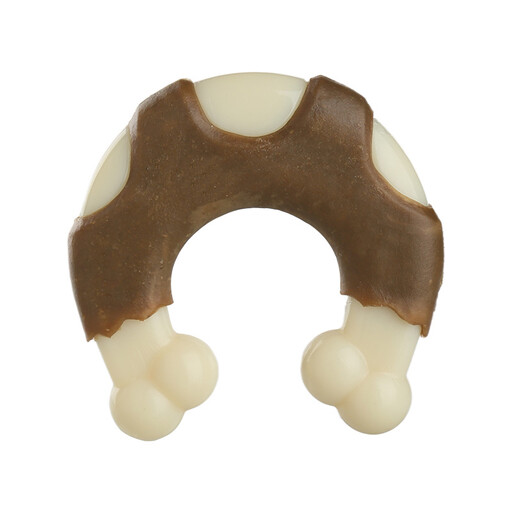
Why it's a great fit: This chew toy is designed for medium to large dogs with a strong chewing drive. The combination of durable nylon and tough cowhide offers a long-lasting activity.
It avoids the trap of toys that are too soft and destroyed within minutes. The robust construction is built for endurance, preventing frustration and the need for constant replacements.
The dual-material construction offers both the structural integrity of nylon and the satisfying texture of cowhide. Its shape is easy for dogs to grip.
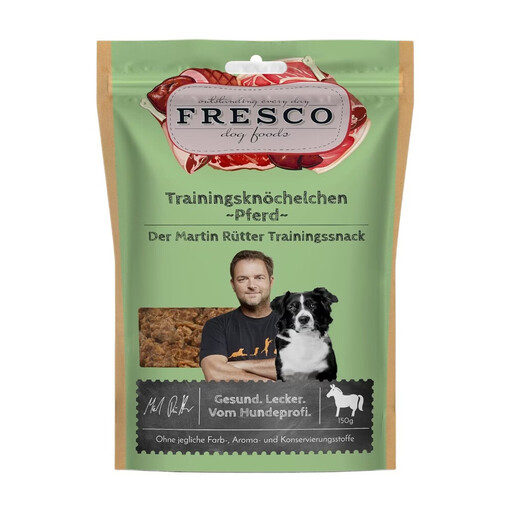
Why it's a great fit: This snack is ideal for dogs with allergies, intolerances, or sensitive digestion. The recipe is based on a single protein source (horse) and is completely grain-free.
It counters the "hidden ingredients" pitfall. The ingredient list is short and transparent: 92% horse meat, vegetable glycerin, and chicory inulin. No hidden fillers.
As a single-protein and grain-free dog bone, it is perfectly suited for elimination diets and provides a highly digestible reward without unnecessarily straining the digestive system.
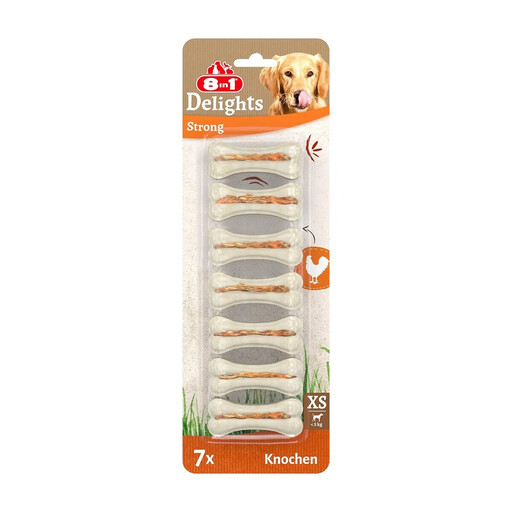
Why it's a great fit: Specifically developed for small dogs under 5 kg that still have a powerful chew drive. The extra-hard pressed cowhide ensures a long-lasting activity.
This product solves the "improper size and hardness" problem. It is small enough for mini dogs to minimise choking hazards, yet robust enough to not be consumed instantly.
The combination of tasty chicken on the inside and tough cowhide on the outside encourages persistent chewing. This supports the mechanical cleaning of teeth and serves as a dog bone for dental care.
We've compiled a comprehensive, up-to-date list of products that meet these strict selection criteria.
The frequency depends on the type of product. A durable chew toy can be available daily, while edible chew snacks for dogs should be considered a treat and a supplement to their main meal. Always follow the manufacturer's feeding guidelines on the packaging and adjust the daily food ration accordingly to avoid excessive calorie intake.
Puppies have a strong need to chew, especially during their teething phase. There are special puppy chews that are softer to avoid damaging their delicate teeth. Pay close attention to the manufacturer's age recommendation. Many products, such as the Pedigree Jumbone, are not suitable for puppies under 9 months according to the manufacturer. Start with softer materials and always supervise your puppy while it's chewing.
A safe chew bone is the right size for your dog (too large to be swallowed whole), does not splinter, and is made from non-toxic materials. Check the ingredients for any unwanted additives. However, the most important safety measure is your supervision. Never leave your dog unattended, especially with a new or edible chew. Remove any pieces that become small enough to be swallowed.