
Lieferung heute & morgen

Qualitätsgarantie

Willkommens-Angebote freischalten: KOSTENLOSE Lieferung | Bis zu 80 % RABATT | Kostenlose 30-Tage-JoyPlus-Testphase
App herunterladen
A dog collar needs to do more than just look good. It should fit securely, not restrict your dog unnecessarily, and be suitable for the intended use. However, it’s easy to run up unnecessary costs when buying: some models are too short, others lose their fit through frequent adjustment. Illuminated versions are also not always chosen with charging time, water resistance and care in mind.
This guide shows what British dog owners should consider before buying, and which model might suit different everyday situations.
Body weight alone tells you very little about the neck circumference needed. A sturdy dog with short fur may require a different collar width than a dog of the same weight with a slender neck. What matters is the measured neck circumference.
Measure the neck where the collar will be worn. As a rule, there should be room for about two fingers between the neck and the collar. The collar must not slip over the head, but it should also not dig in.
An adjustable dog collar only offers a practical advantage if the stated range matches your dog’s neck circumference. A model with a range of 36 to 48 cm cannot be used sensibly for a dog with a 50 cm neck circumference.
Also check:
An LED dog collar or a light-up collar for dogs can improve visibility at dusk and in the dark. However, it does not replace attention, a suitable lead, or safe handling on roads and paths. Reflective elements only work when light hits them, whereas a USB dog collar needs to be actively charged and switched on.
With illuminated models, therefore, pay attention to the stated operating time, the charging port, water resistance, and whether the product needs to be removed before swimming.
Neck circumference is the first non-negotiable parameter. Compare your measurement with the product’s stated adjustment range. For small dogs, a collar that is too wide can restrict freedom of movement. For medium-sized or sturdier dogs, the width should offer sufficient stability.
A dog collar for small dogs should be lightweight and have a finely graduated adjustment. For a dog collar for medium-sized dogs, the correct circumference, a robust buckle and a durable strap are particularly important.
Polyester, TPU and nylon are commonly used for collars. Polyester is easy to care for and holds its shape, while TPU can be flexible and splash-proof. What matters is not just the material name, but the quality of the stitching, edges, adjustment sliders and closures.
A quick-release buckle makes putting the collar on easier. Check the buckle, D-ring and webbing for damage before every walk. If there are tears, frayed areas or significant wear, the collar should be replaced.
A reflective dog collar needs an external light source, whereas an LED model emits its own light. According to the product information for the TRIXIE model, up to 5 hours of flashing light or up to 3 hours of constant light are possible on a full USB charge. These figures are manufacturer’s estimates and can vary depending on usage and battery condition.
An LED collar should not be used as the sole means of attachment. Also check whether the dog can chew the collar and whether it must be removed before swimming.
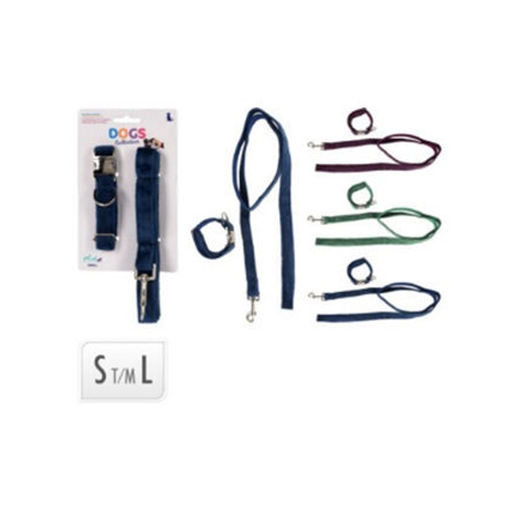
Why this product suits the profile: This set combines a collar with a 120 cm lead and is designed for daily walks, basic training sessions and getting started with dog equipment.
The combination reduces the risk of having to put together a collar and lead separately with different closures or mismatched materials.
120 cm lead length, adjustable collar and a coordinated set for everyday use and training.
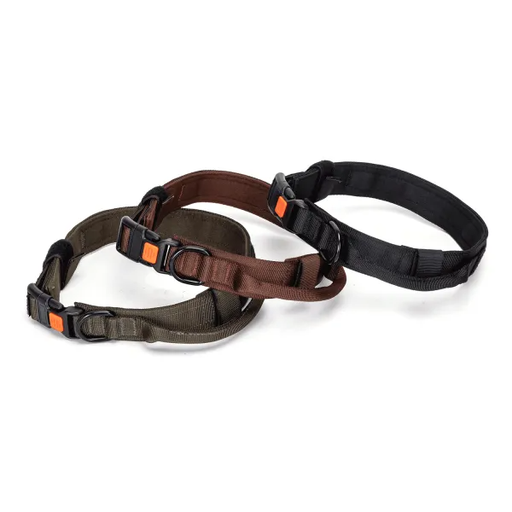
Why this product suits the profile: Designed for a neck circumference of 42 to 54 cm, it appeals to buyers who compare adjustment range, strap width and material specifications carefully.
The clearly stated range of 42 to 54 cm makes fit checking easier and prevents selection based solely on a size label like M.
Polyester strap, 3.8 cm width, 42–54 cm adjustment range and 105 g product weight according to product information.
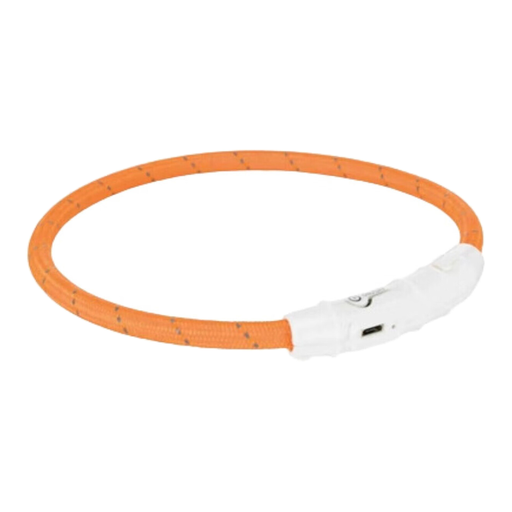
Why this product suits the profile: For regular evening walks, this LED dog collar offers a rechargeable lighting function and reflective elements.
The information on flashing and constant light, as well as USB charging, makes the ongoing charging effort transparent. The model should be removed before swimming.
USB charging, quick-release buckle, TPU/nylon material, reflective elements and adjustable length.
We have put together a complete, regularly updated list of products that fully meet these strict selection criteria and the safety regulations in force in the EU.
The lifespan depends on pulling strain, moisture, UV light and care. Clean the collar as needed with a damp cloth and mild detergent. Electronic components must not be fully immersed. Allow a wet collar to dry completely before using or storing it again.
Before every walk, a quick check of the following is worthwhile:
An anti-pull dog collar may have design features to counteract sudden jerking, but it should not be a substitute for appropriate training. If your dog pulls strongly, a suitable harness may be an additional option depending on the dog and situation. The collar and lead must always be used as specified in the respective product information.
As a rule, there should be room for about two fingers between the neck and the collar. The exact fit depends on the material, width and your dog’s fur. Check the fit after putting it on and again after a few minutes of movement.
The operating time depends on the light mode and the charge level. For the TRIXIE model mentioned, up to 5 hours of flashing light or up to 3 hours of constant light are stated. The battery, charging frequency and weather conditions can affect the actual runtime.
An LED dog collar emits its own light and can therefore be actively visible. A reflective dog collar, on the other hand, requires an external light source. Depending on the route, the lighting and your dog’s behaviour, a combination of visibility, a suitable lead and attentive handling can be sensible.