
Lieferung heute & morgen

Qualitätsgarantie

Willkommens-Angebote freischalten: KOSTENLOSE Lieferung | Bis zu 80 % RABATT | Kostenlose 30-Tage-JoyPlus-Testphase
App herunterladen
As a Joybuy Product Recommendation Officer, I see dog owners every day searching for simple solutions for their pet's dental health. Dental care snacks for dogs promise an uncomplicated way to combat tartar and bad breath. However, the market is overwhelming, and not every product delivers on its promise. Before you make a decision, it's crucial to understand the most common pitfalls that can lead to disappointment and unnecessary expenses.
Many products are advertised with convincing claims, but they often hide disadvantages that only become apparent after the purchase. Pay special attention to these two points:
To find a suitable and effective dental care snack, you should focus on objective features. These three parameters will help you make the right choice for your dog's dental care.
The effectiveness of dog snacks against tartar largely depends on their ability to mechanically abrade plaque. Look for products with a porous or grooved surface texture. During chewing, this texture rubs against the tooth surface and can help remove plaque before it hardens into tartar. A chewy consistency also encourages prolonged chewing, which increases cleaning time and massages the gums.
A look at the ingredients list is essential. For dogs with allergies or sensitive digestion, grain-free dental dog snacks are often the better choice. Products based on potato or tapioca starch are generally well-tolerated. Vegetarian chews are also an option, especially if you want to avoid certain animal proteins. Ingredients like parsley or fennel can additionally help reduce bad breath in dogs.
The size of the snack must match the dog. Manufacturers usually provide weight classes (e.g., for small, medium, or large dogs). Adhere to these recommendations to ensure the chew effectively cleans your dog's teeth and does not pose a choking hazard. For puppies under nine months, most dental snacks are not suitable as their teeth are not yet fully developed.
Based on the criteria mentioned above, we have selected some products from our range that are suitable for different needs.
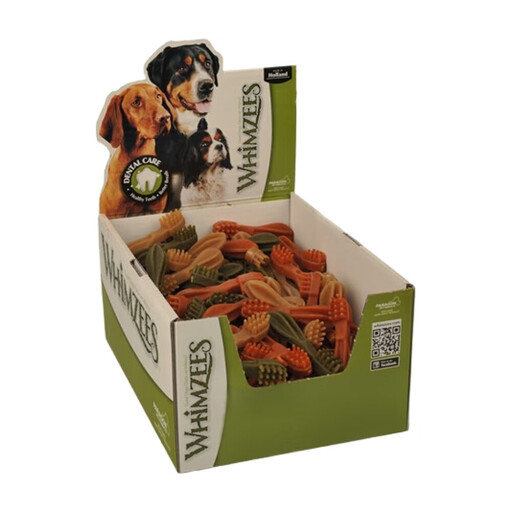
Why it's a good fit: These vegetarian snacks are specially designed for small dogs. The potato starch-based formula is grain-free and therefore often well-suited for dogs with sensitive digestion or food intolerances.
The clear, grain-free declaration avoids the trap of hidden fillers. The size S is precisely tailored to the jaw size of small dogs.
The toothbrush shape with grooves and nubs supports the mechanical cleaning of teeth and interdental spaces.
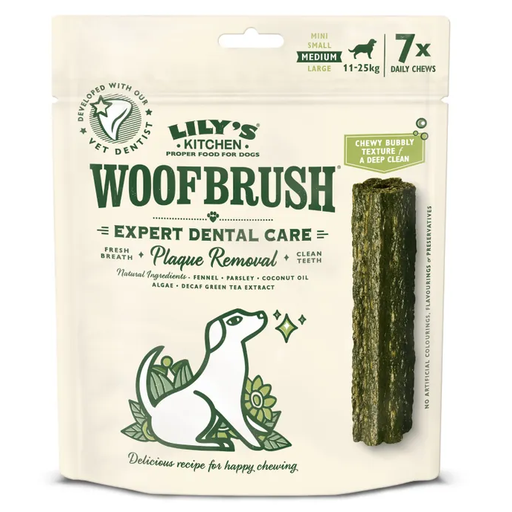
Why it's a good fit: For owners who value a simple ingredient list. This product uses natural components like algae, fennel, and parsley, which are traditionally used to support oral hygiene.
The transparent declaration of natural ingredients avoids the trap of vague marketing promises. The airy texture is gentle on teeth and prevents the danger of snacks that are too hard.
The spongy consistency allows for cleaning right up to the gumline. The recipe is grain-free.
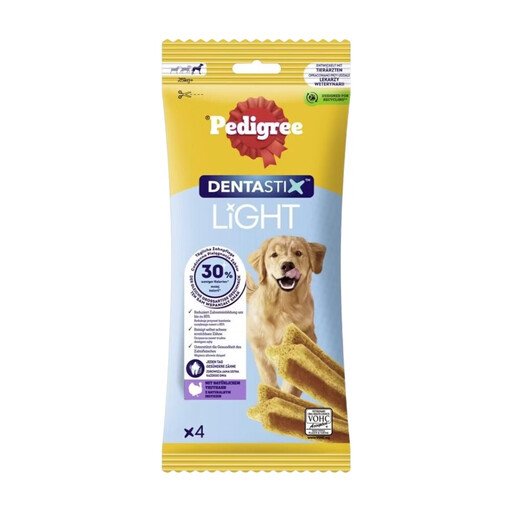
Why it's a good fit: Large dog breeds are often prone to being overweight. This low-fat version offers a calorie-conscious supplement to the daily food ration without sacrificing mechanical teeth cleaning.
The product is explicitly designated for large dogs over 25 kg, which minimises the risk of an incorrect size. The "Light" formula addresses the concern of too many calories in snacks.
The special X-shape and texture are designed to surround the teeth and reduce the build-up of tartar. According to the manufacturer, the fat content is 2.5%.
We have compiled a complete, up-to-date list of products that fully meet these strict selection criteria and current regulations.
1. How often should I give my dog dental care snacks? Most manufacturers recommend giving one snack per day. This is generally a good guideline to ensure continuous support for dental hygiene without excessively increasing daily calorie intake. Always follow the feeding recommendation on the packaging.
2. Do dental care snacks replace brushing? No. Dental care snacks are a useful supplement, but they cannot completely replace regular brushing with a dog toothbrush and toothpaste. The mechanical cleaning by the bristles remains the most effective method for removing plaque, especially in hard-to-reach areas.
3. How can I tell if a snack is too hard for my dog? Observe your dog while it chews. If it has difficulty biting the snack, leaves it in frustration, or you hear excessively loud cracking noises, the snack might be too hard. A good chew should be tough and keep the dog occupied for a while, but not so hard that there is a risk of tooth damage. When in doubt, choose a product with a more flexible, porous texture.