
Lieferung heute & morgen

Qualitätsgarantie

Willkommens-Angebote freischalten: KOSTENLOSE Lieferung | Bis zu 80 % RABATT | Kostenlose 30-Tage-JoyPlus-Testphase
App herunterladen
Regularly grooming your dog at home not only strengthens your bond but is also crucial for their health and well-being. However, the market for grooming products is overwhelming and full of lofty promises. Many pet owners invest in tools that turn out to be impractical, ineffective, or even stress-inducing for their animal. This guide will help you identify the typical pitfalls and make an informed choice tailored to your pet's actual needs.
Before making a purchase, it's helpful to know the three most common problems that arise with low-quality or unsuitable grooming products:
To avoid a bad purchase, focus on objective criteria that truly make a difference. Three parameters are crucial when selecting dog grooming tools.
The composition of the bristles or blades is the most important criterion. Every coat has different requirements.
A tool that fits well in your hand makes the job significantly easier. Look for a non-slip, ergonomically shaped handle. Cleaning is just as important. Models with a button to retract the bristles (self-cleaning brush) save time and ensure that no old hair and skin flakes remain in the tool.
With electric tools like dog clippers or nail clippers, safety and a low noise level are paramount.
Instead of making a blanket recommendation, we have identified products that are tailored to specific needs and user profiles.
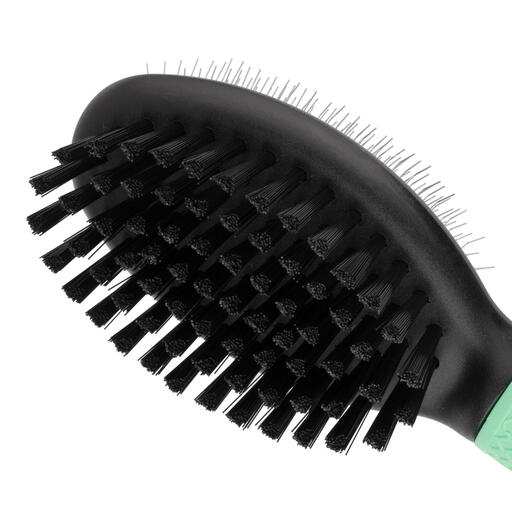
Why it's a good fit: Ideal for beginners looking for a versatile and affordable tool for basic coat care. Suitable for cats and dogs with medium-length fur or an undercoat that requires regular but straightforward grooming.
This model bypasses the "one-size-fits-all" myth with its double-sided design. The metal bristles remove loose hair and light mats, while the nylon bristles smooth the topcoat. It offers two specific functions in one tool.
Two brush types in one for comprehensive basic grooming. The non-slip rubber handle ensures a secure grip.
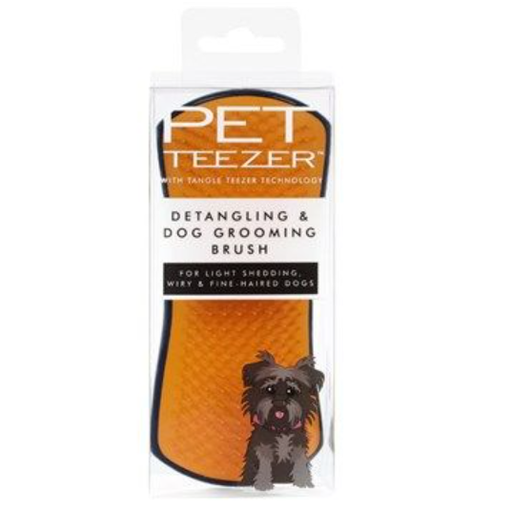
Why it's a good fit: Designed for owners of dogs with long, curly, or mat-prone fur. The technology is engineered to detangle knots without pulling or causing breakage.
This product is the antithesis of the "one-size-fits-all" approach. It uses a patented two-tiered bristle technology specifically designed for detangling. The long bristles reach the undercoat, while the shorter ones smooth the topcoat.
The flexible bristles prevent painful tugging and hair breakage, making it suitable even for sensitive animals. The ergonomic handle ensures control.
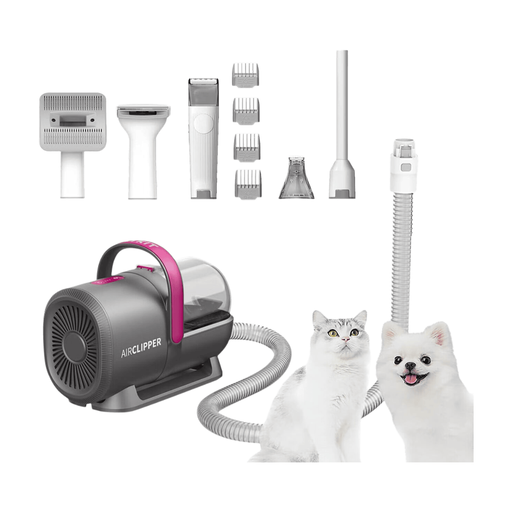
Why it's a good fit: For pet owners who want a clean, efficient, and comprehensive solution. This **grooming kit with vacuum** combines brushing, trimming, and hair removal with a suction feature that captures loose hair immediately.
It solves the problem of flying hair and the laborious cleanup after grooming. The integrated vacuum (which the manufacturer claims collects up to 99% of hair) addresses a major design flaw of conventional grooming kits.
A complete **grooming kit** with 5 attachments for various applications. The low-noise design (under 60 decibels, according to the manufacturer) reduces stress for the animal.
We have compiled a complete, up-to-date list of products that fully meet these strict selection criteria and UK safety regulations.
1. How often should I groom my pet's coat? The frequency heavily depends on the breed, coat length, and season. As a rule of thumb: long-haired breeds and those with dense undercoats should be brushed several times a week to prevent matting. Short-haired breeds typically only need a weekly session to remove loose hair and keep the skin healthy.
2. What should I look for in a set of dog clippers? Besides a low noise level (quiet clippers), the blades are crucial. Ceramic blades stay cooler for longer than metal blades and are often a good choice for sensitive skin. Also, look for a set with various attachment combs to flexibly adjust the cutting length. A cordless model offers more freedom of movement.
3. Are nail clippers with an LED light really useful? Yes, especially for animals with light-coloured or translucent nails. The nail clippers with an LED illuminate the nail, making the "quick" (the blood and nerve vessel) visible. This helps prevent painful injuries from cutting too short and gives the user more confidence. However, visibility is limited with very dark or thick nails.