
Lieferung heute & morgen

Qualitätsgarantie

Willkommens-Angebote freischalten: KOSTENLOSE Lieferung | Bis zu 80 % RABATT | Kostenlose 30-Tage-JoyPlus-Testphase
App herunterladen
Running with your dog can be an enriching experience. But the wrong equipment can quickly turn this athletic activity into a safety hazard. Many dog owners invest in a jogging leash only to find it creates more problems than it solves. Before you make a decision, it's crucial to understand the most common pitfalls, which often only become apparent after a few weeks of use.
The three most common flaws in jogging leashes are:
A thoughtful selection based on objective criteria will protect you from these issues and ensure a safe and comfortable running experience.
To make an informed decision, focus on the core technical features rather than marketing promises. Three parameters are essential for the function and safety of a sports leash for dogs.
An integrated shock absorber is the most important feature of a high-quality dog jogging leash. This elastic element, often designed as a bungee section, absorbs the energy generated by a dog's sudden stops or changes in direction. It protects the runner's spine and joints while preventing the dog from experiencing a harsh jolt on its collar or harness. Ensure the elasticity is matched to your dog's weight—too much stretch offers no control, while too little defeats the purpose.
A hands-free dog leash is only as good as its waist belt. A good running leash with a waist belt must meet several criteria:
The belt is your direct connection to your dog and the foundation for control, leaving your hands free for a natural running motion.
The durability and safety of a leash depend directly on the materials used. Pay attention to the following points:
Reflective elements woven into the material also increase visibility and safety during runs at dusk. These features are also crucial if you are looking for a dog leash for hiking.
Based on these objective criteria, we have identified products that meet the specific requirements of various active dog owners.
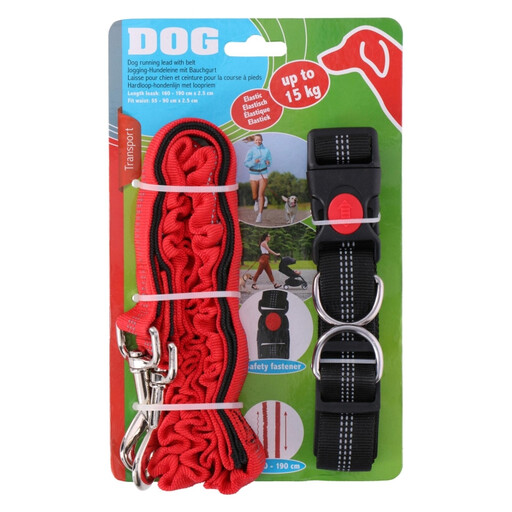
Why it's a good fit: This set is specifically designed for hands-free running. It's aimed at runners with dogs up to 15 kg who are looking for a complete solution that offers safety and comfort for both. The adjustable belt and elastic leash allow for a natural running motion.
The integrated elastic buffer system directly counteracts the problem of harsh jolts. The adjustable waist belt (55–90 cm) with a safety buckle prevents slipping and chafing.
A complete system with a shock absorber and waist belt, specially developed for the demands of jogging with small to medium-sized dogs.
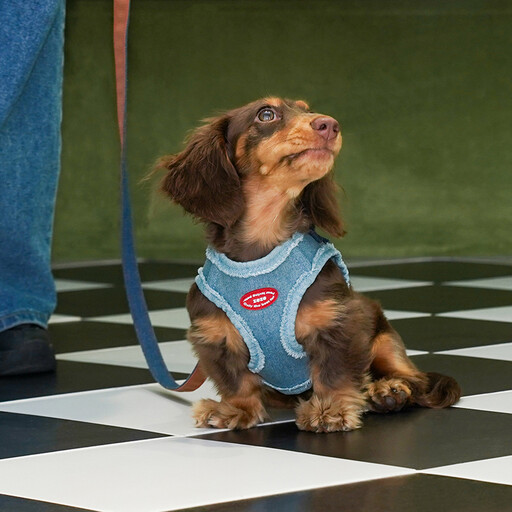
Why it's a good fit: For owners of small dogs (2.5–5 kg) who prioritise comfort and pressure distribution. Ideal for brisk walks or light jogs where a harness is preferable to a collar to protect the sensitive neck area.
The wrap-around harness design distributes pulling pressure evenly across the chest and back. This avoids the concentrated stress on the neck that occurs with sudden movements when using a simple collar.
The ergonomic design of the harness, featuring a breathable mesh lining, ensures high comfort and safety for active small dogs.
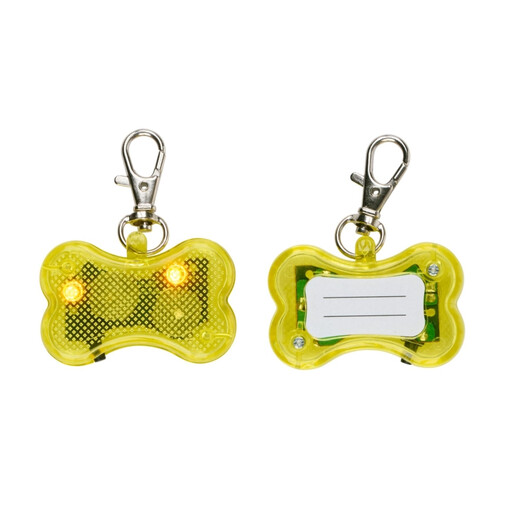
Why it's a good fit: This is an essential accessory for anyone who runs at dusk or in the dark. It complements any leash and harness, ensuring the dog is highly visible to other road users and pedestrians.
It directly addresses the often-overlooked safety risk of poor visibility. Many leashes have only minimal reflective strips; an active light provides a much higher level of safety.
Increases visibility with various light modes (steady, slow flash, and fast flash) and can be easily attached to any collar or harness.
We have compiled a complete, up-to-date list of products that fully meet these strict selection criteria.
A dog's physical development is crucial. Generally, you should wait until their bone growth plates have closed. For smaller breeds, this is often around 12 months, while for larger breeds, it can take up to 18–24 months. Start with short, slow runs and gradually increase the distance and pace. A consultation with your vet can provide clear guidance.
Start in a quiet environment. Put on the waist belt and attach the leash, but initially, hold it with your hand as well. Practice running for short distances, giving your dog time to get used to the new range of motion. Praise calm behaviour and use positive reinforcement. Once your dog is running calmly beside you, you can let go of the leash.
Yes, a high-quality jogging leash with a shock absorber is often an excellent dog leash for hiking as well. The elastic component is very useful on uneven terrain, as it cushions abrupt movements when the dog jumps over an obstacle or stops unexpectedly. The hands-free models also allow you to use hiking poles or keep your hands free for better balance.