
Lieferung heute & morgen

Qualitätsgarantie

Willkommens-Angebote freischalten: KOSTENLOSE Lieferung | Bis zu 80 % RABATT | Kostenlose 30-Tage-JoyPlus-Testphase
App herunterladen
A dog house and dog run must suit the animal, the location, and its intended purpose. An insulated dog house for the garden has different requirements than a puppy pen in the living room or a metal pet enclosure on the balcony. Those who focus solely on product images, grand promises, or a low price often overlook crucial details.
This buying guide from the Joybuy Product Recommendation Officer highlights the dimensions, materials, and features that matter before you make a purchase. The product selection is based on the specified product data and is organized by different usage scenarios.
A weatherproof dog house should offer more than just a roof. Key factors include an elevated floor, a sloped roof, appropriate seals, and a location with good drainage. Wood, metal fittings, and plastic components can behave differently under persistent moisture, frost, or intense sunlight.
For an outdoor dog house, therefore, you should check:
The term insulated dog house alone reveals little about its construction. More meaningful are details on the number of insulated sides, the thickness of the insulation layer, and a removable inner liner. An insulated house also does not replace adaptation to the weather, the dog's age, coat type, or health condition. In extreme temperatures, the animal should not be left outside unsupervised.
A dog house for small and medium-sized dogs should be neither too cramped nor unnecessarily large. The dog should be able to turn around, lie down, and stand up comfortably. A very large house can be harder to keep warm in cold weather. For a dog run, height is also crucial: a low fence may be unsuitable for climbing or jumping animals.
Measure the body length from the tip of the nose to the base of the tail, as well as the shoulder height. For the house, consider the internal dimensions, not just the external ones. For a puppy pen, the area should provide space for a sleeping area, water bowl, and a short exercise zone, without giving the puppy too much unsupervised space for unwanted behavior.
For a dog playpen or dog run, the following questions are also relevant:
A metal pet enclosure should consist of sturdy grid elements with securely connected joints. The bar spacing must be small enough that the head, paws, and snout cannot fit through. For the EUGAD model, the specified spacing is 1.5 cm. The construction consists of metal, plastic connectors, and additional cable ties.
For a wooden dog crate, stable doors, secure locks, and a sturdy base plate are important. Wood surfaces should be regularly checked for splinters, moisture, and bite marks. A foldable dog crate can be practical for indoor use or transport, but is not automatically suitable as a permanent outdoor shelter.
Removable floors, washable liners, and coated mats reduce cleaning effort. A textile floor mat should be cared for according to the manufacturer's instructions. For the EUGAD enclosure, for example, an Oxford fabric mat with PU coating is described; according to product details, it should not be machine washed.
An indoor/outdoor dog kennel requires different properties depending on the location. Indoors, floor protection, noise level, and ventilation are important. Outdoors, water drainage, UV resistance, and stable installation are also crucial. A small animal enclosure designated as "indoor" should not be left permanently in the rain or direct sun.
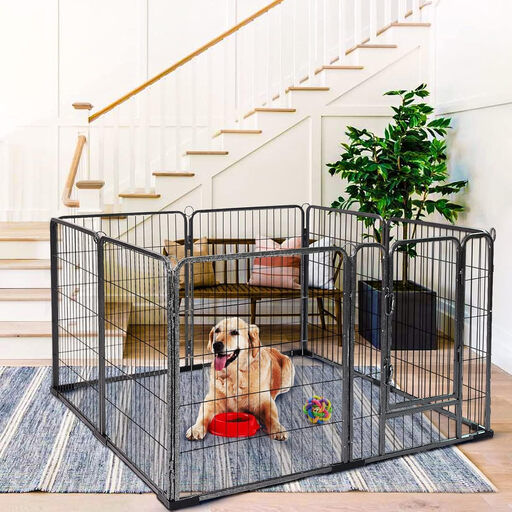
Why it fits: This modular puppy pen is suitable for small and medium-sized dogs and for changing locations in the apartment, garden, or while traveling.
According to the product description, the eight panels can be arranged in a rectangle, square, or octagon. The door, feet, and connectors should still be checked before each use.
Metal construction, tool-free assembly, foldable design, and specified dimensions of 134 × 134 × 80 cm.
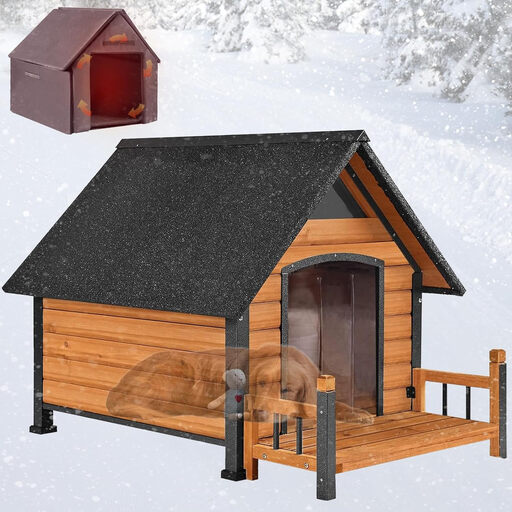
Why it fits: For owners of small to medium-sized dogs seeking a combined solution for indoor and outdoor areas with a removable liner.
The product data specifies six-sided insulation with 2 cm foam, an elevated floor, and a weather-resistant asphalt roof. These are verifiable details rather than a mere advertising claim.
Solid wood and iron frame, removable floor, detachable washable liner, and water-protected plastic feet.
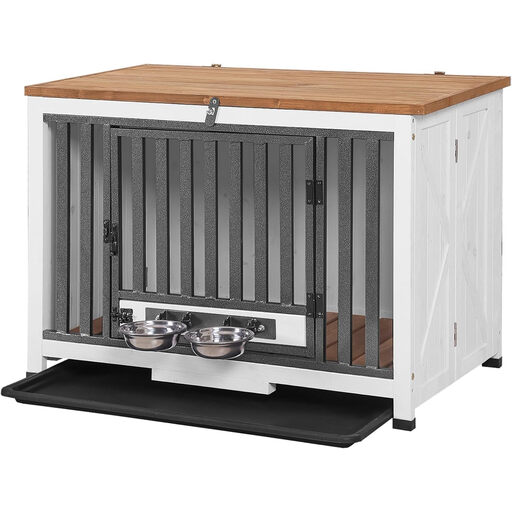
Why it fits: An option for small to medium-sized dogs indoors when space-saving storage and easy access are important.
The product description explicitly states indoor use. This prevents the crate from being mistakenly planned as a permanent outdoor shelter.
Tool-free, foldable construction, sturdy iron frame, removable base plate, and cleaning drawer.
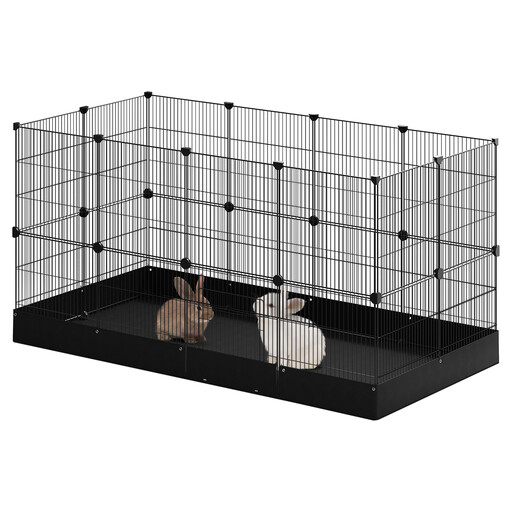
Why it fits: For rabbits, guinea pigs, and other small animals that need a clear indoor run with a floor mat.
According to product details, this model is not intended for adult dogs or permanent outdoor use. This limitation should be considered before purchase.
23 grid panels, small door, 1.5 cm bar spacing, adjustable shape, and Oxford floor mat.
We have compiled a current selection of products that can be compared based on dimensions, material, location, and usage scenario.
The run should accommodate a sleeping area, water bowl, and adequate exercise space. For a rapidly growing puppy, a modular model whose panels can later be rearranged or expanded is recommended. The height must match the animal's jumping ability and behavior. Supervision remains necessary.
This depends on the construction, material, maintenance, and location. An elevated foundation, a tight roof, and a removable liner support practical use. Nevertheless, the house must be regularly checked for moisture, loose connections, and damage. In severe frost, extreme heat, or inclement weather, a sheltered indoor area is preferable.
In addition to the purchase price, replacement mats, cleaning supplies, repairs, and possibly additional anchoring may be required. For outdoor models, wood maintenance, rust checks, and protection against ground moisture should also be factored in. An easily accessible door and a removable floor can reduce daily cleaning effort.