
Lieferung heute & morgen

Qualitätsgarantie

Willkommens-Angebote freischalten: KOSTENLOSE Lieferung | Bis zu 80 % RABATT | Kostenlose 30-Tage-JoyPlus-Testphase
App herunterladen
The selection of dog toys is vast, but not every product lives up to its promise. As a dog owner, you want to provide your pet with safe and durable enrichment. Yet, the search often ends with a quickly destroyed toy or, even worse, a safety hazard for your dog. This guide will help you recognise the common pitfalls and make an informed decision.
Many products are marketed with exaggerated claims. Pay close attention to these two points to avoid disappointment:
To find the right toy, you should check three essential criteria. These will help you objectively evaluate a product's quality.
The choice of material is crucial. Each material has specific properties that make it suitable for different chewing styles and types of play.
Every dog has different preferences. Choosing the right type of toy encourages their play drive and prevents boredom.
The toy's size must be appropriate for the dog's size. A toy that is too small can be swallowed, leading to a life-threatening intestinal blockage. Conversely, a toy that is too large or heavy can be frustrating. Check the seams on fabric toys and the edges on hard plastic toys for clean and safe construction.
Here are some product recommendations tailored to specific profiles of dogs and owners.
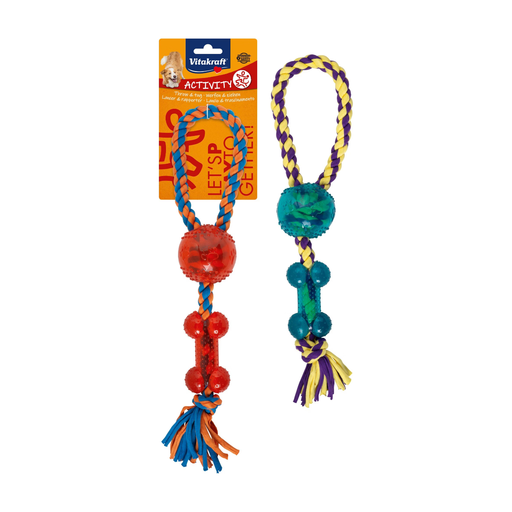
Why This Fits Their Persona: Ideal for owners who want to play actively with their dog. It is excellent for games of tug-of-war, which strengthen the bond and provide great exercise.
This toy is clearly designed for interactive play, not as a dedicated chew toy. The combination of a jersey rope and TPR elements is built to withstand pulling forces, thus bypassing the problem of toys that are quickly destroyed during unsupervised chewing.
Combines a tug rope with TPR chew elements. The material is described as being gentle on gums.
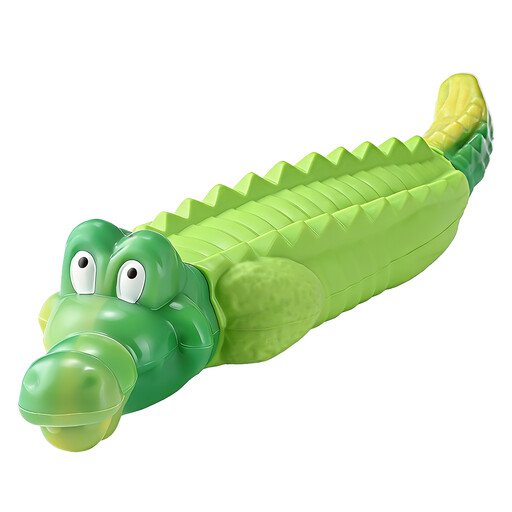
Why This Fits Their Persona: Specifically developed for medium to large dogs with powerful jaws. Its construction is designed to withstand intense chewing activity.
Instead of an empty promise of durability, this product relies on a logical design: a hard nylon chew toy core with a flexible outer layer of natural rubber. This dual-layer structure offers greater resistance than many single-material toys.
Durable dog toy thanks to its dual-layer construction. The flexible outer layer is gentle on the gums.
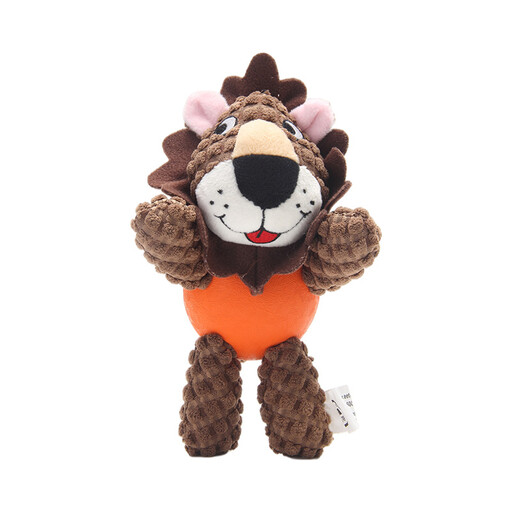
Why This Fits Their Persona: This puppy toy is suitable for the sensitive teething phase. The combination of soft corduroy and natural rubber massages the gums without putting stress on new teeth.
This toy is not marketed as indestructible. It is intended for supervised, gentle play and chewing, thus avoiding the false promise that a plush toy can withstand a power chewer. The hand-stitching increases durability for its intended purpose.
Soft materials are gentle on the teeth. The built-in squeaker provides extra stimulation and encouragement to play.
We have compiled a complete, up-to-date list of products that meet these strict selection criteria and rigorous safety standards.
Materials like 100% natural rubber, food-grade nylon, and TPR (Thermoplastic Rubber) are generally considered safe options. Look for labels like "BPA-free" and "non-toxic." Avoid soft PVC, which can contain harmful phthalates (plasticisers). With any material, it is crucial that the dog does not swallow any pieces.
There is no fixed rule. Replacement depends on the toy's condition and the intensity of use. Inspect toys regularly for cracks, loose parts, or significant wear. As soon as a toy is damaged to the point where pieces could break off or be swallowed, it should be discarded immediately.
The cleaning method depends on the material.