
Lieferung heute & morgen

Qualitätsgarantie

Willkommens-Angebote freischalten: KOSTENLOSE Lieferung | Bis zu 80 % RABATT | Kostenlose 30-Tage-JoyPlus-Testphase
App herunterladen
Dog toys should fit into your dog’s daily routine: a dog ball for fetch games, a tug toy for dogs for interactive play, or an interactive dog toy for solo entertainment. At first glance, the choice seems straightforward, but product images and marketing claims don’t always reveal whether a toy suits your dog’s size, bite strength and play style.
As a Joybuy Product Recommendation Officer, I’ve filtered out the key details. This way, you can avoid buying the wrong toy and compare products more effectively.
Terms like “robust”, “tear-resistant” or “bite-proof” describe a material property, but they’re no guarantee for every dog. A dog with a strong chewing instinct can damage even a reinforced toy. What really matters is the material construction, wall thickness, seams and any small parts.
With a chew toy for dogs, it should also be clear whether it’s intended for light, moderate or particularly strong chewers. Warnings like “not suitable for aggressive chewers” are important when comparing products and shouldn’t be overlooked.
A breed recommendation is no substitute for measuring. A toy that’s too small can be swallowed, while one that’s too large may be difficult for a small dog to carry. Check the diameter, length and weight, and compare these measurements with your dog’s mouth.
For medium and large dogs, larger fetch or chew toys make sense. For puppies and small dogs, the grip, weight and movement should be adjusted accordingly.
A treat toy for dogs with a motor, battery or sensors requires different care than a simple dog ball. Electronic units generally shouldn’t be fully submerged in water. With an inflatable dog toy, you’ll need to regularly check the valve, outer shell and air pressure.
The manufacturer’s instructions on cleaning, storage and use are therefore a practical selection criterion – not just a note for the manual.
Look for specific details rather than general marketing claims:
A combination of materials isn’t automatically suitable for every dog. Supervision is still necessary for strong chewers.
A 7 cm ball weighing 55 g behaves differently when thrown than an 18 cm soccer ball. For fetch training, easy-to-grip surfaces and good visibility outdoors also matter. A tug toy should be long enough to keep your hands at a safe distance from your dog’s mouth.
With a dog frisbee, diameter and material are key. Models measuring 18 or 21 cm may be intended for medium and large dogs according to product details. Even so, your dog should be able to pick up the disc safely without having to jump excessively or land abruptly.
Match your purchase to the intended use:
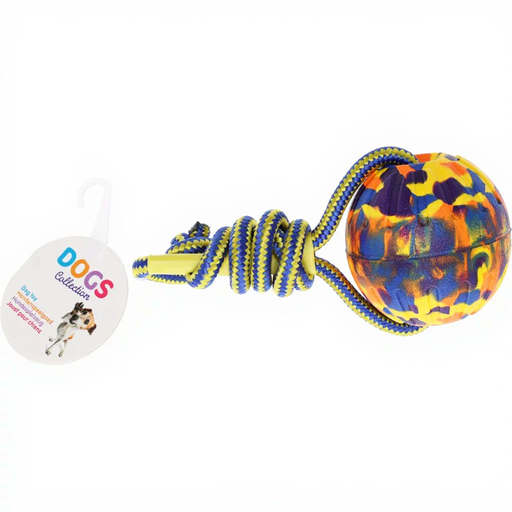
Why this product fits the profile: The 7 cm EVA ball is attached to a 55 cm rope and weighs 55 g according to the product details. This makes it suitable for simple throwing and tug games with a manageable weight.
The product data provides specific measurements, weight and material. This makes it easier to check whether the ball and rope suit your dog’s size before buying.
EVA ball with rope, 7 cm diameter, 55 cm rope length and lightweight design.
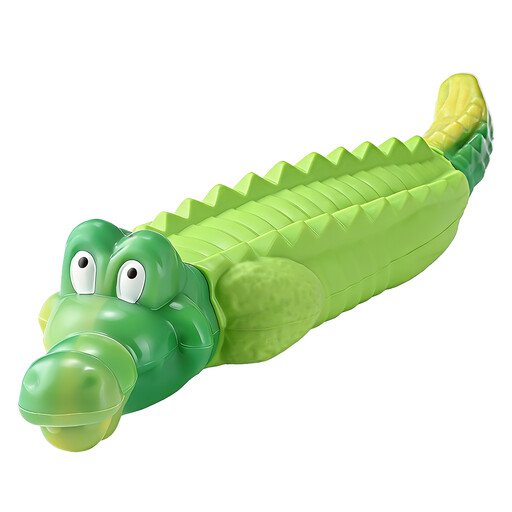
Why this product fits the profile: The combination of a nylon core and natural rubber outer layer is designed for medium and large dogs, and supports throwing, tugging and supervised chewing sessions.
The two-layer construction is described in more detail than a generic durability claim. Still, you should check it regularly for cracks, breaks and loose parts.
Natural rubber outside, nylon inside, dimensions 24 × 6 cm and textured surface.
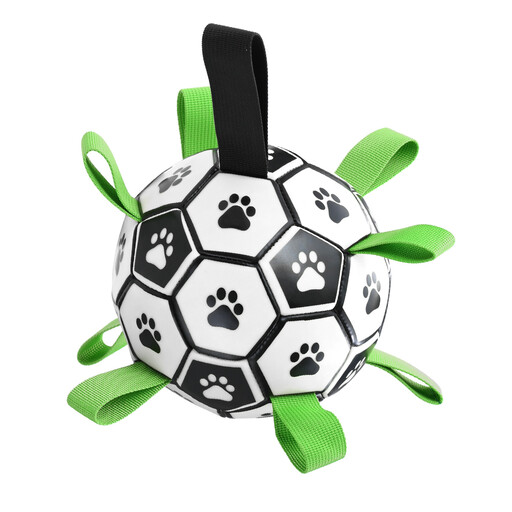
Why this product fits the profile: The inflatable dog ball can be deflated for transport and storage. The 18 cm size is designed for chasing, throwing and fetch games with dogs of various sizes.
The instructions explicitly mention avoiding over-inflation and checking for holes and tears. This addresses the key consideration for inflatable products.
18 cm diameter, inflatable construction, woven outer texture and space-saving storage after deflation.
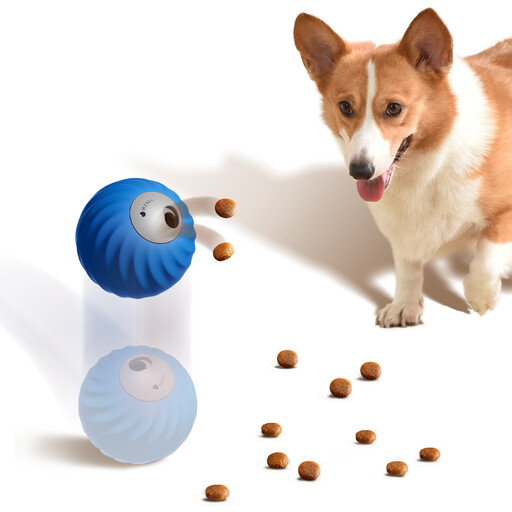
Why this product fits the profile: The 10 cm ball features a treat-dispensing function, two play modes, USB-C charging and a removable plush cover. It’s suitable for supervised indoor play.
The instructions rule out use for aggressive chewers and require dry care of the electronics. This prevents unrealistic expectations of an electronic chew toy.
Treat dispensing, two play modes, USB-C rechargeable battery and washable plush cover.
We’ve put together a full, regularly updated list of products that fully meet these strict selection criteria and the safety regulations in force across the EU.
Even robust dog toys are consumable items. Check before and after play:
Damaged products should not be used. With electronic toys, keep charging cables out of your dog’s reach. Inflatable models must not be inflated beyond the specified pressure.
For large dogs, look for models with appropriate dimensions and sturdy materials, such as a larger chew toy made from natural rubber and nylon, or a dog frisbee with an 18 to 21 cm diameter. What really matters, however, is your dog’s mouth size, chewing behaviour and the specific purpose. Supervision is still necessary.
There’s no one-size-fits-all answer to lifespan. It depends on the material, frequency of use, play style and bite strength. A toy used for throwing games may stay intact longer than one that’s chewed intensively every day. Regular inspections are more telling than any general durability claim.
With simple toys, there are usually no ongoing costs beyond occasional replacements. Electronic products need electricity for charging, and treat-dispensing toys require suitable snacks. Also check whether covers or other wear parts can be replaced separately.