
Lieferung heute & morgen

Qualitätsgarantie
App herunterladen
Kategorien
Selecting the right dog carrier is a decision that should be based on objective criteria. It not only ensures your pet's comfort but also the safety of all passengers during a car journey, as mandated by German road traffic regulations (StVO) for securing cargo. Legally, a pet is considered cargo and must be secured accordingly. This article analyses the technical parameters and functional differences of various models to provide a basis for making an informed decision.
The choice of the right transport solution depends on the size of your pet, the primary use case, and the material properties.
Carriers can be broadly divided into two material categories:
The size of the carrier is a crucial factor for both safety and comfort. The animal should be able to stand up straight, turn around, and lie down in a natural position.
A carrier that is too large won't provide enough support during sudden braking, while one that is too small will cause stress and discomfort.
Pay attention to the following technical details:
Based on an analysis of product specifications and functional design, we present three distinct models.
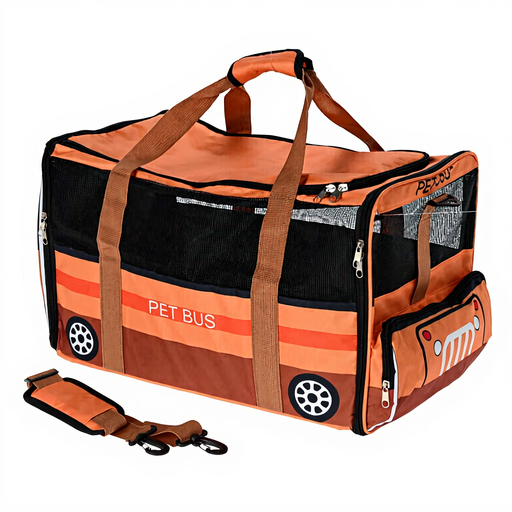
Why we recommend this product: This dog transport bag combines a lightweight build with a sturdy structure. The polyester material is durable, and the large mesh panels on multiple sides ensure excellent air circulation. The design, featuring a reinforced base and a removable liner, provides structural stability.
Advantages:
Who it's for:
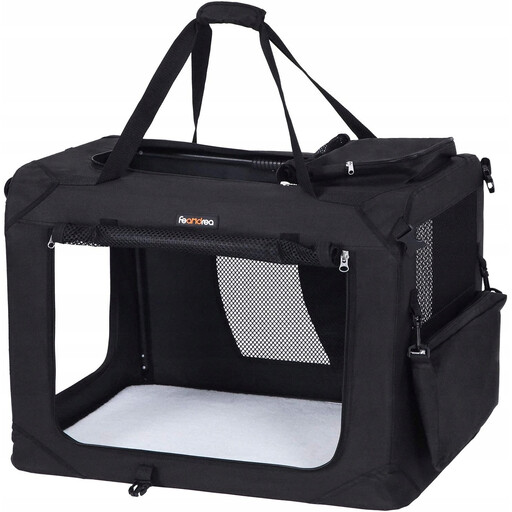
Why we recommend this product: This model is a collapsible dog crate for large breeds. It combines the stability of a steel tube frame with the flexibility of a textile carrier. The Oxford fabric (polyester) used is robust, and the scratch-resistant mesh fabric provides visibility and ventilation. The folding function allows for space-saving storage.
Advantages:
Who it's for:
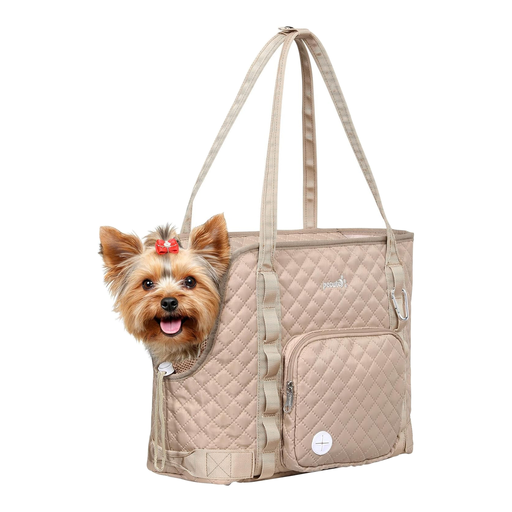
Why we recommend this product: This dog tote bag is designed for transporting very small pets in an urban environment. Weighing only 0.7 kg, it is extremely lightweight. The design focuses on safety with an integrated tether for attaching to a harness and a full-length zipper. Its appearance is styled after a handbag.
Advantages:
Who it's for:
The products presented here cover specific use cases. If these models do not exactly meet your requirements, or if you are looking for a small carrier for a different weight class or a cat carrier with different features, you will find a wider selection of designs and sizes in our main category.
Discover more models in the Dog Carrier Bag category
1. Is a dog carrier mandatory in a car? In Germany, there is no explicit requirement for a carrier. However, § 23 of the StVO (German Road Traffic Regulations) stipulates that the driver is responsible for ensuring that road safety is not compromised by the cargo. An unsecured animal can become a dangerous projectile in an accident or distract the driver. Securing your pet in a suitable dog car carrier is one of the safest methods to comply with this regulation.
2. How large does a dog carrier need to be? The carrier must allow the animal to stand up straight, turn around, and lie down comfortably. As a rule of thumb, the carrier should be about 15 cm longer and taller than the dog's body length (nose to base of tail) and standing height (floor to head).