
Lieferung heute & morgen

Qualitätsgarantie

Willkommens-Angebote freischalten: KOSTENLOSE Lieferung | Bis zu 80 % RABATT | Kostenlose 30-Tage-JoyPlus-Testphase
App herunterladen
As a responsible pet owner, you want only the best for your dog. But the market for dog treats is overwhelming and full of marketing promises. Many products advertised as healthy contain hidden flaws that aren't obvious at first glance. This guide will help you separate the wheat from the chaff and make an informed decision for your four-legged friend.
Before we dive into quality features, it's important to know the most common pitfalls that can lead to a bad purchase.
To ensure you're getting a high-quality product, you should check three core parameters. These will give you an objective basis for your purchasing decision.
The order of ingredients is regulated by law: the ingredient with the largest weight percentage is listed first. Look for products where a specific type of meat (e.g., "chicken breast fillet" or "beef") is at the top of the list. A high meat content from clearly declared sources is a good sign. Phrasing like "meat and animal by-products (of which 4% is chicken)" suggests that the rest of the meat content comes from undefined sources.
Sugar-free dog treats are a fundamental requirement for a healthy diet. Sugar promotes obesity, dental problems, and can strain your dog's metabolism. Grain-free dog treats are also a preferred choice for many owners, especially for dogs with known allergies or sensitive digestion. Wheat, corn, and soy are common triggers for intolerances.
Not every snack is suitable for every purpose.
Here are some product recommendations tailored to the different needs of dogs and their owners.
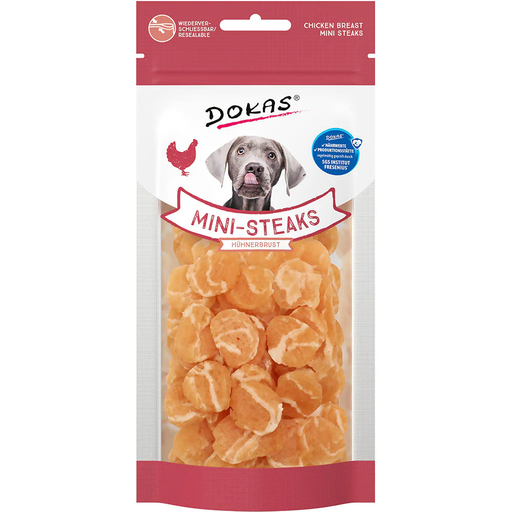
Why it's a good fit: The bite-sized pieces are ideal for quick rewards during training without distracting the dog for long. The high palatability from chicken and cod provides the necessary motivation.
The formula is grain-free and has no added sugar. The ingredient list is clearly declared with 91% chicken breast fillet and cod.
Perfect size for training and on the go. Moderate protein content (40%) and low fat content (2.9%).
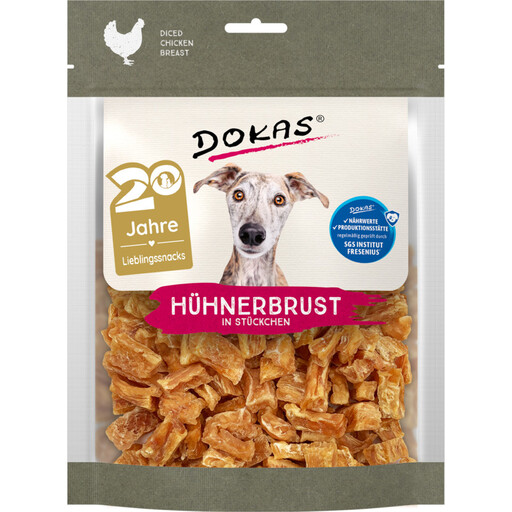
Why it's a good fit: For owners who value pure and traceable origins. According to the manufacturer, the meat comes from humanely raised animals without the use of antibiotics.
The formula is minimalistic: 93% chicken breast, free from sugar, grain, soy, and gluten. The declaration is transparent and avoids vague terms.
Very high protein content of 57% crude protein. As a single-protein snack, it's also an option for dogs with dietary sensitivities.
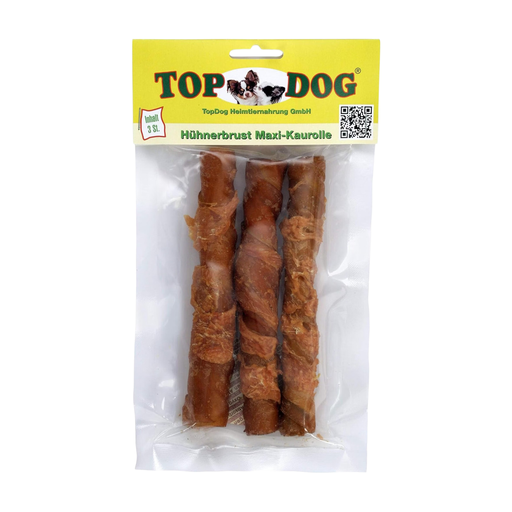
Why it's a good fit: This chew roll combines a tasty meat coating with a tough inner roll of pork hide. This provides long-lasting activity and satisfies the natural chewing instinct.
The formula is grain- and sugar-free. The ingredient list is simple and clear: 70% pork hide and 27.3% chicken.
Promotes dental cleaning and strengthens chewing muscles. Ideal for calming and occupying your dog.
We've compiled a complete, up-to-date list of products that meet these strict selection criteria.
The recommended amount depends on your dog's size, age, activity level, and the specific product. A rule of thumb is that treats should not make up more than 10% of the daily calorie intake. Always follow the feeding recommendations on the packaging and reduce the main meal accordingly to prevent weight gain. Ensure fresh water is always available.
Not necessarily for every dog. However, they are essential for dogs with a diagnosed grain allergy or intolerance. Many owners also opt for grain-free feeding without a medical reason, viewing it as more species-appropriate since dogs' ancestors primarily ate meat. The key factors are individual tolerance and the overall quality of the product.
It is not recommended. Dogs and cats have different nutritional needs. For example, cats require taurine, an amino acid that is often missing or insufficient in many dog snacks. An occasional small bite is usually harmless, but for regular rewards, you should use special cat treats, such as the GimCat Sticks with Poultry, which are tailored to the needs of cats.