
Lieferung heute & morgen

Qualitätsgarantie

Willkommens-Angebote freischalten: KOSTENLOSE Lieferung | Bis zu 80 % RABATT | Kostenlose 30-Tage-JoyPlus-Testphase
App herunterladen
As a Joybuy Product Recommendation Officer, I see countless dog owners standing in front of the vast dog treat aisle every day, unsure which choice is right for their four-legged friend. The packaging makes big promises, but not every treat delivers. An informed decision not only saves you money but also benefits your dog's health.
The sheer variety of treats can quickly become overwhelming. Many products use marketing buzzwords that obscure more than they clarify. Before you buy, you should be aware of the three most common pitfalls:
To avoid falling into these traps, it's helpful to focus on objective criteria. You can use the following three points to assess the quality of dog treats factually.
The ingredient declaration is the most important tool for evaluating a treat. An open declaration lists all ingredients individually and with their percentages (e.g., "Chicken 70%, Potatoes 15%"). This creates transparency. A closed declaration groups ingredients into categories (e.g., "Cereals, meat and animal by-products"), which obscures the exact composition. Look for natural treats with a short, understandable ingredient list. For dogs with intolerances, grain-free dog treats or single-protein (monoprotein) products are often a great choice.
The nutritional content should match your dog's activity level and health status. Protein-rich dog treats with a high meat content are well-suited for active dogs and as a motivating reward for dogs during training. The crude protein content should ideally be above 25%. For dogs prone to obesity or for older, less active animals, low-fat treats are the better option. A quick look at the analytical constituents (crude protein, crude fat, crude fibre, crude ash) on the packaging will provide clarity.
Not every treat is suitable for every situation. The texture and size play a crucial role:
Based on these objective criteria, we have compiled a selection of products suitable for various requirements and dog types.
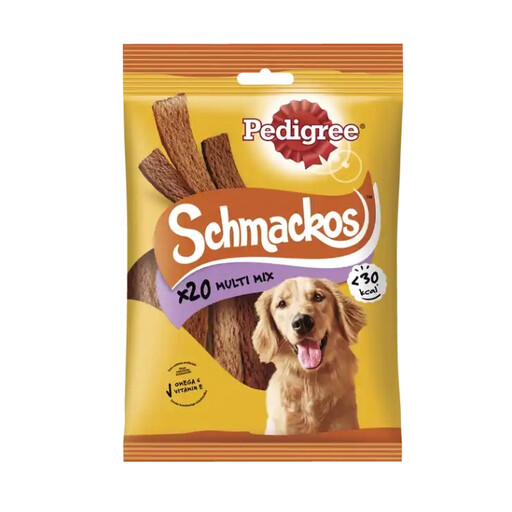
Why it's a good fit: Ideal for dog owners who want to give regular rewards without breaking the bank. The soft strips are easy to portion, and the different flavours provide variety.
Although sugar and cereals are included, they are clearly declared in the ingredient list. This allows for a conscious decision based on the dog's individual needs and your budget.
Good value for money for daily use. Contains Omega-6 fatty acids and vitamins, according to the manufacturer.
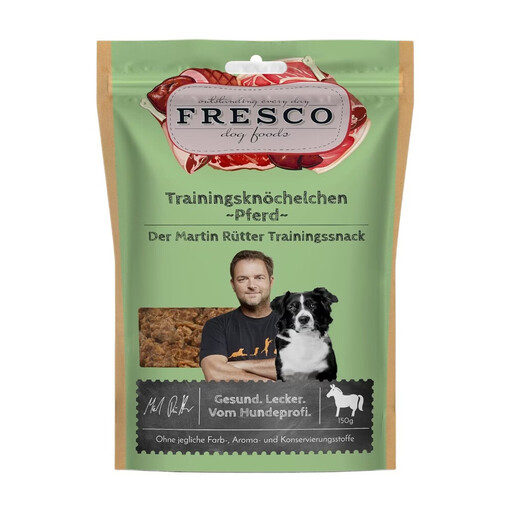
Why it's a good fit: Perfect for owners of dogs with dietary sensitivities or those who value a pure, minimalist recipe. The horse variety, as a single source of protein (monoprotein), is ideal for dogs with allergies.
This product avoids the trap of vague declarations and fillers. The open declaration shows 92% horse meat. The formula is also grain-free and contains no artificial additives.
Single-protein recipe, very high meat content, and grain-free. Made in Germany.
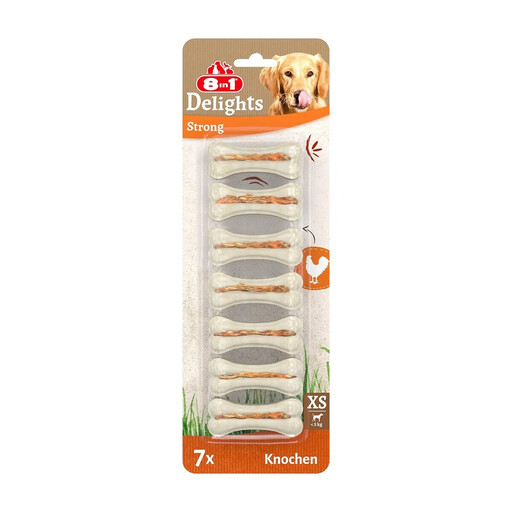
Why it's a good fit: Specially developed for small but powerful chewers. The extra-hard pressed rawhide provides long-lasting chewing fun, while the wrapped chicken meat keeps motivation high.
This product addresses the pitfall of ineffective dental treats. Its hard texture requires intensive chewing, which promotes the mechanical abrasion of plaque and thus serves a real function.
Long-lasting enrichment that supports dental cleaning. High protein content (88%) with a low fat content (2.5%).
We have compiled a complete, up-to-date list of products that fully meet these strict selection criteria and all applicable regulations.
A common rule of thumb is that treats should not make up more than 10% of a dog's daily calorie intake. However, this is just a guideline. Always follow the feeding recommendations on the packaging and adjust the amount of their main food accordingly to prevent overfeeding. Your dog's age, breed, weight, and activity level are also crucial factors.
Not necessarily. Grain-free dog treats are primarily important for dogs with a diagnosed grain allergy or intolerance. For most healthy dogs, high-quality grains fed in moderation are not a problem and can be a source of energy. The overall quality of the ingredients and the transparency of the product's declaration are more critical than the "grain or no grain" question.
High-quality dog chews usually consist of a single ingredient and are gently dried. Look for products made from 100% natural raw materials like rawhide, coffee wood, antlers, or fish skin. They should be free from artificial colours, flavours, and preservatives. Another important point is size: the chew should be large enough that the dog cannot swallow it whole to prevent choking hazards. Always supervise your dog while they are chewing.