
Lieferung heute & morgen

Qualitätsgarantie

Willkommens-Angebote freischalten: KOSTENLOSE Lieferung | Bis zu 80 % RABATT | Kostenlose 30-Tage-JoyPlus-Testphase
App herunterladen
The audio quality of integrated TV speakers often limits the visual experience of modern 4K or 8K displays. A Dolby Atmos soundbar is an effective solution for elevating the sound to a level that matches the picture quality. Unlike traditional surround systems based on fixed channels, Dolby Atmos is an object-based audio format. It allows individual sounds to be placed and moved as objects in three-dimensional space—including overhead. The result is an immersive soundscape that pulls the listener right into the action.
This article analyses the technical criteria for selecting a suitable soundbar and presents a selection of models with various specifications.
The choice of a suitable home cinema soundbar depends on several technical parameters. An informed decision is based on understanding these specifications.
The number combination describes the speaker arrangement.
For the lossless transmission of high-resolution audio formats like Dolby Atmos (via Dolby TrueHD), an HDMI eARC (Enhanced Audio Return Channel) connection is required. This port on the soundbar for TV ensures that the full bandwidth of the audio signal is transferred from the TV or a source device to the soundbar. Older HDMI ARC ports can often only transmit Dolby Atmos in a compressed format (Dolby Digital Plus). Bluetooth is a useful addition for wireless music streaming but is not suitable for the primary home cinema connection.
Some soundbars feature integrated subwoofers, which allows for a compact, space-saving design. For the deep, tangible bass foundation required for action films or music, an external, usually wireless subwoofer is the more powerful option. It can be positioned more flexibly in the room to optimise bass response.
Alongside Dolby Atmos, DTS:X is the other major object-based audio format. Many higher-end soundbars support both formats, offering maximum compatibility with various media such as Blu-rays, streaming services, and video games.
Based on technical specifications and practical utility, we have selected the following models for closer consideration.
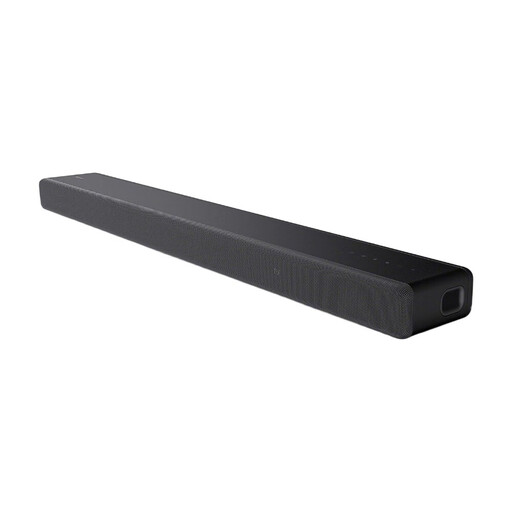
Why We Recommend This Product The Sony HT-A3000 is a 3.1-channel system that offers a particularly compact solution thanks to its integrated subwoofers. Its strength lies in its software-based sound processing: the Vertical Surround Engine creates virtual 3D sound. When paired with compatible Sony BRAVIA TVs, the soundbar uses the TV's speaker as an additional centre channel via Acoustic Center Sync, which enhances dialogue clarity. The automatic room calibration, using integrated microphones, adapts the sound to the room's acoustics.
Pros
Who It's For This model is suitable for users seeking a powerful all-in-one system without an external subwoofer, who also value seamless integration into a Sony ecosystem. It is an excellent choice for medium-sized living rooms where a clean, uncluttered look is desired.

Why We Recommend This Product The LG SK10Y is designed as a 5.1.2-channel system and features two dedicated, upward-firing speakers for a physically accurate reproduction of Dolby Atmos height effects. With a total power output of 550 watts and a powerful wireless subwoofer, this surround sound system delivers a room-filling and dynamic performance. The integration of Meridian Audio technology aims for precise and balanced sound reproduction. Support for High-Resolution Audio (up to 24-bit/192kHz) is another bonus for audiophile users.
Pros
Who It's For This system is aimed at home cinema enthusiasts looking for a high-performance 5.1 soundbar with dedicated height channels and a potent subwoofer for a maximally immersive film and gaming experience.
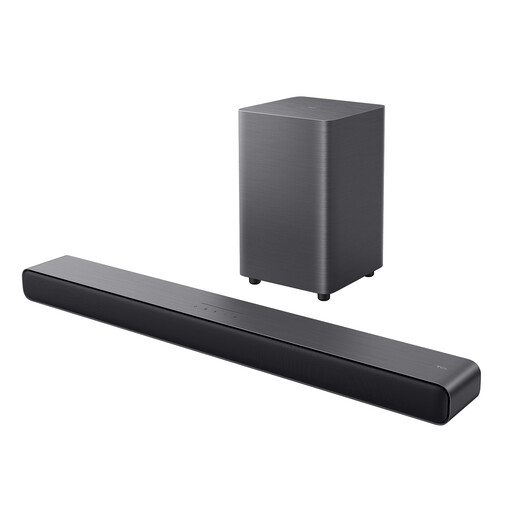
Why We Recommend This Product As a 2.1-channel system, the TCL S55HE offers an accessible entry point into the world of 3D sound. It decodes both Dolby Atmos and DTS Virtual:X, creating virtual surround sound through psychoacoustic algorithms. Its AI-Sonic technology enables automatic room calibration, a feature not commonly found in this price range. With HDMI eARC, Bluetooth 5.3, and a wireless subwoofer, this TV soundbar offers a modern and straightforward feature set.
Pros
Who It's For This model is ideal for budget-conscious buyers who want a significant upgrade to their TV audio and wish to enjoy the benefits of 3D audio formats without the complexity of a multi-channel system. It is a straightforward plug-and-play solution for small to medium-sized rooms.
If the models presented here do not exactly meet your requirements, or if you would like a broader overview of different configurations, you can find a larger selection of audio products in our main category.
Discover more models in the category: Home Cinema Sound System
1. What is the difference between Dolby Atmos and traditional surround sound? Traditional surround sound (e.g., 5.1 or 7.1) is channel-based. Sound is assigned to specific speakers. Dolby Atmos is object-based. Sounds are not mixed into channels but as objects with coordinates in three-dimensional space. A system capable of decoding Dolby Atmos then places these objects precisely in the room, enabling a more realistic and immersive soundscape that includes height information.
2. Do I need special ceiling speakers for Dolby Atmos? No, not necessarily. While dedicated ceiling speakers are an option for high-end home cinemas, Dolby Atmos soundbar models create the height effect in one of two ways: either through integrated, upward-firing speakers that reflect sound off the ceiling to the listener, or through virtual processing, where psychoacoustic effects simulate 3D sound.
3. Does a Dolby Atmos soundbar work with any TV? Essentially, yes, but with differences in functionality. For the best possible lossless playback of Dolby Atmos, a TV with an HDMI eARC port is required. If your TV only has an HDMI ARC port, Dolby Atmos is typically transmitted in a compressed format (via Dolby Digital Plus), which is the standard for most streaming services. If you connect via an optical cable, transmitting Dolby Atmos is not possible. The soundbar will then function as a regular stereo or surround system.