
Lieferung heute & morgen

Qualitätsgarantie

Willkommens-Angebote freischalten: KOSTENLOSE Lieferung | Bis zu 80 % RABATT | Kostenlose 30-Tage-JoyPlus-Testphase
App herunterladen
Modern TVs offer impressive picture quality, but their sound often can't keep up. Dialogue sounds flat, and action scenes lack impact. A Dolby Atmos soundbar is an effective solution to elevate your TV's audio to a cinematic level. It creates three-dimensional sound that puts you right in the middle of the action, without needing to install a complex home cinema system with numerous speakers and cables.
This article serves as a practical guide. We'll explain the most important technical features and present a selection of models to help you make an informed decision for your home.
The selection of soundbars is vast. To find the right model, a few technical aspects are crucial.
Number combinations like 5.1.2 or 7.1.4 describe the channel arrangement. The first digit represents the horizontal channels (front, side), the second indicates the number of subwoofers, and the third refers to the height channels, which are crucial for the Dolby Atmos effect. These upward-firing speakers reflect sound off the ceiling, creating the impression that noises (like rain or a helicopter) are actually coming from above.
Some models create this 3D effect virtually, while others feature dedicated, upward-firing drivers, which often leads to a more precise result. Alongside Dolby Atmos, DTS:X is another important 3D audio format. Many high-quality soundbars support both, offering maximum compatibility with various media. A 5.1 soundbar with additional height channels is a great starting point for an immersive surround sound system.
A soundbar with a subwoofer is essential for a complete audio experience. The subwoofer is responsible for reproducing low frequencies, delivering tangible bass during explosions or in music. A wireless subwoofer offers maximum placement flexibility in your room, as it only requires a power outlet.
The most important connection for a soundbar for your TV is HDMI eARC (Enhanced Audio Return Channel). Only this connection can transmit uncompressed 3D sound like Dolby Atmos in its full quality (Dolby TrueHD) from the TV to the soundbar. Older HDMI ARC ports only support Dolby Atmos in a compressed form, which is sufficient for most streaming services.
Here is a selection of soundbars that are well-suited for a modern home cinema, thanks to their technical features and equipment.
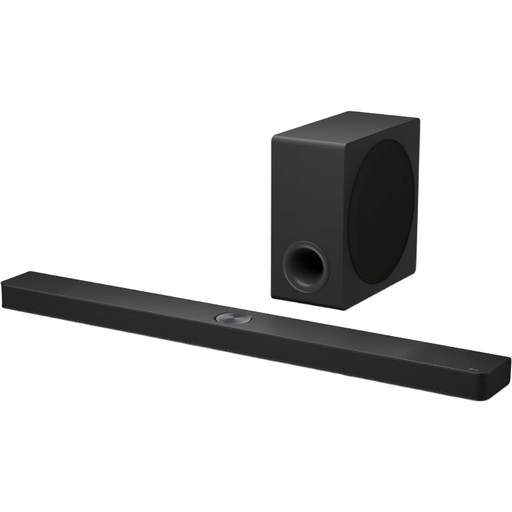
The LG DS90TY is a 5.1.3-channel system designed to deliver room-filling and precise 3D sound. With a dedicated centre up-firing channel, it aims for enhanced clarity and positioning of sound effects.
Why it stands out: The system uses AI Sound Pro, a technology that, according to the manufacturer, analyses sound in real-time and automatically optimises audio settings for dialogue, music, or action scenes. The combination of three upward-firing channels and a total power of 570 watts promises an intense audio experience.
Advantages:
Who is it for? For users seeking a powerful all-in-one solution with intelligent sound optimisation who value precise reproduction of height effects.
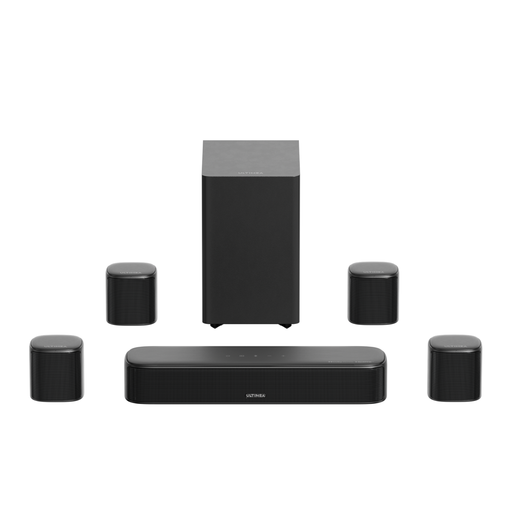
The ULTIMEA Aura S5T takes a different approach than many competitors, offering a true 7.1-channel system with four dedicated surround speakers. This setup aims to create a particularly enveloping and detailed surround sound.
Why it stands out: The system consists of a soundbar, a subwoofer, and four separate surround speakers. This configuration allows for a physical distribution of sound in the room that goes beyond virtual surround technologies. Its VoiceMX technology is also designed to improve voice clarity by boosting relevant frequencies.
Advantages:
Who is it for? For home cinema enthusiasts who want a true multi-speaker experience without the complexity of an AV receiver and prefer precise sound localisation from all directions.
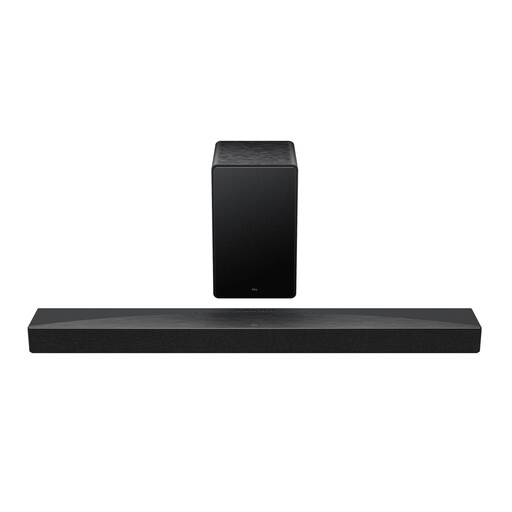
The TCL Q65H is a 5.1-channel soundbar designed to create a wide soundstage with high power and special acoustic technology. It supports both Dolby Atmos and DTS:X and offers great flexibility in connectivity options.
Why it stands out: The Ray·Danz acoustic technology developed by TCL uses specially shaped reflectors to project sound sideways, creating a wider and more natural sound field. With a total power of 580 watts and a 6.5-inch subwoofer, the system delivers powerful and room-filling sound.
Advantages:
Who is it for? For users looking for a very powerful soundbar that creates a wide and immersive soundstage without additional rear speakers. Ideal for larger living rooms.
The models presented here offer a good overview of what modern Dolby Atmos soundbars can do. If you haven't found the right solution for your specific needs or budget, there are many more options to explore.
Discover more models and find the perfect audio system for your home in our Audio Systems category.
No, and that's the main advantage of these systems. Dolby Atmos soundbars either use specially designed upward-firing speakers, which reflect sound off the ceiling to the listener, or they use psychoacoustic algorithms to create a virtual 3D height effect.
Both are object-based audio formats that enable three-dimensional sound. The main difference lies in their technical implementation and market adoption. Dolby Atmos is currently more widespread, especially on streaming services. DTS:X theoretically offers more flexibility in speaker configuration. Many modern soundbars support both formats, so you don't need to worry about it.
For playing back lossless Dolby Atmos (Dolby TrueHD), as found on Blu-ray discs, an HDMI eARC connection is necessary. For the compressed Dolby Atmos signal used by most streaming providers like Netflix or Disney+ (based on Dolby Digital Plus), a standard HDMI ARC connection is sufficient. However, eARC is more future-proof and offers the highest available bandwidth.