
Lieferung heute & morgen

Qualitätsgarantie

Willkommens-Angebote freischalten: KOSTENLOSE Lieferung | Bis zu 80 % RABATT | Kostenlose 30-Tage-JoyPlus-Testphase
App herunterladen
Modern flat-screen TVs offer impressive picture quality, but their sound often falls short. The slim design leaves little room for powerful speakers, resulting in a thin and unimpressive audio experience. A TV soundbar is an effective solution to significantly upgrade the sound. Models with Dolby Atmos go a step further, enabling three-dimensional audio that puts you right in the middle of the action.
This article serves as a guide. We'll explain the key features to consider when making your choice and present a selection of models that cater to different needs and budgets. Our goal is to provide you with an objective foundation for your purchasing decision.
The selection of soundbars is vast. To find the right model for you, a few technical aspects are crucial.
Number combinations like 2.1 or 3.1 describe the speaker configuration. The first digit represents the number of main channels (left, right, centre), and the second indicates the number of subwoofers.
A TV speaker with bass, in the form of a subwoofer, is fundamental for a complete home theatre experience, as it reproduces the low frequencies responsible for explosions, music, and the overall sound atmosphere.
The right connection is essential for transmitting high-quality audio formats like Dolby Atmos. HDMI eARC (Enhanced Audio Return Channel) is the current standard. Compared to the older ARC standard, eARC offers significantly higher bandwidth. This allows for the lossless transmission of uncompressed audio signals. Another advantage is simplified operation: you can control the soundbar's volume directly with your TV's remote.
Dolby Atmos creates a three-dimensional soundstage by also incorporating height channels—meaning the sound comes from above as well. Soundbars achieve this in two ways:
Here you'll find a selection of soundbars that offer different technical approaches and features.
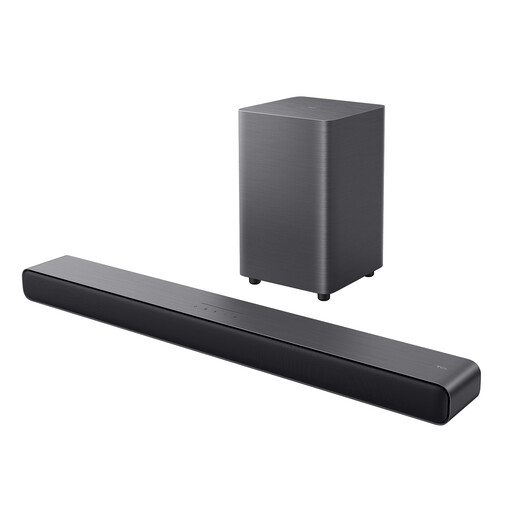
Why it stands out: The TCL S55HE offers a complete package for entering the world of better TV sound. The combination of a 2.1 soundbar and a wireless subwoofer ensures a balanced sound profile with tangible bass. Support for Dolby Atmos and DTS Virtual:X enables virtual 3D sound, making the movie experience more immersive.
Advantages:
Who is it for?: For users looking for a straightforward and cost-effective upgrade to their TV audio. It's ideal for small to medium-sized rooms and offers a significant improvement over integrated TV speakers, especially for movies and music streaming.
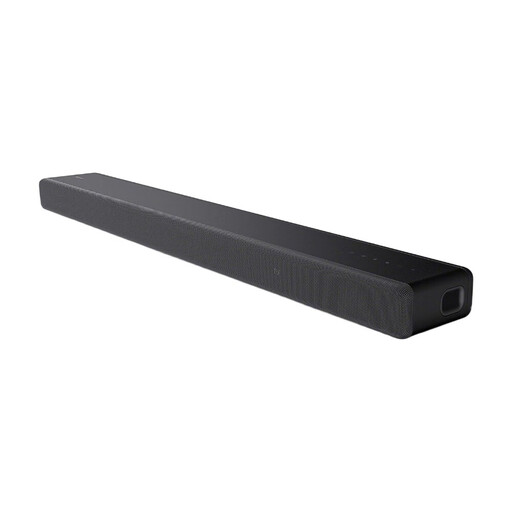
Why it stands out: The Sony HT-A3000 is a compact all-in-one solution that delivers powerful sound despite its slim design. With three front channels, including a dedicated centre speaker, and an integrated dual subwoofer, it ensures clear dialogue and a solid bass foundation. A special feature is the Sound Field Optimization, which adapts the sound to the room's acoustics using built-in microphones.
Advantages:
Who is it for?: For users who prefer an uncluttered setup without an external subwoofer and value advanced sound technologies. It's a great choice for owners of Sony BRAVIA TVs and for those who want to keep the option of expanding their system into a full Surround Sound System later on.
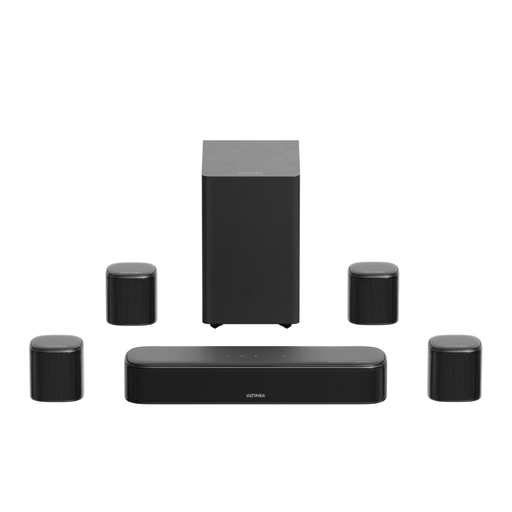
Why it stands out: The ULTIMEA Aura S5T system is designed for home theatre enthusiasts seeking a comprehensive spatial audio experience. It is a true 7.1-channel system with four dedicated surround speakers, creating a more precise and immersive soundscape than virtual solutions. The large 5.25-inch subwoofer and a peak power of 420 watts ensure impressive dynamics and deep bass.
Advantages:
Who is it for?: For users who want an authentic home theatre soundbar experience with true surround sound. The high power and dedicated speakers make this system particularly suitable for larger living rooms and for anyone who desires maximum realism in movies and games.
If the models presented here don't exactly meet your requirements, or if you're looking for a specific configuration, you can find a wider selection of audio equipment for your home theatre in our affordable surround sound amplifier category.
1. What is the difference between Dolby Atmos and traditional surround sound? Traditional surround sound (e.g., 5.1) operates on a horizontal plane, placing sound around the listener. Dolby Atmos adds a height dimension, allowing sound objects to be placed and moved freely in three-dimensional space. This creates a more realistic and enveloping soundscape where sounds can also appear to come from above.
2. Do I need a special TV for a soundbar with Dolby Atmos? For the best possible quality—the transmission of uncompressed Dolby Atmos—your TV should have an HDMI eARC port. While many TVs with a standard HDMI ARC port can pass a compressed version of Dolby Atmos, eARC is preferable for lossless playback. Additionally, the source content (e.g., streaming service, Blu-ray) must be available in Dolby Atmos.
3. Can I also use a soundbar for listening to music? Yes, modern soundbars are very well-suited for music playback. Almost all models feature Bluetooth, allowing you to stream music wirelessly from your smartphone, tablet, or computer. Many devices also offer special sound modes for music that optimise stereo reproduction and ensure a balanced sound profile.