
Lieferung heute & morgen

Qualitätsgarantie
App herunterladen
Kategorien
Upgrading your TV's audio is a key priority for many home cinema enthusiasts. A Dolby Atmos soundbar offers an advanced solution that goes beyond traditional stereo or surround systems. Unlike channel-based audio, which assigns sound to fixed speakers, Dolby Atmos treats sound as three-dimensional objects. These can be precisely placed and moved within a space, creating an immersive soundscape where effects also appear to come from above. This results in significantly enhanced immersion in movies, TV shows, and video games.
This article serves as a technical guide for selecting a suitable TV soundbar with Dolby Atmos functionality and presents a selection of models with varying specifications.
Choosing the right device depends on objective technical parameters and your room's layout. The following criteria are relevant to your decision.
The number combination in the product description reveals the speaker system's structure:
DTS:X is a competing object-based audio format. Many modern soundbars support both formats, ensuring compatibility with a wide range of media content. The fundamental principle of positioning sound objects freely in space is comparable in both technologies.
A soundbar with a subwoofer is fundamental for a complete audio experience, especially for movies and bass-heavy music.
Connection options are important for both sound quality and ease of use.
Advanced models feature integrated microphones to analyze room acoustics. The software then automatically adjusts the sound to the environment to ensure optimal playback. Technologies like DTS Virtual:X or proprietary engines can create a virtual 3D sound effect even without dedicated up-firing speakers.
The following selection is based on an analysis of the technical specifications and intended use cases of each product.
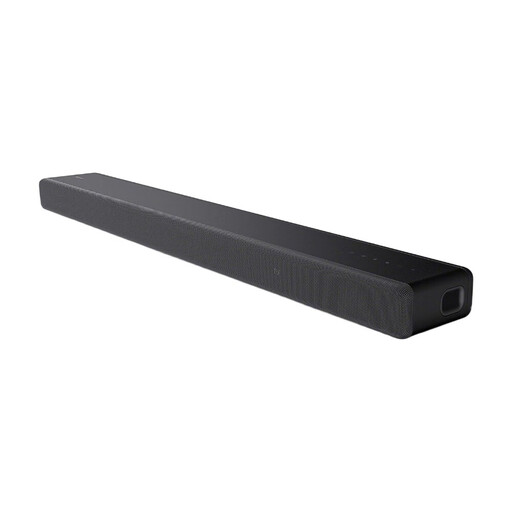
Why We Highlight This Product: The Sony HT-A3000 is a 3.1-channel soundbar that offers a compact all-in-one solution with its integrated dual subwoofers. Its strength lies in software-based sound optimization. The Vertical Surround Engine and S-Force PRO Front Surround create a wide, virtual soundscape. A special feature is its compatibility with optional rear speakers, which use 360 Spatial Sound Mapping to simulate multiple phantom speakers in the room. When paired with compatible BRAVIA TVs, the TV's speaker acts as an additional center channel via Acoustic Center Sync for clearer dialogue.
Pros:
Who It's For: Users looking for a space-saving yet powerful solution without an external subwoofer. It is especially beneficial for owners of compatible Sony BRAVIA TVs who want to fully leverage the ecosystem.
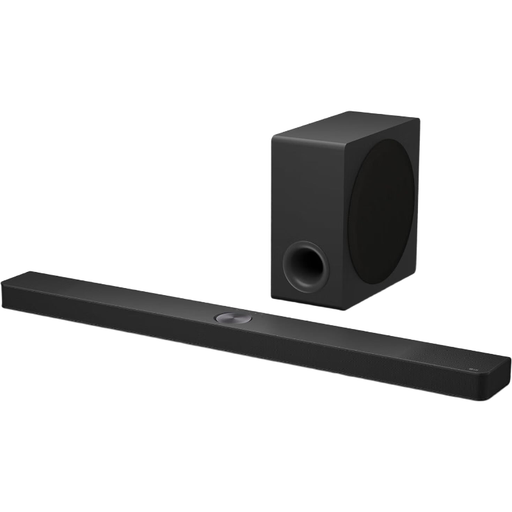
Why We Highlight This Product: The LG DS90TY is designed as a high-performance home cinema soundbar system. With a 5.1.3-channel configuration that includes three dedicated up-firing channels and a total power output of 570 watts, it aims for a maximally immersive audio experience. The included wireless subwoofer provides a punchy and precise bass foundation. Its AI Sound Pro technology analyzes content in real-time and automatically adjusts audio settings, while AI Room Calibration adapts the sound to the specific environment.
Pros:
Who It's For: Home cinema enthusiasts and gamers seeking an uncompromising, powerful surround sound system who have space for an external subwoofer. The high channel count is ideal for larger rooms.
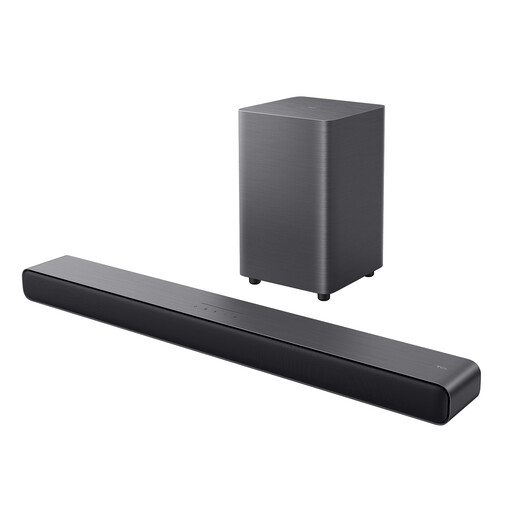
Why We Highlight This Product: The TCL S55HE is positioned as an accessible entry-point into the world of 3D audio. As a 2.1 system with a wireless subwoofer, it offers a significant sound improvement over standard TV speakers. It supports Dolby Atmos and also uses DTS Virtual:X to create a virtual height effect without dedicated up-firing channels. With six preset EQ modes (Movie, Music, Game, etc.), the sound can be quickly adapted to the content. Connectivity via HDMI eARC and Bluetooth 5.3 meets current standards.
Pros:
Who It's For: Users looking for a straightforward and cost-effective way to buy a soundbar that delivers solid bass performance and virtual 3D audio effects. Ideal for small to medium-sized rooms.
The models presented cover a range of different use cases. If none of these devices exactly match your needs or room conditions, the market offers a multitude of other configurations. You can find a wider selection of devices, from compact all-in-one solutions to modular high-end systems, in our main Audio Sound System category.
1. What is the difference between Dolby Atmos and regular surround sound? Traditional surround sound (e.g., 5.1 or 7.1) is channel-based. Sound is assigned to fixed speakers. Dolby Atmos is object-based. Sound effects are treated as individual objects that the soundbar can place precisely in three-dimensional space, including height. This creates a more comprehensive and realistic soundscape.
2. Do I need special ceiling speakers for a Dolby Atmos soundbar? No. A Dolby Atmos soundbar creates the height effect either through integrated, upward-firing speakers (up-firing drivers) that reflect sound off the ceiling, or through psychoacoustic algorithms (virtualizers) that simulate the impression of height. For the reflection method, a flat, not-too-high ceiling is advantageous.
3. Is a soundbar with a subwoofer always the better choice? For reproducing low frequencies (bass), which are crucial for the impact of action movies or music, a subwoofer is essential. An external subwoofer generally offers higher performance and more depth than integrated solutions. However, for users with limited space or less demanding bass requirements, a soundbar with a well-tuned, integrated subwoofer can be a sufficient and more practical alternative.