
Lieferung heute & morgen

Qualitätsgarantie

Willkommens-Angebote freischalten: KOSTENLOSE Lieferung | Bis zu 80 % RABATT | Kostenlose 30-Tage-JoyPlus-Testphase
App herunterladen
By: Joybuy Product Recommendation OfficerDate: July 4, 2026
Modern televisions impress with brilliant picture quality, but their sound often falls short. The slim design leaves little room for powerful speakers, resulting in a thin and underwhelming audio experience. For film and series lovers who crave a cinema-quality sound in their own homes, a soundbar with a subwoofer and Dolby Atmos is an effective and straightforward solution.
This article serves as an objective guide. We will explain the most important features and present a selection of models to make it easier for you to choose the right home cinema system.
The selection of soundbars is vast. To find the right model for your needs, a few technical aspects are crucial.
The channel count indicates how many separate audio tracks a soundbar can reproduce.
Dolby Atmos takes it a step further by placing sound as three-dimensional objects in the room. Special upward-firing speakers or advanced virtualisation technologies create a height dimension, making sounds like rain or a helicopter flying overhead seem to realistically come from above.
A subwoofer is responsible for reproducing low frequencies (bass). It provides the palpable rumble during explosions or the punchy beat in music. A soundbar with a wireless subwoofer offers maximum placement flexibility in the room, as it only requires a power outlet and no cable connection to the soundbar itself.
The right connection is essential for transmitting high-resolution audio like Dolby Atmos. A Soundbar with HDMI eARC (Enhanced Audio Return Channel) is the recommended choice here. Compared to the older ARC standard, eARC offers significantly higher bandwidth. This allows for the lossless transmission of complex audio formats and ensures you get the full sound quality. Another advantage is simplified control: with an eARC connection, you can typically control the soundbar's volume directly with your TV's remote.
Based on the criteria mentioned, we have compiled a selection of models that cover different requirements and use cases.
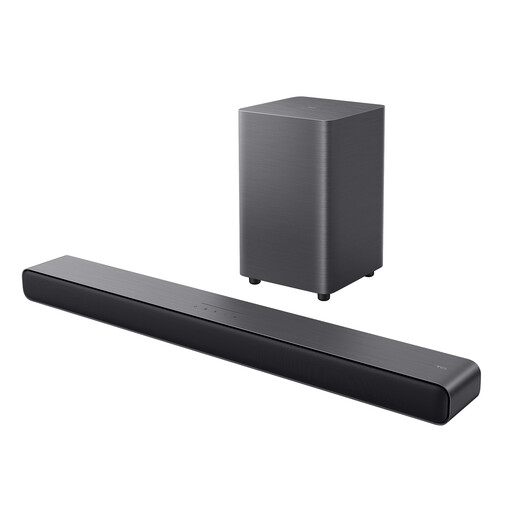
TCL S55HE Soundbar 2.1 Channel with Wireless Subwoofer, 220W
Why it stands out: The TCL S55HE offers an accessible entry point into the world of 3D sound. It uses Dolby Atmos and DTS Virtual:X decoding to create a virtual surround sound that fills the room. A special feature is the AI-Sonic technology, which adapts the sound to the room's acoustics. According to TCL, the Tutti-Choral function synchronises the soundbar with the speakers of compatible TCL TVs for a wider soundstage.
Pros:
Who is it for? This model is a great choice for users looking for a straightforward and significant audio upgrade for their TV. Owners of a TCL television, in particular, can benefit from the additional synchronisation features.
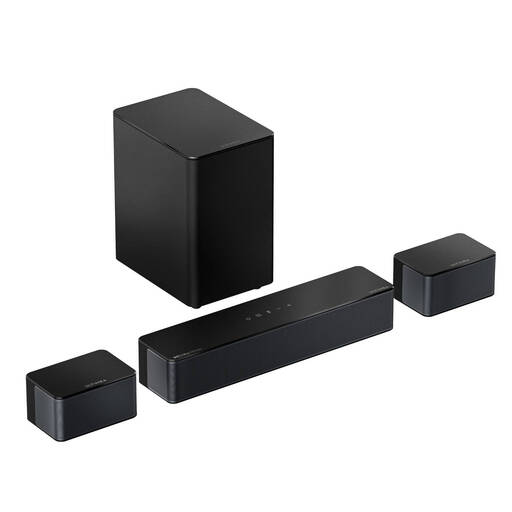
ULTIMEA 5.1ch Soundbar Dolby Atmos, 5.25'' Wireless Subwoofer, 450W
Why it stands out: The Poseidon M4T is a true 5.1-channel system that includes two wired surround speakers in addition to the soundbar and wireless subwoofer. This allows for more precise sound localisation and a more authentic surround experience. Dolby Atmos decoding provides the three-dimensional soundscape. According to ULTIMEA, the BassMX technology enhances low-frequency reproduction.
Pros:
Who is it for? Ideal for home cinema enthusiasts who want to go a tangible step beyond virtual surround sound and desire a true spatial soundscape for movies and series, without the complexity of a traditional setup.
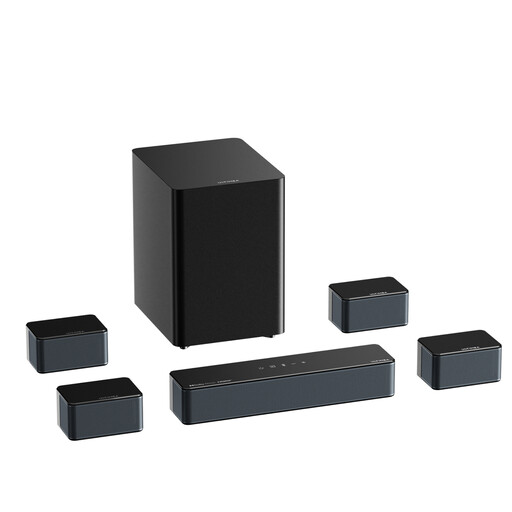
Ultimea Poseidon D80 Boom7.1 Soundbar,500W,Bluetooth 5.3
Why it stands out: The Poseidon D80 Boom expands the setup to 7.1 channels with a total of eight drivers, including a powerful 6.5-inch subwoofer and additional front surround speakers. With 500W of peak power and Dolby Atmos, this system aims to create an intense, cinema-like experience. According to ULTIMEA, the SurroundX technology ensures precise spatial localisation of sound. The ULTIMEA Smart App also offers extensive customisation options.
Pros:
Who is it for? This model is aimed at discerning users looking for a powerful and feature-rich soundbar for their TV that can serve as a fully-fledged replacement for a complex home cinema system and offers maximum immersion.
The models presented here are just a sample of the available options. If you are looking for other configurations, designs, or price ranges, you will surely find the right device in our wider selection.
? Discover more sound speakers on Joybuy.de here
No, not necessarily. Many Dolby Atmos soundbars use specially angled, upward-firing speakers or advanced digital signal processing (virtualisers) to reflect sound off the ceiling, thus simulating the 3D height effect.
The main difference lies in the bandwidth. HDMI ARC (Audio Return Channel) can transmit compressed 5.1 audio signals. HDMI eARC (Enhanced Audio Return Channel) has a much higher bandwidth and can losslessly transmit uncompressed, high-resolution audio formats like Dolby TrueHD (the basis for Dolby Atmos on Blu-rays). For the full audio experience, HDMI eARC is the preferred connection.
Generally, yes. Most soundbars can be connected to almost any modern TV via HDMI or an optical digital input. However, for optimal functionality, especially when using Dolby Atmos and controlling everything with a single remote, it is recommended that both the TV and the soundbar support the HDMI eARC standard.