
Lieferung heute & morgen

Qualitätsgarantie

Willkommens-Angebote freischalten: KOSTENLOSE Lieferung | Bis zu 80 % RABATT | Kostenlose 30-Tage-JoyPlus-Testphase
App herunterladen
Better TV sound doesn’t have to mean a complete AV receiver and speaker system. A Dolby Atmos soundbar can combine multiple speaker channels, height effects and a subwoofer in a relatively compact system. The key is knowing how to interpret the technical specifications.
Many buyers focus only on wattage or terms such as “3D sound”. This can lead to common buying mistakes:
The 5.1.2 soundbar designation usually means five main channels, one bass channel and two height channels. The final number often refers to upward-firing speakers. A 7.1 soundbar, on the other hand, may use additional surround channels or separate rear speakers.
When choosing a Dolby Atmos soundbar, check the following:
Virtual sound modes can make audio feel more spacious, but their effectiveness depends on the shape of the room, your seating position and the walls. A soundbar with separate surround speakers takes up more space, but can provide clearer sound from behind you.
For a modern soundbar for TV, films and gaming, HDMI eARC is an important feature to look for. It can transmit compatible multi-channel and higher-resolution audio signals, and usually lets you adjust the volume with your TV remote.
Before you buy, check the connections on your TV and games console:
If you’re choosing a soundbar for films and gaming, also check whether its HDMI connections can pass through video signals such as 4K, HDR or high refresh rates.
A soundbar with a subwoofer can deliver deeper bass more effectively than a compact standalone soundbar. A wireless subwoofer reduces visible audio cables, but still needs to be plugged into a socket. Place it on a stable, level surface, with a little space around it and away from walls and furniture.
Also consider:
Automatic room calibration can make setup easier. However, it doesn’t replace sensible placement and shouldn’t be treated as a guarantee of a particular sound.
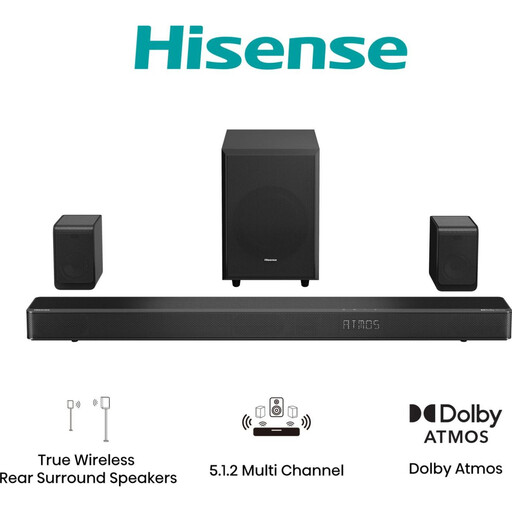
Why it suits this profile: This system combines a 5.1.2-channel configuration, a wireless subwoofer and multiple inputs for TV, films, music and gaming.
The two up-firing speakers are clearly specified. You also get HDMI passthrough, USB and an optical input.
500 W total output according to the product details, seven sound modes and Bluetooth 5.3. The subwoofer connects wirelessly to the soundbar.
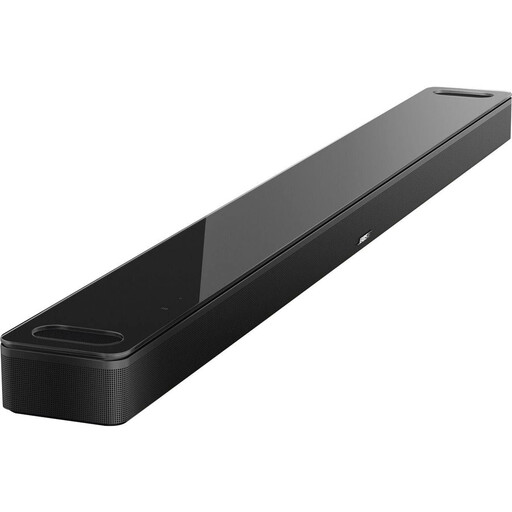
Why it suits this profile: This soundbar is designed for households looking to combine streaming, voice control and automatic room calibration.
HDMI eARC is included, and ADAPTiQ provides room calibration. That means your choice doesn’t have to rely on vague sound claims alone.
5.1.2-channel configuration, Wi-Fi, Bluetooth, AirPlay 2, Chromecast and an AI Dialogue Mode, according to the manufacturer.
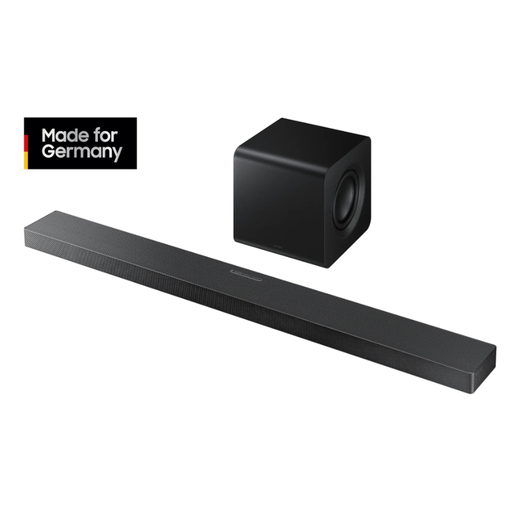
Why it suits this profile: This slim soundbar can sit on a TV unit or be wall-mounted, with features for TV, streaming, films and gaming.
The dimensions, centre channel and up-firing speakers are specified. Q-Symphony and SpaceFit Sound Pro work with compatible Samsung devices.
Dolby Atmos and DTS:X, a wireless 6.5-inch subwoofer, Wi-Fi, Bluetooth 5.2, HDMI ARC and 4K 60 Hz HDR10+ passthrough.
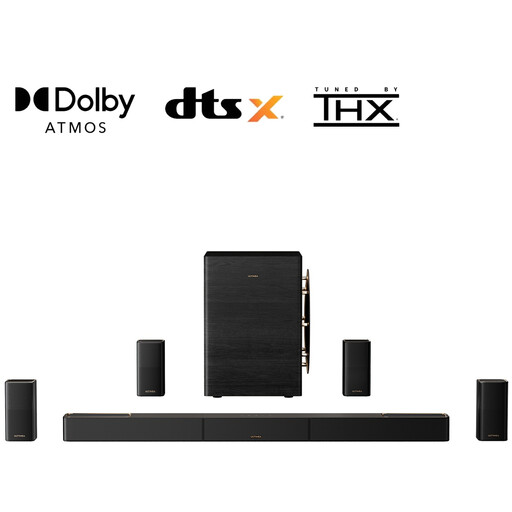
Why it suits this profile: This system is designed for users who need separate rear speakers, plenty of adjustment options and HDMI 2.1 features for films and gaming.
The specifications list 19 speakers, four wireless surround speakers and a 10-inch subwoofer. Measure the available space before buying.
9.1.6-channel configuration, Dolby Atmos and DTS:X, HDMI eARC, HDMI 2.1 passthrough, plus support for 4K at 120 Hz and 8K at 60 Hz according to the product details.
We’ve put together a complete, regularly updated list of products that meet these strict selection criteria and the safety regulations in force in the EU.
Where possible, connect the soundbar to the appropriate TV port using HDMI eARC. Enable HDMI audio output on your TV and select bitstream or passthrough output, if available. Streaming apps must also support Dolby Atmos; not every soundtrack uses this format.
Place a soundbar with up-firing speakers in an open space beneath the TV. Don’t put anything on top of it, as this can block the height channels. Avoid placing the subwoofer in an enclosed cabinet space. If you’re using rear speakers, follow the recommended distances and make sure the cables are routed safely.
No. Check whether your TV can output Dolby Atmos and whether it has HDMI ARC or eARC. Older devices often only have an optical connection, which can’t transmit certain Dolby Atmos signal formats.
Its lifespan depends on how long it’s used, ventilation, volume levels, firmware maintenance and physical wear. It isn’t possible to guarantee a specific lifespan. Keep the ventilation openings clear, use the soundbar in a dry environment and use the supplied power adapter.
The soundbar and subwoofer each have their own power consumption. For many devices, standby consumption is much lower than when they’re in use. To get an accurate idea, check the energy label and technical specifications for both components.