
Lieferung heute & morgen

Qualitätsgarantie

Willkommens-Angebote freischalten: KOSTENLOSE Lieferung | Bis zu 80 % RABATT | Kostenlose 30-Tage-JoyPlus-Testphase
App herunterladen
Dolls are among the most versatile dolls for children aged 3 and over, but models are also available for younger children. Depending on the model, cuddling, dressing up, role play, collecting or themed adventures may take centre stage. To avoid your purchase being let down by small parts, difficult-to-clean materials or an unsuitable size, it is worth taking a close look at the product details.
A large doll can be difficult for small children to hold. Conversely, many fashion dolls, mermaid dolls and collectible figures contain small accessories that are unsuitable for children under three. The manufacturer’s age recommendation is therefore crucial, rather than the doll’s appearance alone.
For products for children aged 1 and over, parents should pay particular attention to securely attached details, an easy-to-grip shape and clear safety information. Dolls for children aged 3 and over may include accessories such as shoes, combs or belts to extend play, but these still require age-appropriate use.
Many dolls with accessories appear substantial because they include numerous individual parts. For everyday use, however, it is more important to consider whether the accessories actually suit the intended play: Can the doll be dressed? Can children hold it safely? Are replacement parts available, or are small items easily lost?
For younger children, a small number of easy-to-handle elements are often more practical. For older children, spare outfits, movable joints or themed accessories can encourage role play and inspire their own stories.
Cuddle dolls and fabric dolls are often used while out and about or during mealtimes. Being machine washable can therefore be an important selection criterion. Other models, by contrast, may only be cleaned with a damp cloth or must not be immersed in water. With electronic dolls, the battery compartment and lighting features also need to be taken into account.
Pay attention to the following details:
The CE marking is a mandatory conformity marking, not an independent quality seal. It therefore does not replace comparing the material, workmanship, size and care requirements.
Cotton, polyester and blended fabrics are common materials for fabric and cuddle dolls. Check whether the model is machine washable and at what temperature. According to the product details, the HABA Malou Doll is washable at 30 °C. This distinguishes it from figures such as Monchhichi, which should only be cleaned on the surface with a damp cloth.
Plastic dolls can usually be wiped clean. With long hair, colour-changing features or electronic components, you should follow the relevant manufacturer’s instructions. Water-activated colour changes and LED functions should not automatically be taken as proof that a product is fully waterproof.
A doll measuring around 20 to 30 cm is easy for many children to carry. Larger models provide more room for dressing and styling, but can be more difficult to transport. For the bedroom, nursery or holidays, a compact model with only a few accessories may be more practical.
When choosing educational role-play toys, the play environment is also important: a baby doll is suited to care and everyday scenarios, while fashion dolls, mermaid dolls and collectible figures are more likely to support storytelling, styling and imaginary worlds. This type of play may encourage creativity, empathy and social interaction, although no particular developmental outcome is guaranteed.
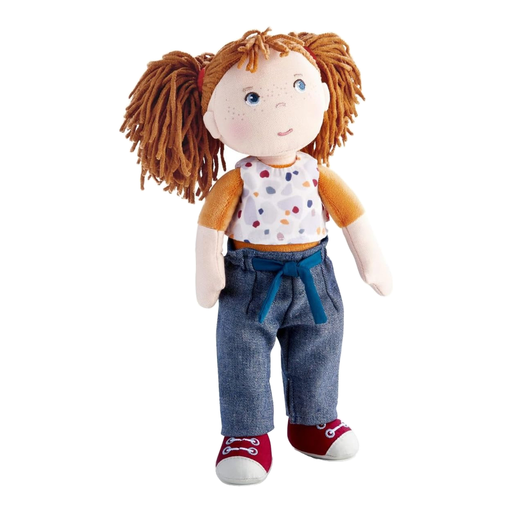
Why this product suits this profile: According to the product details, this soft fabric doll is designed for children aged 18 months to 5 years and is suitable for carrying, dressing and cuddling.
The product description states that it is washable at 30 °C. This reduces the care required compared with models that can only be cleaned on the surface. Safety information and the age limit still need to be observed.
30 cm size, embroidered face, soft materials and removable clothing for care and dressing-up play.
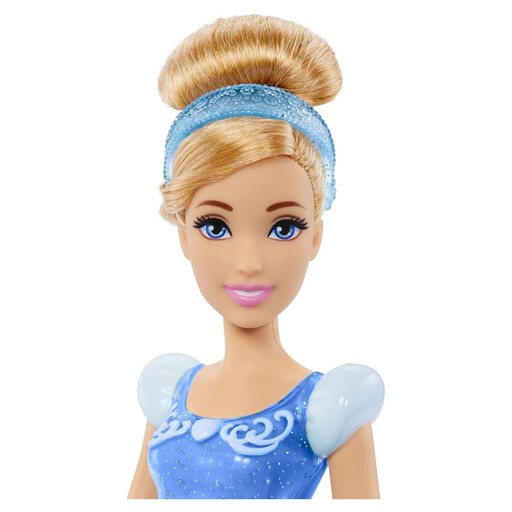
Why this product suits this profile: Measuring 27.94 cm, this fashion doll combines a familiar character with changeable clothing elements and brushable hair.
The features are clearly described: a posable doll, removable skirt, shoes and tiara. This allows you to check the actual contents before buying.
Brushable hair, removable clothing details and an age recommendation of 3 and over according to the product information.
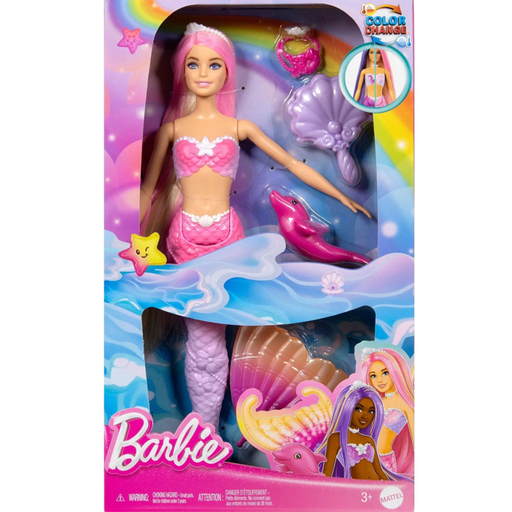
Why this product suits this profile: This model is aimed at children aged 3 and over who want to combine styling, water experiments and imaginative underwater scenarios.
The colour change is explicitly activated by cold or warm water. The information also mentions small accessories and recommends supervision during water play.
Long hair for styling, colour-change features on the hair, upper body and tail, plus a dolphin and several accessories included in the set.
We have put together a complete, regularly updated list of products that fully meet these strict selection criteria and the safety regulations applicable in the EU.
When choosing a gift, you should also check whether the child already has accessories or belongs to a particular themed play world. A compatible figure can complement existing sets in a useful way and reduce the risk of buying duplicate components.
This depends on the individual model. According to the manufacturer’s information, some fabric dolls are designed for children aged 18 months or 1 and over. Models with small shoes, jewellery pieces or other removable accessories are often only recommended for children aged 3 or 4 and over. The age recommendation and warnings for the specific product are decisive.
Depending on the care label, fabric dolls may be washed at a low temperature. Plastic dolls and figures can usually be cleaned with a slightly damp cloth. Electronic dolls must not be fully immersed; before cleaning, batteries or electronic modules should be removed in accordance with the instructions.
Not necessarily. Accessories such as bottles, shoes, belts or hairpieces may contain small parts that could be swallowed. For children under three, only use products that the manufacturer explicitly approves for this age group. Adult supervision is advisable for younger children.