
Lieferung heute & morgen

Qualitätsgarantie

Willkommens-Angebote freischalten: KOSTENLOSE Lieferung | Bis zu 80 % RABATT | Kostenlose 30-Tage-JoyPlus-Testphase
App herunterladen
The right mat or rug should trap dirt, stay securely in place and suit the room. However, unclear product details often lead to disappointing purchases. With door mats and rugs in particular, important details such as dimensions, material and backing may only become clear once the product has been unpacked.
Three common buying mistakes occur particularly often:
By comparing a few verifiable criteria before buying, you can tailor your choice more effectively to your home, household and everyday use.
For a small hallway, a flat entrance or a utility room, a compact entrance door mat may be a sensible choice. Dimensions such as 47 × 30 cm are more suitable for narrow areas or as an additional mat in front of individual doors. A 60 × 90 cm door mat, on the other hand, covers a larger area and provides more room for wiping your shoes.
Measure the usable floor area before placing your order. Also make sure that doors can open fully. Where there is limited clearance beneath a door, a low pile or flat weave is practical. Larger formats may be suitable for living and dining areas, such as a 250 × 200 cm rug.
A rectangular rug can usually be positioned easily against walls, sofas or dining tables. For smaller homes, a rug for small rooms with clearly defined edges is often easier to place than a model with a strongly curved shape.
The material affects how a rug feels, how it should be cleaned and which rooms it is suitable for.
A low-maintenance rug with a surface that can be vacuumed regularly is practical for hallways and entrances. In the living room, appearance and texture may be more important.
Buying a non-slip door mat does not mean that it will stay safely in place on every type of flooring without additional measures. The key factors are:
According to the product description, the vidaXL Rectangular Tufted Doormat has a flexible anti-slip rubber backing. The 5 Five Simply Smart Fresh Carpet should be placed on a dry, level surface; on smooth floors, an additional underlay may be required. Open flames should always be kept away from textile floor coverings.
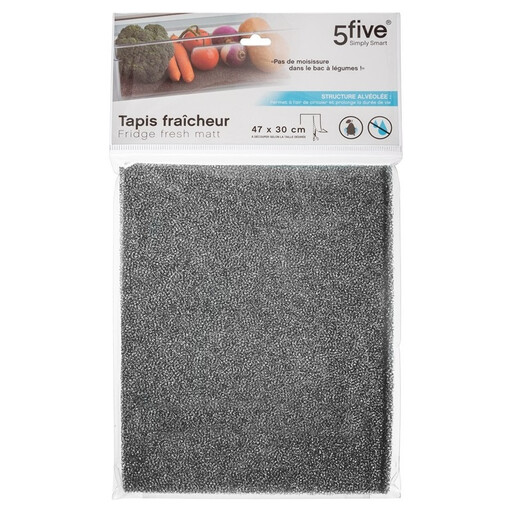
Why this product suits this profile: The compact format is suitable for small entrances, storage rooms or individual passageways where a large mat is not needed.
The dimensions and low surface are clearly specified. This allows you to check before buying whether the mat will fit the door width and clearance.
Rectangular format, low surface and, according to the product description, easy care by shaking out or vacuuming regularly.
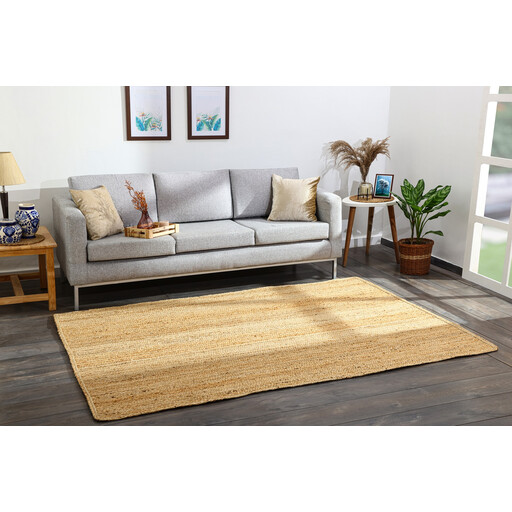
Why this product suits this profile: The large format is designed for households looking to define a clear area in their living or dining space and who prefer natural materials.
The material specification of 100% jute and the dimensions of 250 × 200 cm are clearly stated. This makes it easier to compare the appearance, space required and care needs in advance.
100% jute, natural colouring, 1 cm height and a stated net weight of 13 kg.
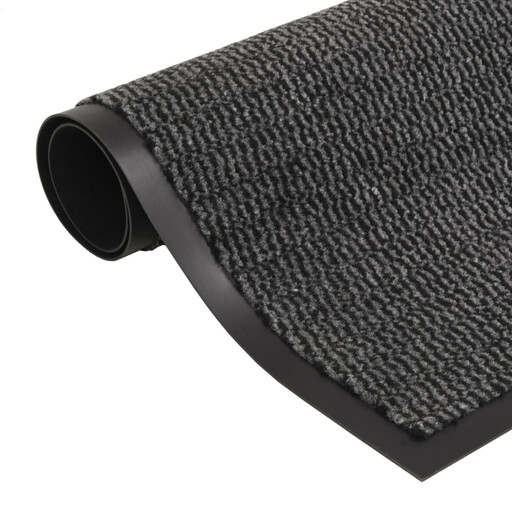
Why this product suits this profile: The 60 × 90 cm model is intended for entrances and busy areas where dirt and moisture need to be caught at the door.
The product description specifies the material, backing, pile height and weight. This makes it easier to compare the mat objectively with the door clearance, flooring and intensity of use.
100% polypropylene, moisture- and mould-resistant according to the product details, 5.5 mm height and a flexible anti-slip rubber backing.
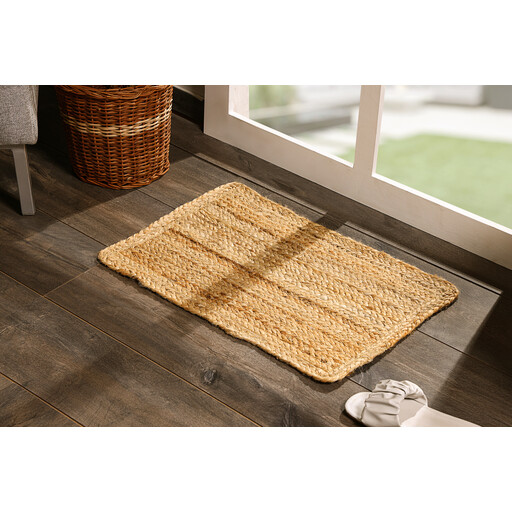
Why this product suits this profile: The small jute model is suitable as a decorative accent next to furniture, in narrow hallways or on limited floor areas.
The compact dimensions prevent a decorative rug from being too large for its intended location. The jute specification makes the choice of material clear.
100% jute according to the product description, natural colouring, rectangular format and 1 cm height.
We have put together a complete, regularly updated list of products that fully meet these strict selection criteria and the safety regulations applicable in the EU.
A dirt-trapping mat will stay looking its best for longer if it is shaken out or vacuumed regularly. If it becomes damp, allow the mat to dry completely before placing it back on the floor. Remove dirt in accordance with the manufacturer’s instructions.
With jute rugs, it is particularly important to use water and aggressive cleaning products sparingly. Synthetic mats may be easier to clean, depending on the product, but the specific care instructions still apply. After laying the mat, check that no edges are raised and that the door does not catch on it.
This depends on the door width, the area available for movement and the available space. 60 × 90 cm provides more room for wiping shoes than a compact format such as 47 × 30 cm. Measure the door clearance and floor area before buying.
Place the mat on a clean, dry and level surface. On polished or particularly smooth floors, a suitable non-slip underlay may be required. Check the position regularly and remove dust from beneath the mat.
Its lifespan depends on the material, foot traffic, moisture, cleaning and how it is used. Regular care can reduce the build-up of dirt, but it does not replace treating the material appropriately. In busy areas, pay particular attention to durable surfaces, suitable backing and an appropriate pile height.