
Lieferung heute & morgen

Qualitätsgarantie

Willkommens-Angebote freischalten: KOSTENLOSE Lieferung | Bis zu 80 % RABATT | Kostenlose 30-Tage-JoyPlus-Testphase
App herunterladen
Whether you have a narrow hallway, a small bathroom or a rented home where you can’t drill into the walls, hooks and hook rails for doors and walls create extra storage without taking up much space. Keep clothes, towels, bags, keys and kitchen utensils close to hand without taking up cupboard or shelf space.
But choosing a product involves more than just colour and price. The key factors are the fitting method, door clearance, material, weight capacity and where you plan to use it. Our guide explains what households, families and anyone short on storage space should look out for.
Self-adhesive hooks don’t automatically work on every wall. For a reliable bond, you’ll usually need a smooth, clean and dry surface, such as glass, tiles, metal or certain painted surfaces. Wallpaper, textured wallpaper, masonry, rough plaster and damaged paintwork can affect how well the adhesive holds.
Before buying, also check whether the adhesive can be removed without leaving residue or is described as permanent. Removable systems are often more practical in rented homes, as long as you follow the manufacturer’s guidance for the surface.
A rating such as “up to 1.5 kg per hook” applies to an individual hook under the recommended fitting conditions. It doesn’t automatically apply to a hook rail or an uneven wall. Sudden force, such as pulling a bag off firmly, can also put more strain on the fixing than simply hanging up a garment.
Heavy winter coats, full shopping bags and wet towels need a suitable design. With over-door hooks, make sure the weight is spread evenly.
An over-door hook needs enough clearance between the door and the frame. If the rebate is too narrow, the door may be difficult to close or its surface could be damaged. Take extra care with glass, unstable or very thin doors. Before buying, make sure you check the door thickness, hook width and door gap.
If you’re looking specifically for hooks for cupboard doors, you’ll find more suitable options in our over-cupboard-door hooks selection.
Stainless steel hooks and coated metal hooks are worth considering for the kitchen or bathroom, provided the product description confirms they’re suitable for that setting. Bamboo hooks pair a natural look with metal components, but should be protected from prolonged exposure to moisture. In the hallway, sturdy fixings and enough hooks are especially important.
A compact rail with two or three hooks is enough for keys, towels or a few accessories. For families or a busy hallway, a model with five or ten hooks may be more practical. Check the:
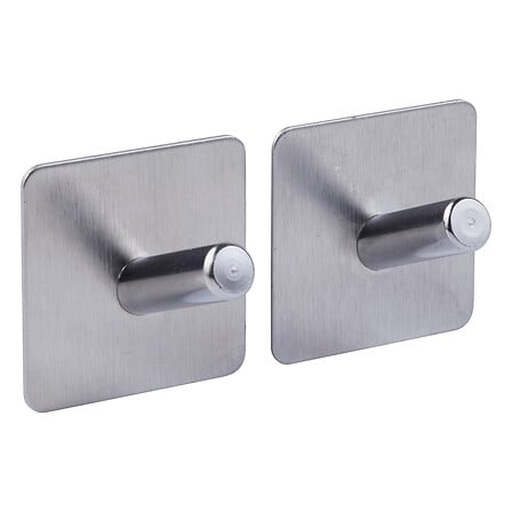
Why this product suits this profile: The two self-adhesive metal hooks need no tools and, according to the product details, are suitable for lightweight items such as keys, towels or small accessories.
The 1.5 kg per-hook rating gives you a clear guide. It’s designed for smooth surfaces, so avoid rough or unsuitable surfaces.
Steel and stainless steel construction, compact dimensions of 4,5 × 3,5 × 4,5 cm and tool-free fitting.

Why this product suits this profile: Ten hanging points keep clothes, bags or towels together on a door, making use of the vertical space you already have.
The rack hangs over the door and, according to the product description, doesn’t require drilling. You’ll still need to make sure there’s enough clearance between the door and frame.
Ten hooks, steel construction and dimensions of 19,5 × 12,5 × 41,7 cm.
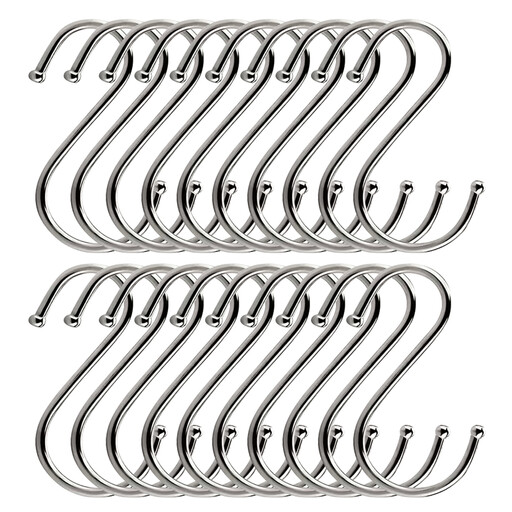
Why this product suits this profile: This pack of 20 is ideal for households wanting to arrange lots of small hanging points around the kitchen, bathroom, home office or garden.
The S-hooks don’t need adhesive, so you can avoid surface-related sticking problems. They’re designed to hang from existing rods, rails or edges.
20 metal hooks, each 75 mm long, with a rust-resistant finish according to the product details.
We’ve put together a complete, regularly updated list of products that meet these strict selection criteria and fully comply with the safety regulations in force in the EU.
For lightweight items, self-adhesive hooks are an option on suitable smooth surfaces. For clothes and towels, over-door hooks are often more flexible because they don’t need to be fixed to a wall. Measure the door thickness and clearance from the frame first.
How long they last depends on the surface, temperature, humidity, weight and adhesive material, so there’s no one-size-fits-all answer. Follow the manufacturer’s guidance and don’t use adhesive hooks on rough, damp or damaged surfaces.
You can use S-hooks in the bathroom if they’re suitable for the conditions and hang from a sturdy rod or rail. Keep them clean and dry after use. For areas that are constantly damp, follow the care and material guidance for the product in question.