
Lieferung heute & morgen

Qualitätsgarantie

Willkommens-Angebote freischalten: KOSTENLOSE Lieferung | Bis zu 80 % RABATT | Kostenlose 30-Tage-JoyPlus-Testphase
App herunterladen
Door hooks create extra storage space without the need to add a piece of furniture to your hallway, bedroom, bathroom or kitchen. This makes them a practical option for renters and smaller households. However, over-door racks, door hook rails and adhesive hooks differ considerably in terms of installation, load capacity and intended use.
If you only look at the number of hooks or a marketing claim such as “strong”, you can easily overlook important details. The following criteria will help you choose a suitable solution that remains practical over the long term.
An over-door hook must be compatible with your door. If the door is too thick, the rail may not fit fully into place. If the gap between the door leaf and frame is too narrow, the door may be difficult to close or the surface could be damaged.
You should therefore measure the following before buying:
Models designed for standard internal doors are not automatically suitable for glass, hollow-core or particularly delicate doors.
With an over-door hook, the weight is distributed across the door and the contact surfaces. With an adhesive version, however, the actual grip depends heavily on the surface. Smooth, dry and grease-free surfaces are generally more suitable than woodchip wallpaper, wallpaper, rough paint or damaged walls.
It is also important to consider the load capacity not only for the product as a whole, but for each individual clothes hook or towel hook. A jacket, a full bag and a wet towel each exert different loads.
Stainless steel hooks are an appealing choice for bathrooms and kitchens because stainless steel can be corrosion-resistant under normal conditions. However, this does not mean that every product is designed for constant exposure to moisture or aggressive cleaning products. Coated steel, aluminium, plastic, wood and bamboo each have different care requirements.
Pay attention to:
Door hooks without drilling are particularly suitable for rented homes. Over-door models can usually be fitted without tools and removed again when you move. The door thickness and clearance must be compatible.
Self-adhesive hooks require a clean, dry and smooth surface. Before installation, the adhesive area should be prepared according to the manufacturer’s instructions. It is often recommended that the hooks are not heavily loaded for a set period after fitting. Take care when using them on delicate, textured or freshly painted surfaces.
A door hook rail or a wall-mounted model secured with screws may be more suitable for consistently heavy loads. In this case, the fixing method must be appropriate for the surface. Suitable wall plugs are required for plasterboard, while drill bits and wall plugs must be matched to the material of solid walls.
More hooks do not automatically mean more usable storage space. What matters is whether clothing, bags or towels can hang next to one another without overlapping.
Useful points of reference:
The stated maximum load capacity should not be exceeded. Weight should be distributed evenly rather than placing a concentrated load on a single coat hook.
In the hallway, typical uses include bags, hats and coats. In the bathroom, towels and dressing gowns can be added. In the kitchen, small kitchen hooks are suitable for mugs, oven gloves or lightweight utensils. Self-adhesive models are only suitable for the surfaces specified in the product description.
The door material also plays a role. For glass, unstable door leaves or doors with a very low load-bearing capacity, you should follow the installation instructions particularly carefully.
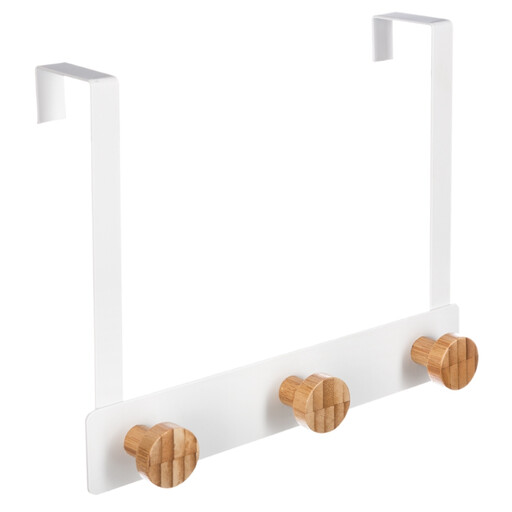
Why this product suits this profile: This compact over-door rack has three hooks and is designed for hallways, bathrooms, bedrooms or offices. It is fitted by hanging it over a suitable standard internal door.
The product specifications state a maximum load capacity of 6 kg. This makes it easier to plan use with coats, bags or towels, rather than overloading the rail indiscriminately.
Three hanging points, dimensions of 25 × 8 × 19 cm, and a combination of white-coated steel and bamboo.

Why this product suits this profile: The stainless steel or steel rail with its silver-coloured finish is aimed at households that need plenty of hanging points for clothing, towels, bags or accessories.
The construction is positioned over the door and, according to the product specifications, requires no drilling. Before buying, check the door thickness, fit and even weight distribution.
Ten hooks, dimensions of 19,5 × 12,5 × 41,7 cm, and a design for use without permanent wall mounting.
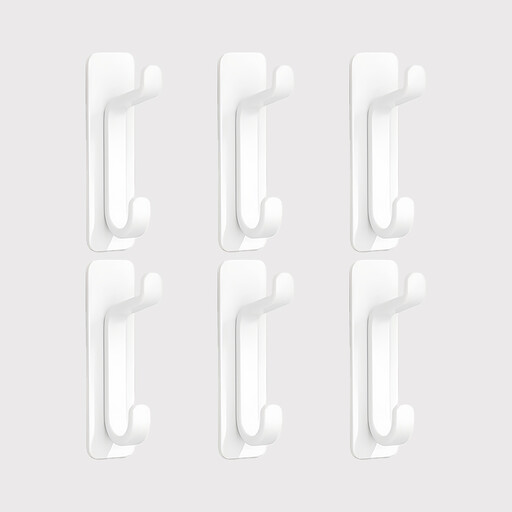
Why this product suits this profile: Six individual hooks offer flexible storage for the bathroom, kitchen, bedroom or hallway when drilling is not possible or not wanted.
According to the specifications, the adhesive mounting is not suitable for delicate, rough or textured surfaces. The surface must be clean and dry, and overloading should be avoided.
Six rust-resistant stainless steel hooks with a white finish, installed without a drill or screws.
We have put together a complete, regularly updated list of products that fully meet these strict selection criteria and the safety regulations applicable in the EU.
Before installation, read the instructions for the product in question and check whether the door or wall is suitable. For adhesive hooks, the following steps are particularly important:
With a hook rail for the door, the door must still be able to close fully after the rail has been fitted. Hooks must not be used as handholds for climbing. Heavy items such as full rucksacks should only be hung from products whose load capacity and fixings are suitable for this purpose.
This depends on its design, material and installation method. The product specifications may state, for example, 6 kg for a three-hook door rail or up to 10 kg for a five-hook model. With adhesive hooks, the stated load capacity only applies to suitable surfaces and correct installation. The load limit should never be exceeded.
Over-door hooks and self-adhesive hooks can be a suitable solution for rented homes, as they do not create permanent drill holes. However, adhesive products can still alter the surface when removed. You should therefore avoid wallpaper, delicate finishes and surfaces not approved for use, and follow the removal instructions.
First check that the door thickness is suitable for the model and that the hook sits fully on the door leaf. Distributing the weight evenly reduces uneven loading. Wall hooks must be fitted with suitable wall plugs. Adhesive hooks require a smooth, dry surface and must not be overloaded.