
Lieferung heute & morgen

Qualitätsgarantie

Willkommens-Angebote freischalten: KOSTENLOSE Lieferung | Bis zu 80 % RABATT | Kostenlose 30-Tage-JoyPlus-Testphase
App herunterladen
Anyone searching for Doppelherz Magnesium will find variants with Magnesium 400, Magnesium 500 or Magnesium 600, as well as products containing B vitamins, vitamin D, calcium and potassium. The available formats range from classic tablets and magnesium effervescent tablets to Magnesium Direct and Magnesium Depot.
Your choice should therefore not be based solely on the number of milligrams or advertising claims. The recommended daily intake, the nutrients included, any information provided on the packaging and whether the product fits into your daily routine are all important factors.
Magnesium 600 may initially sound like a particularly concentrated solution. However, when choosing a product, it is important to consider whether this quantity suits your personal diet and intended use. In sensitive individuals, amounts of more than 250 mg of magnesium from food supplements may have a laxative effect. The recommended daily dose must not be exceeded.
Magnesium with B vitamins, magnesium with calcium and potassium or a combination with vitamin D may be of interest for certain dietary and lifestyle needs. However, if you already use several food supplements, you should compare your total intake. It is particularly sensible to check all the products you use when it comes to potassium, vitamin D or high doses of B vitamins.
Magnesium Depot is released gradually and is generally taken as a tablet. Magnesium Direct can be consumed without water, although depending on the product it may contain sweeteners or other ingredients. Magnesium effervescent tablets may contain, among other things, acidity regulators, sweeteners and flavourings. People with intolerances should therefore check the ingredients list and allergen information.
The label should clearly state the magnesium content per daily dose. In the products presented here, the quantities range from 300 mg to 600 mg, depending on the variant. The NRV percentage refers to the EU nutrient reference value. It helps you put the quantity into context, but does not replace individual dietary advice.
According to authorised EU nutrition claims, magnesium contributes to normal muscle function, the normal functioning of the nervous system, normal energy-yielding metabolism and electrolyte balance. These claims should not be confused with medical treatment or the correction of a deficiency.
A preparation containing magnesium and B vitamins may include vitamin B1, B6, B12, niacin or folic acid. Other variants combine magnesium with calcium, potassium and vitamin D. Check:
With forms of magnesium such as magnesium oxide, magnesium carbonate or magnesium citrate, the formulation may vary from product to product. For comparison purposes, the stated amount of elemental magnesium per recommended serving is particularly important.
Tablets are usually taken with plenty of fluid. Effervescent tablets are dissolved in water, while direct granules can dissolve on the tongue without water. A slow-release preparation may appeal to people who prefer gradual release.
Always follow the specific instructions on the packaging. Food supplements are not a substitute for a balanced and varied diet or a healthy lifestyle.

Why this product suits this profile: The effervescent tablet is dissolved in 200 ml of water and provides 500 mg of magnesium and 50 µg of vitamin B12 per tablet. It is a convenient format for people who do not want to swallow large tablets.
The dosage and preparation instructions are clearly stated. The ingredients list includes magnesium carbonate, acidity regulators and sweeteners, allowing you to check the formulation before buying.
500 mg of magnesium, vitamin B12 and a water-soluble format with lemon flavour.
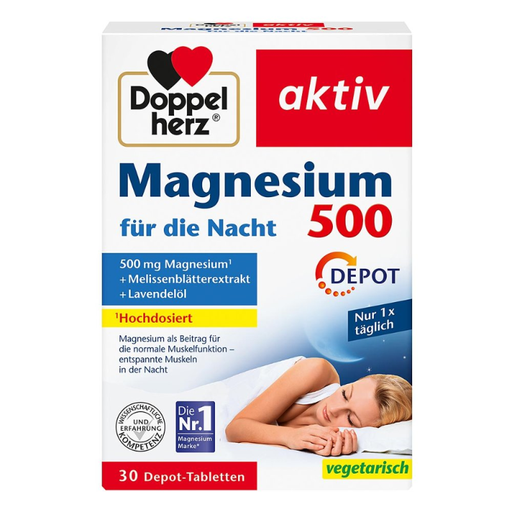
Why this product suits this profile: The formulation is designed for evening use and combines 500 mg of magnesium with vitamin D, vitamins B1 and B6, and niacin. It also contains lemon balm leaf extract and lavender oil.
The composition makes it clear that this is not a pure magnesium product. The tablet is taken whole with fluid in the evening.
Slow-release tablet with 500 mg of magnesium, several B vitamins and 5 µg of vitamin D per tablet.
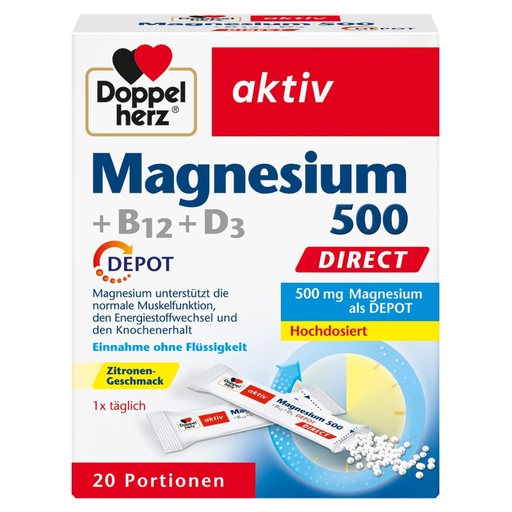
Why this product suits this profile: The direct granules are designed for use on the go and can be taken without water. One sachet provides 500 mg of magnesium, vitamin B12 and 10 µg of vitamin D3.
The individual portions make it easier to manage the dosage. The allergen information is important: the product contains a source of phenylalanine from aspartame.
Water-free use, 20 individual portions and a clearly stated slow-release formulation.
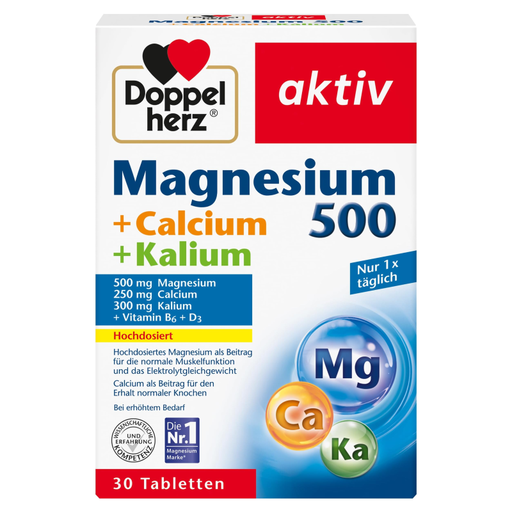
Why this product suits this profile: Each tablet combines 500 mg of magnesium with 250 mg of calcium, 300 mg of potassium, vitamin B6 and 20 µg of vitamin D. It is aimed at buyers who prefer to get several minerals in a single daily serving.
The additional minerals are listed with their respective quantities. Anyone with kidney or heart conditions, or taking medication, should seek medical advice beforehand.
A combination of magnesium, calcium, potassium, vitamin B6 and vitamin D in one tablet per day.
We have put together a complete, regularly updated list of products that fully meet these strict selection criteria and the safety regulations applicable in the EU.
Depending on the product, the stated amount per daily dose may be 400 mg, 500 mg or 600 mg of magnesium, for example. A 300 mg variant with calcium and vitamin D is also available. The information on the relevant packaging is always the deciding factor.
Magnesium Depot is taken as a tablet and is designed for gradual release. Magnesium Direct comes as granules that are placed directly on the tongue and require no water. The choice therefore mainly depends on your personal preferences for taking supplements.
The recommended intake and warnings for the specific product should be followed. Anyone with kidney disease, heart disease, who is pregnant or breastfeeding, or who regularly takes medication should consult a doctor before use. A food supplement should also not be regarded as a substitute for a varied diet.