
Lieferung heute & morgen

Qualitätsgarantie

Willkommens-Angebote freischalten: KOSTENLOSE Lieferung | Bis zu 80 % RABATT | Kostenlose 30-Tage-JoyPlus-Testphase
App herunterladen
A no-drill double roller blind is especially practical for rented flats: it attaches to the window frame without needing wall plugs or leaving drill holes. However, not every drill-free blind suits every window. The key factors are frame thickness, fabric width, operation and the desired light effect.
With many clamp-fit double roller blinds, the stated width includes the brackets and carriers. The actual fabric is often around 4 to 5 cm narrower. If you order only the glass width, you may end up without sufficient side privacy protection.
A zebra blind or day-night blind consists of alternating transparent and opaque strips. It allows flexible adjustment of privacy and light entry, but generally cannot be equated with a blackout blind. For bedrooms where you want as little light as possible, a coated, opaque roller blind is usually more suitable.
No-drill installation only works if the clamp brackets match your frame thickness. Depending on the product, the specified ranges might be, for example, 13–23 mm, 16–22 mm or 10–23 mm. Wooden windows, roof windows, sliding windows and certain fixed-glazed windows are often excluded. You should check these details against your own window before buying.
Measure the thickness of the window frame (excluding the seal) and check that the window handle has enough clearance. The blind must not block the handle. With a clamp-fit double roller blind, the carriers are usually placed on top of the opening window sash.
Many models also offer screw-fixing as an option. This is useful if you want a permanent fixture. For rented flats, however, the clamp fitting is often the better choice because it leaves the window frames and walls untouched.
First, measure the visible glass width. For various WOLTU double roller blinds, an order width of approximately glass width plus 4 cm is recommended. For example, with a 46 cm wide pane, a blind with an order width of around 50 cm can improve side light and privacy protection.
Also check the total height of the window frame. For balcony or patio doors, a greater height is needed; special versions as a roller blind for windows and doors are suitable for this.
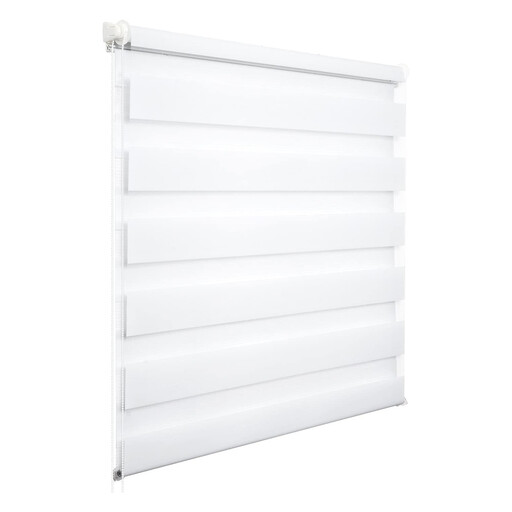
Why this product fits the profile: The combination of clamp fitting, alternating fabric strips and a chain that can be fitted on the left or right offers a simple introduction to flexible light control.
The description states the suitable frame thickness of 13–23 mm and highlights the narrower fabric width. This makes it easier to plan your order.
100% polyester, wipe-clean with a damp cloth, clamp or screw fixing, and side-switchable chain operation.

Why this product fits the profile: The honeycomb structure, metal frame and stepless operation via top and bottom handles appeal to buyers who care about material construction and flexible positioning.
The frame compatibility of 10–23 mm is clearly stated. Also, the width should not extend over window handles or protruding parts.
Opaque polyester, clamp-fit fixing, moisture resistance and operating handles on both the top and bottom.
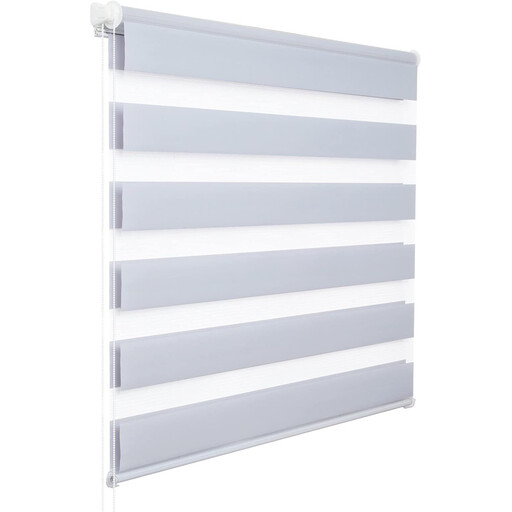
Why this product fits the profile: The greater height is suitable for doors and tall windows. The chain can be fitted on the left or right, which is helpful for frequently used doorways.
The product details exclude roof windows and wooden frames, and state a frame range of 13–23 mm. This allows unsuitable locations to be ruled out in advance.
220 cm height, alternating transparent and opaque strips, wipe-clean polyester and optional screw fixing.
Durability depends on the frame fit, installation and daily use. A clamp bracket must match the frame thickness and sit securely. Check the fixing regularly, especially on frequently used balcony or patio doors.
A zebra blind with alternating fabric strips regulates light entry, but does not necessarily create complete darkness. For bedrooms and workrooms where you want reduced light, a model with opaque fabric and a coated back is more suitable.
A mechanical roller blind requires no electricity and therefore incurs no running energy costs. You only need to consider the purchase price, any replacement parts and proper care. With a thermal blind, any change in room climate depends on the window, orientation and installation; blanket savings promises are therefore not appropriate.